
Lessons from ‘The Rookie’: Former Major Leaguer Morris speaks in Macon
Jim Morris, the subject of the film ‘The Rookie’ starring Dennis Quaid, spoke at The Methodist Home on Oct. 2.
A new chapter for The Melody
Our team and coverage are moving to The Telegraph. Make sure you look for The Melody's community-first journalism as a section highlighting the people, places and moments that are the rhythm of Macon.

Former MLB pitcher Jim Morris is retired now, but he still loves the game of baseball.
The former Tampa Bay Rays reliever, who is most well-known for being the subject of the Disney film “The Rookie” starring Dennis Quaid, is quick to list some of his favorite Major Leaguers nowadays. He rattles off names like Aaron Judge, Tarik Skubal and the uber-popular Shohei Ohtani.
Morris is 61 now, and his playing days are long over. However, he might love his new gig — which brought him to Macon recently to speak at a fundraiser for the Methodist Home for Children and Youth — even more than pitching.
“Kids are the most important people on the planet right now because they’re going to fix what we’ve screwed up,” Morris said. “We need to enable them with all that we can for a future that’s very uncertain.”
The former fireballer is now a motivational speaker, and he talked to guests at the Methodist Home as part of its Evening of Hope fundraising dinner Oct. 2.
“I do this at a lot of places: small businesses, colleges, high schools, corporations. The ones that really get me are the faith-based institutions,” Morris said, referencing the employees at the Methodist Home, who provide residential care to abandoned, abused and neglected children from across the state. “It takes normal people working hard like this. We all need to step up and do our job.”
The pitcher used his unlikely journey to the major leagues and all the obstacles he had to overcome on the way there to inspire his audience.
Morris was a high school teacher and baseball coach in Texas in 1999 when he struck a deal with his players. If they managed to win the region championship, an honor they had never achieved before, he would try out for a Major League team.
It was a motivational tactic — one that perhaps foreshadowed Morris’ endeavors later in life — and it worked. The team won the championship.
Just to hold up his end of the bargain, Morris tried out for the Tampa Bay Rays that summer. He shocked the scouts observing his tryout — and himself — by hurling fastball after fastball, nearly touching 100 mph on this throws.
The family man signed with the Rays and, after a stint in the minor leagues, was called up and pitched in the Majors that same year. He was 35 years old, the third-oldest rookie in MLB history at the time, according to MLB.com.
“Almost every day I still wake up and say, ‘Wow, did that happen?’” Morris said. “Just because it came from such an unlikely source, a group of kids who were counted out. So I pushed them, and they pushed me back. I got a second chance at my dream because of them.”
When Morris’ story was told on the big screen a few years later in the 2002 film “The Rookie,” it captivated millions across the country. Though the story is so improbable that it feels like a “Disney-ification,” the film is fairly accurate to Morris’ actual story, the pitcher said.
“Dennis (Quaid) and I had a great rapport from the beginning. He said, ‘You see anything being filmed that you don’t like, you don’t agree with, you tell me and it’s out,’” Morris said. “We’re still great friends 25 years later. I mean, the first time I met him, we played catch in my front yard. I was like, ‘I’m playing catch with a movie star.’”
One of the few invented portions of the film is perhaps its most iconic moment, where a grimacing Quaid (as Morris) hurls a baseball past a highway speed radar monitor in the dead of night to see how fast he can throw. The speed detector shows 76, much to Morris’ dismay — but as he goes to retrieve the ball, the yellow dot lights buzz and blink to display the true speed of the pitch, 96 mph.
The memorable moment never happened to Morris in real life, he said. It was a screenwriter that cooked up the concept.
“You just had to make me look stupid, didn’t you?” Morris joked when asked about the roadside radar scene. “I saw that sign by the road for three years, never thought to try it. Then the screenwriter and I drove down the road, he sees the sign, pulls over and throws a ball past it. What do you know, it works.
“Dennis loved doing that scene, and the key thing about it was that it told people: I didn’t know how hard I was throwing. When I was young I was around 88 (mph), then the doctor said ‘You’ll never pitch again.’ Then (it was) all of a sudden, 98 to 102.”
There are some parts of his story that are not so rosy for Morris to recall, of course. As a child in a military family, he moved around the country frequently. He also endured physical and verbal abuse as a kid, a difficult endeavor that hurt him — but also one that taught him to care for others.
“What I did with my own kids and with all kids, I just thought of how my parents treated me and did the opposite,” Morris said. “The other big piece of advice is, and this is something my grandfather told me, ‘You are who you hang out with.’”
Morris’ grandfather was a key influence in his life and is featured prominently in the film. Some of the other people he mentioned as great role models were the men he met in the majors — legends like Fred McGriff and Wade Boggs, who had just recorded his 3,000th MLB hit.
“Freddie McGriff is one of the best human beings I’ve met in my life,” Morris said. “There was Roberto Hernandez, my best friend in the big leagues. Wilson Alvarez was great, and Ozzie Guillen was on that team, too.
“Getting to be part of that teamwork and camaraderie while being 35 instead of 18 was so great. You can say whatever you want to whoever, and they’ll say it right back to you. There’s great communication. That teamwork brings you together.”
Morris said that attitude helped him greatly in the Majors. He said he noticed that same mindset at Macon’s Methodist Home, too.
“We took a tour of the children’s home today, and the people who are here have been doing this for a long, long time,” Morris said. “Other organizations, sometimes the turnover is high. They do such a great job here as a team.”
Morris has experience with similar operations. After the troubles of his youth and the arm injuries that ended his initial attempt at a baseball career out of college, he worked with the Texas Youth Commission teaching and coaching at-risk youth.
It’s been a passion of his for many years, and that fervor will carry him from the Methodist Home to other engagements.
“We’re gonna do all this again someplace else right after,” Morris said with a smile. “Places like this are so great to speak at — I like to get to as many as I can.”
It’s not quite pitching on a Major League mound, but Morris doesn’t seem to mind — and it’s probably a lot better than tossing fastballs past a Texas roadside radar.
Author

Related Articles
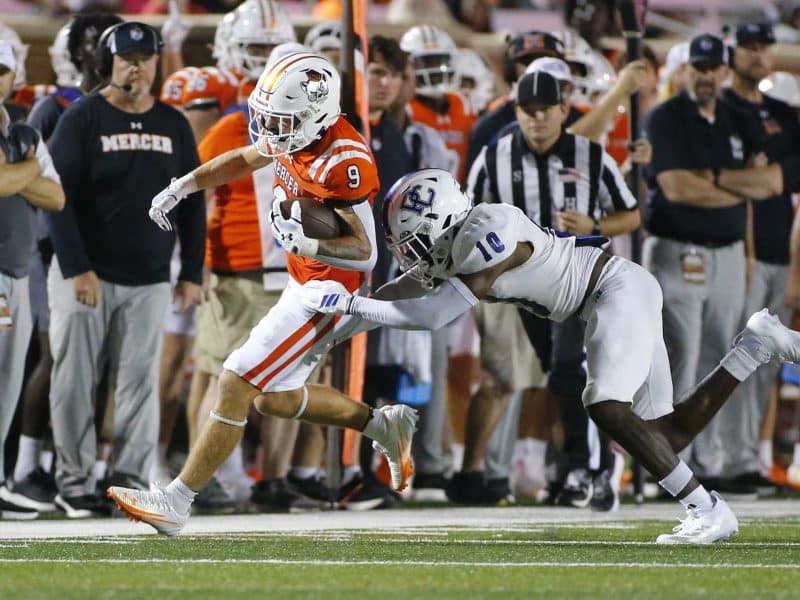
Mercer Athletic Director Jim Cole steps down; Bears picked to win SoCon
Get updates from sports across Macon and our weekly sports notepad.
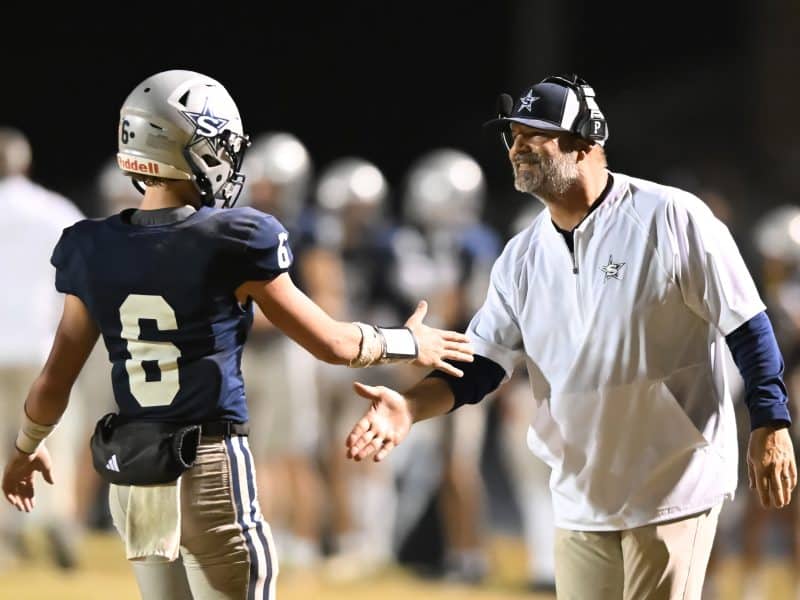
After last year’s state title run, Stratford ready to run it back
After taking home the trophy last year, a talented Stratford team wants to do it all again.

Macon’s first pro pickleball tourney complete; Covenant drops football for 2026 season
Get sports updates from across Macon in our weekly sports Notepad.