
Beating the heat: How Macon’s football teams can stay safe at summer practice
With football season approaching, it’s important for coaches and players alike to keep certain rules in mind during practice.
A new chapter for The Melody
Our team and coverage are moving to The Telegraph. Make sure you look for The Melody's community-first journalism as a section highlighting the people, places and moments that are the rhythm of Macon.
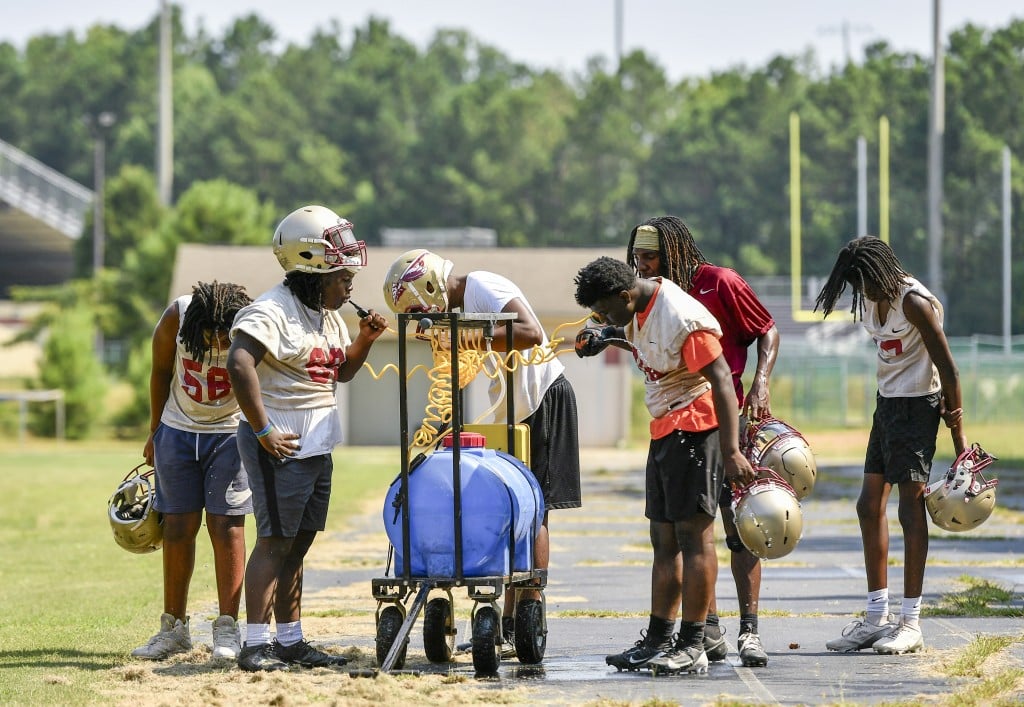
The heat of the Georgia summer is inescapable, particularly for folks who have to work or live outside, but high school football schedules are unforgiving. With class back in session earlier and earlier each year, the football season begins prematurely as well.
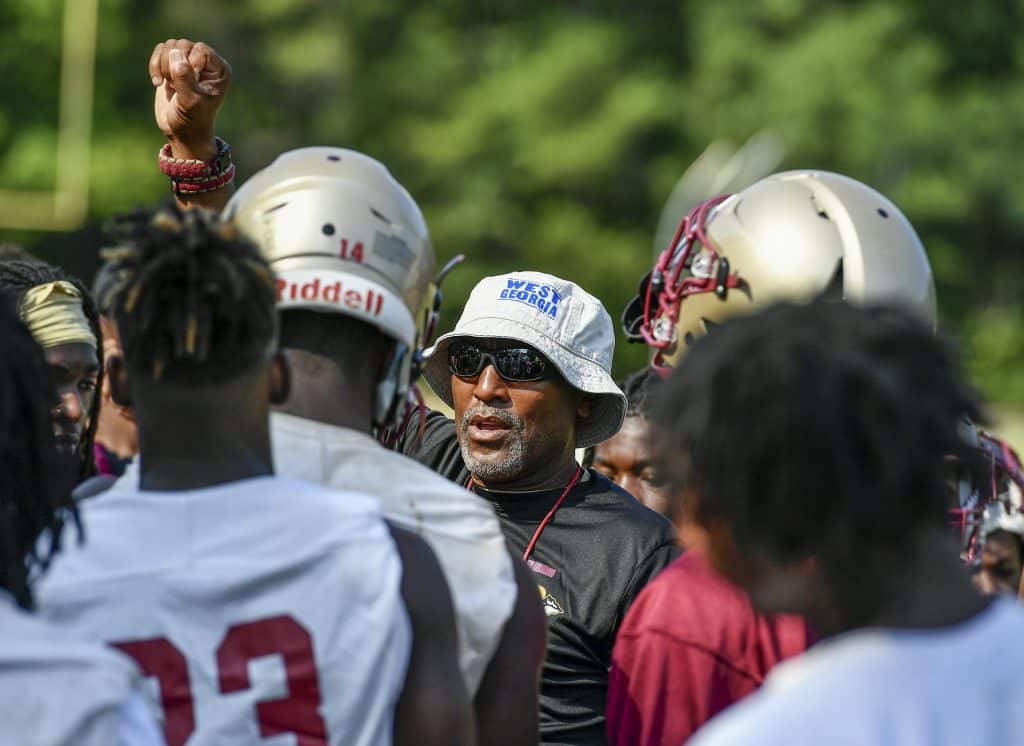
Many of Macon’s local high schools are already practicing, and they have to try to find ways to stay safe in the July heat. Longtime Westside coach Spoon Risper said being diligent about player safety is as important as ever.
“We like to practice early, but we’re always waiting long enough to wear certain equipment, because that can make the heat even worse,” Risper said. “And we get our practice done in the morning too. You gotta beat the heat that way.”
Practice right now is also voluntary, Risper noted, with the required practices not starting until right at the end of July. Voluntary or not, arrive at the Westside practice fields behind the school’s auditorium and you’ll find plenty of players gladly giving up their summer mornings for the sake of football.
“You know, we get a lot of kids that want to come out here and work, but you have to balance that,” Risper said. “Safety is always the first priority. There’s nothing that will change that. As long as I’ve been coaching, every coach has to understand that.”
But with the higher temperatures of late and the renewed focus on heat safety comes new information about keeping players safe, too.
Heat safety through the years
Scott Anderson spent his entire career working as an athletic trainer at the college football level, spending time at the University of Oklahoma and as president of the College Athletic Trainers Society. Much of that career was dedicated to preventing the deaths of athletes, particularly football players.
While it seems like practices have started earlier and heat has only gotten worse, Anderson said that much of the guidelines for keeping players safe have remained similar for decades.
“If you look back at 65 years of exertional heat stroke fatalities in football… you know, in the ‘60s we made uniform adjustments, in the ‘70s there was a big emphasis on hydration,” Anderson said. “And we do a lot of that same stuff now, because it’s important and it works.”
Risper talked about keeping his players safe through those means.
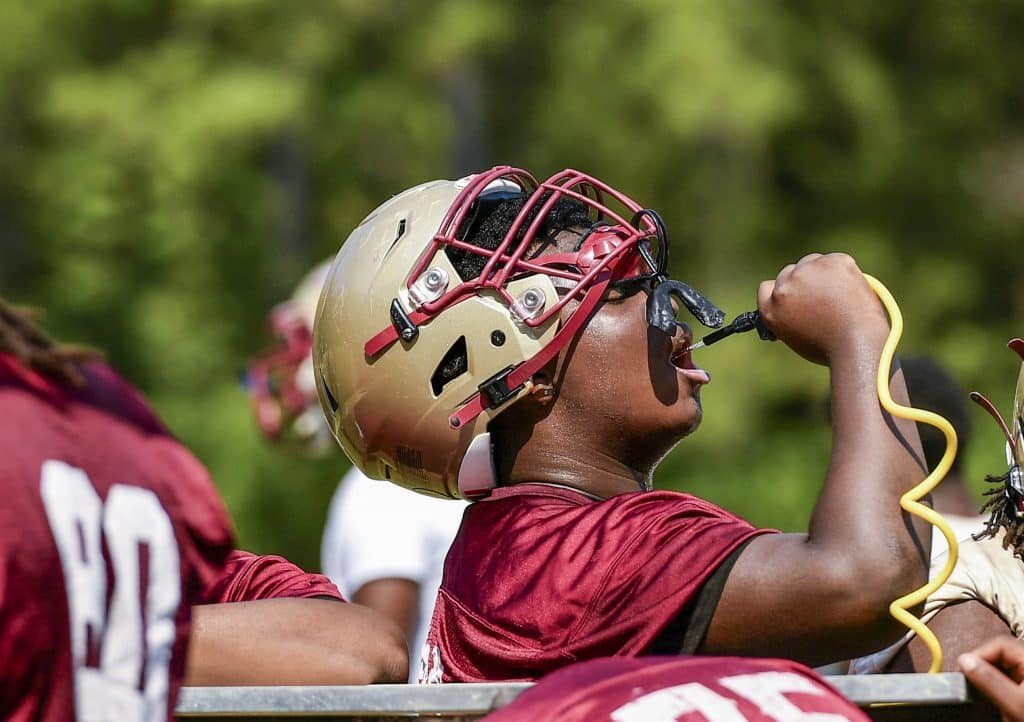
“We wait until everyone is fully acclimated to go full pads, we’re required to wait on that. We don’t have a whole team water break, you know, every hour, we just let players get water whenever they want,” Ripser said. “They don’t have to wait, if they feel like they need water, they need a break, they can just take it.”
Anderson said that coaches and players alike started paying closer attention to the problem of heat stroke on the football field around 20 years ago, after Korey Stringer died. Stringer, an offensive tackle for the Minnesota Vikings, died from exertional heat stroke in August of 2001. His death brought increased awareness to his player heat safety after his wife filed lawsuits against the NFL and others, and his legacy led to the foundation of the Korey Stringer Institute.
Southwest High School football player Joshua Ivory’s death on the first day of fall practice in 2021 renewed a focus on protecting high school athletes from the heat in Macon, although Ivory died from an irregular heartbeat, according to county coroner Leon Jones.
“Any time something like that happens, you take a good long look at football and yourself,” Risper said. “I think everyone around here was rattled. And that goes beyond Middle Georgia, too, because a lot of coaches know other guys around the whole state. Sometimes I see something happen near Atlanta, or somewhere else and it has the same effect. It’s just tragic.”
Teams are required to check the wet bulb temperature, a specific heat reading that combines dry air temperature with humidity, regularly throughout practices. Water breaks are also required; Risper adopted the aforementioned method of giving his players constant access to water.
But those methods alone have not eliminated the risk for players. Players have still died from exertional heat stroke (EHS), Anderson said. A recent study he and colleagues conducted for the College Athletic Trainers Society found that a player’s hydration level, while very important, is not often the key problem when a player suffers from EHS.

Knowing who is at risk
Anderson said that, regardless of whether it’s high school, college or NFL football, there’s one key thing the coaches can change to better protect their players.
“We have a lot of protocol for coaches to follow now, and they generally do a good job of keeping up with those things,” he said. “But the biggest thing is just conditioning the players in the ways that actually represent what position they’ll play in a game.”
That most applies to linemen, according to Anderson. Often the biggest players on the field, those in the trenches hardly ever run during games but tend to be subject to the same conditioning during practice as other players — lots of running.
“For a long time we never identified a specific group as at risk, we always had a team of, say, 115 players at Oklahoma, and the perception for people was that, ‘oh, all those people are at risk,’” Anderson said. “But really, a tremendous number of these heat stroke related deaths are linemen. We can identify a position that really does suffer.”
The vast majority of players that have died from heat-related illness or heat stroke have been linemen, Anderson said. Punishment plays a huge role in that.
“It’s because running is so often used as a punishment in football. And these athletes, the biggest ones on the field, are running too… in our recent study, we found that 37% of these heat stroke deaths were athletes who were subjected to punishment,” he said.
That same study also found that 97% of players who died from exertional heat stroke, at all levels of football, were linemen.
The paper concludes that understanding who is at risk and why is key to protecting football players, and Anderson’s advice revolves around knowing your players — have linemen run less. Work out your players based on their position, not as an entire team. And do that while following the original guidelines for keeping players safe in the heat, while keeping an eye on every member of the team.
“Paying attention to your guys is the most important thing,” Risper said. “Even if you give them those water breaks, or you think they’re in that shape, something can always happen. So you just have to be attentive as a coach about this sort of thing.”
Author

Related Articles
Mercer Athletic Director Jim Cole steps down; Bears picked to win SoCon
Get updates from sports across Macon and our weekly sports notepad.
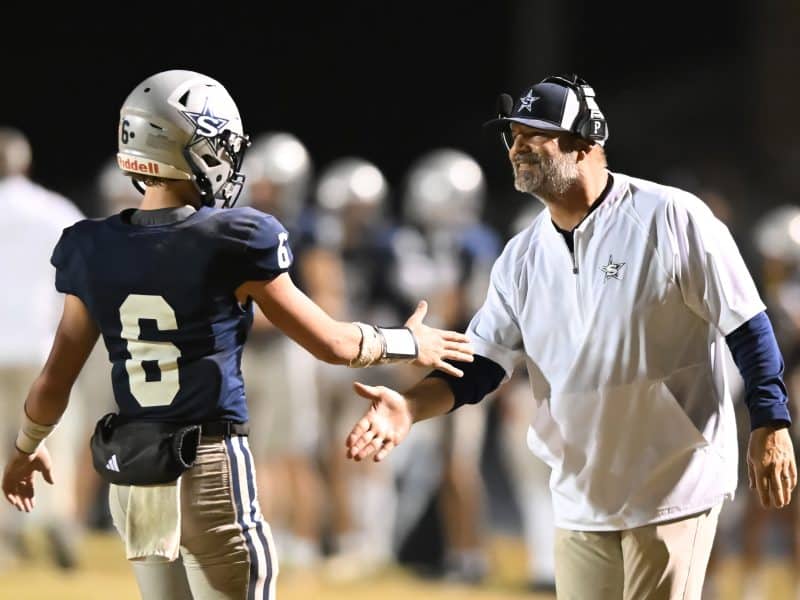
After last year’s state title run, Stratford ready to run it back
After taking home the trophy last year, a talented Stratford team wants to do it all again.
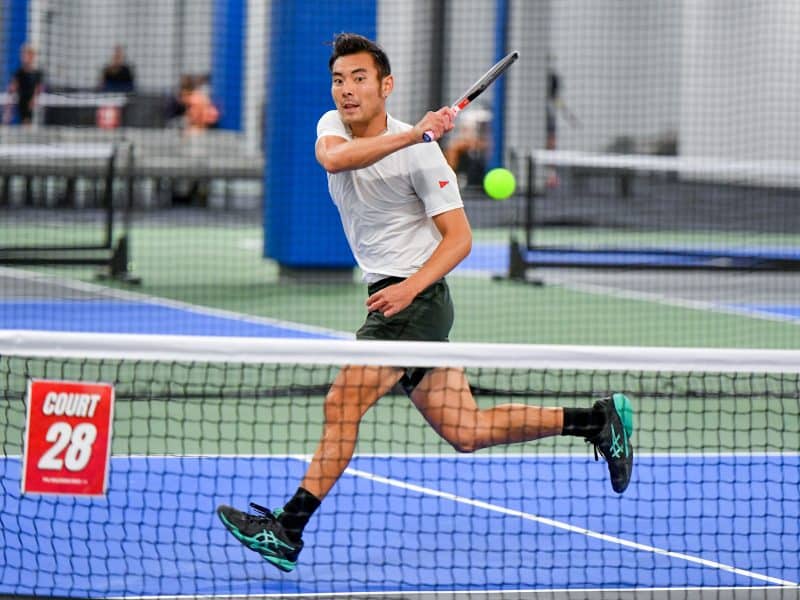
Macon’s first pro pickleball tourney complete; Covenant drops football for 2026 season
Get sports updates from across Macon in our weekly sports Notepad.