
COLUMN: Every newsroom in America needs one of these
Journalists are wary of throwing anything away, whether it’s full notebooks, old keyboards or computer monitors with dead pixel lines. We value history, continuity, the utility of things that are a little banged up but still have a spark in them.
A new chapter for The Melody
Our team and coverage are moving to The Telegraph. Make sure you look for The Melody's community-first journalism as a section highlighting the people, places and moments that are the rhythm of Macon.

Newsrooms, new and old, all tend to look at least a little bit alike.
It’s not universal, but I’ll bet that you can still find print copies of the paper. There’s a coffee pot with a massive plastic container of ground coffee sitting next to it, maps on the walls, industrial size bottles of ibuprofen and antacids. Someone has a drawer full of takeout cutlery and condiments or a bookshelf sagging under the weight of phone books from decades ago and unsolicited proof copies of novels by authors tangentially connected to the coverage area.
I’ve worked in four different newsrooms and visited more than a hundred. They’re often labyrinthian structures in brick downtown buildings, occasionally with hulking Goss Community printing presses (that even more occasionally still work), fading green testaments to days gone by.
Journalists are wary of throwing anything away, whether it’s full notebooks, old keyboards or computer monitors with dead pixel lines. We value history, continuity, the utility of things that are a little banged up but still have a spark in them.
Most newsrooms also have a print copy of the newsroom bible: the Associated Press Stylebook.
*****
First made publicly available in 1953, the AP Stylebook solved problems by giving newsrooms across the country a shared, consistent style (it also gave journalists and copyeditors a coup de grâce in their endless style disputes).
Journalists now had a guide to turn to when they wanted to know how to write street addresses (abbreviate boulevard, street and avenue when used with the street number, but not drive or road); months (when used with the date, abbreviate every month except March, April, May, June and July); numbers (write out numbers one through nine, use numerals for 10 and above, except for ages); and states (don’t use postal codes, and abbreviate when used with a city, i.e. Macon, Ga.).
Figuring out where (or if) a word or phrase is included in the stylebook is more art than science. Some usage and style rules that seem important are totally absent. Others are grouped in different sections. If a reporter wants to know whether to capitalize or abbreviate “general” in front of someone’s name, they shouldn’t flip to the g’s. They need to go to “military titles.”
Not every newsroom uses AP Style — some papers create their own stylebooks (like the New York Times). But it is widely accepted. I took AP Style pop quizzes in college and a decade later administered my own when teaching at the University of Oklahoma.
The stylebook is often a source of controversy. Journalists often write about tough subjects, and the AP Stylebook can struggle to keep up with modern language. For example, in 2021, the stylebook updated its section on guidelines for writing about people with disabilities. The National Center on Disability and Journalism at Arizona State University offers a more comprehensive style guide.
*****
Language, of course, changes. Words are introduced into the popular lexicon (app, hashtag), old words are given new meaning (meme) and some disappear from popular use. The AP Stylebook attempts to keep up with these evolutions. Journalists and copyeditors everywhere are generally outraged.
That reaction seems silly, but it makes sense. Many journalists learned these rules in college and abided by them faithfully for years, even decades. Then the very organization that set down these rules embraces the iconoclastic nature of modern vernacular.
Bear in mind, many of these rules are arbitrary (for instance, what makes adviser better than advisor?). Others were made with only the printing press in mind, back when correcting a mistake during the production process was time consuming and expensive and space was tight (which is why dates and street names are often abbreviated). Regardless, these style rules were the gospel, right up until they weren’t.
I’ve been doing this long enough to remember the switch from e-mail to email, from Web site to website, from Internet to internet. I was fine with all of those.
It took me longer to get used to using the symbol for percent “%” in copy rather than writing it out: 15 percent just looked correct, 15% was wrong. Now, I appreciate the symbol. It helps make numbers look like numbers.
The change I can’t accept? For years, journalism school professors beat into our brains to use “more than” instead of “over.” There were more than 100 people at the event, not over 100 people. That changed a decade ago, when the stylebook announced that “over” and “more than” were interchangeable when indicating greater numerical value.
In the words of then-Twitter user Mike Shor “More than my dead body!” That’s a change I just can’t accept. The Macon Melody’s stylebook insists on using “more than.”
*****
In 2022, photographer Jeremiah Ariaz photographed 135 newspapers in his native Kansas. Perusing his photos felt like going back home. I recognized the wood-paneled offices, the bound books of newspapers moldering in the morgue, the framed press association awards hung slightly askew.
Some of Ariaz’s work is melancholic, a stark reminder of the rapid decline of American journalism and the quiet death of so many community newspapers. Saving those newsrooms and turning them into thriving, sustainable newspapers is the mission of The Melody’s parent organization, The National Trust for Local News. It’s what we do each day here in Georgia with our network of 19 community newspapers.
It’s invigorating to walk into The Melody’s newsroom. While we do have phone books and a coffee pot and maps on the wall, we have something that you don’t see in a lot of Ariaz’s photos: a room full of journalists.
And of course, an AP Stylebook.
Caleb Slinkard is the managing editor of The Macon Melody. Email him at [email protected].
Author

Related Articles
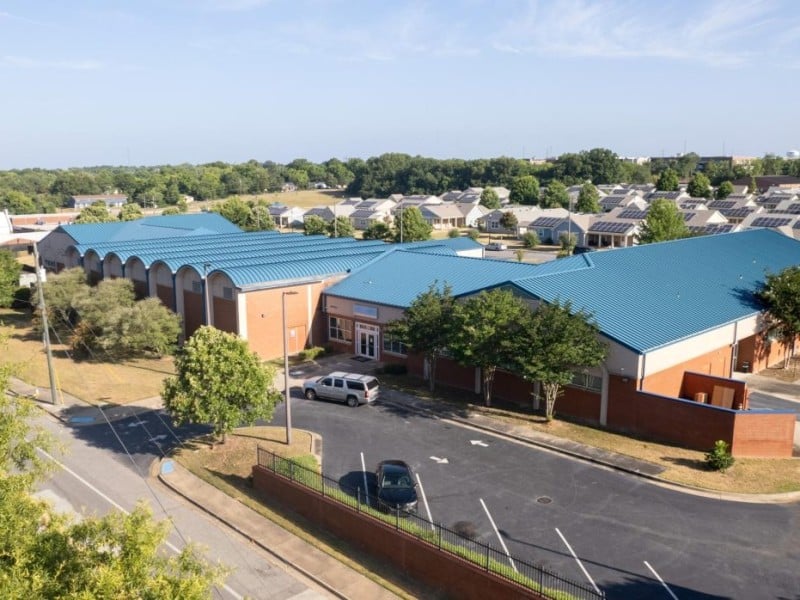
Macon’s Boys and Girls Club closed for 90 days, families search for alternatives
The club had many after-school programs that are now on hold.
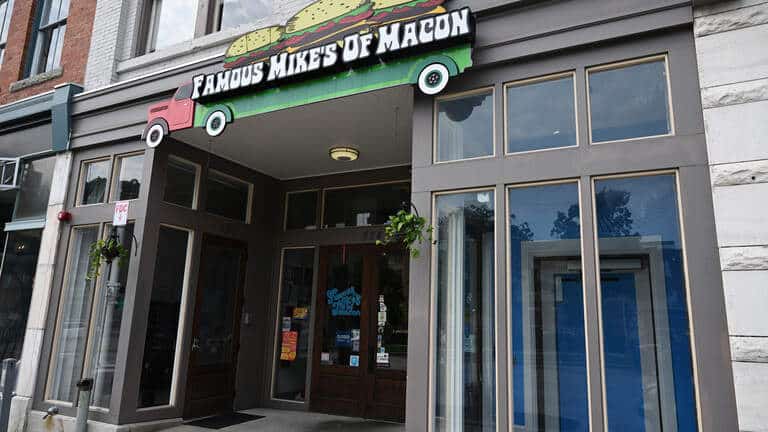
Downtown Macon breakfast staple Famous Mike’s closes
The restaurant known for its comfort food announced it was shutting its doors Monday.
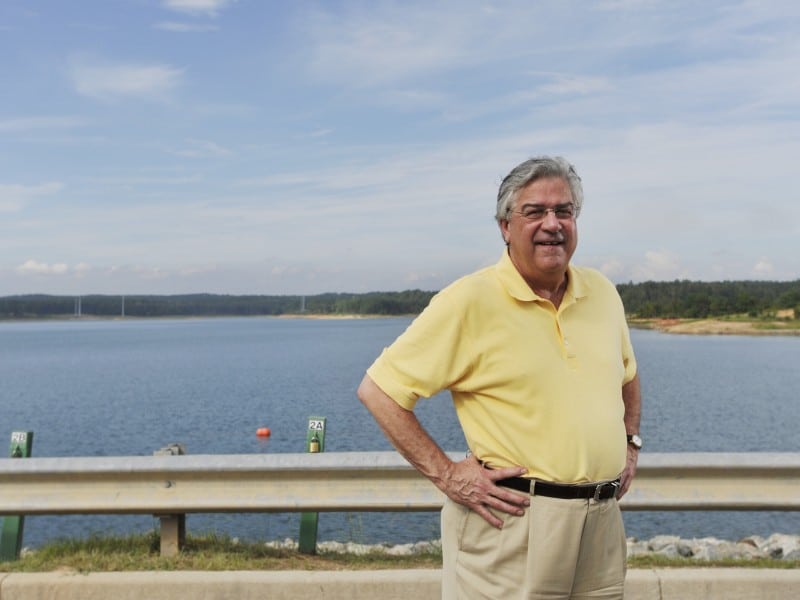
The lasting legacy of former Macon mayor George Israel, who bridged political divides
Israel, Macon’s second-ever Republican mayor, died last weekend. He was 78.