
Mayor stalls approval of Confederate plaque in Rose Hill
Mayor Lester Miller has opted to not authorize the donation of a plaque in honor of a Black Confederate fifer. He invited leaders from Macon’s NAACP and the local branch of the United Daughter’s of the Confederacy to have an open conversation on the topic.
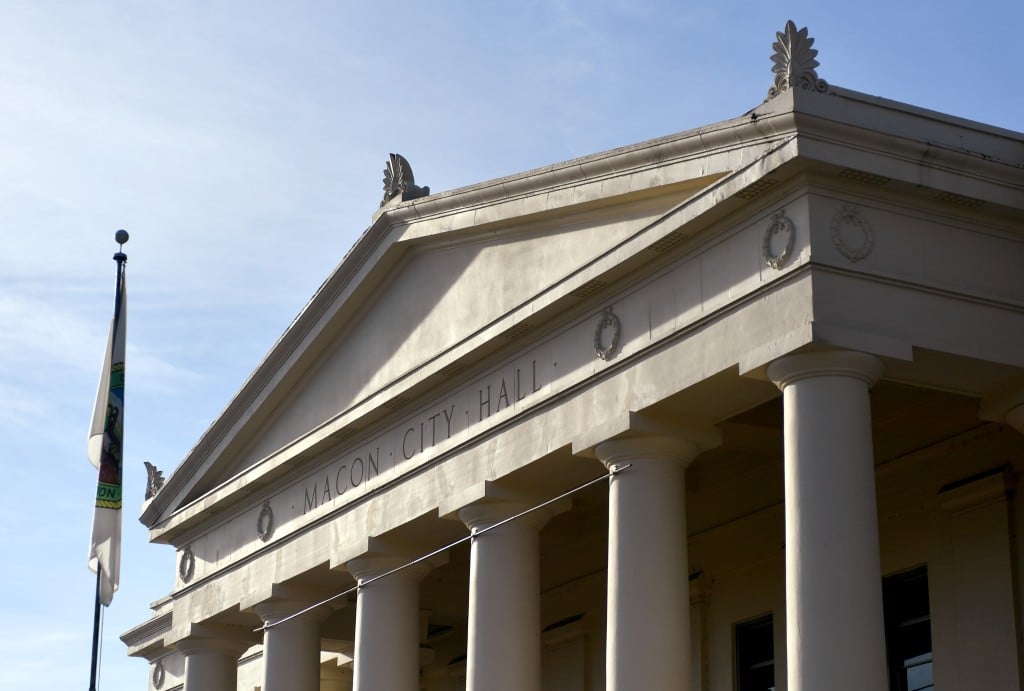
An effort to install a plaque commemorating a Black Confederate fifer in Macon stalled Tuesday night after Mayor Lester Miller decided not to authorize the memorial and called for a community discussion on the issue.
The decision prolongs one of the more bemusing episodes in recent county politics. The United Daughters of the Confederacy (UDC), a hereditary association for female descendants of Confederate Civil War soldiers, approached Macon-Bibb County’s parks and recreation department with a donation to fund a memorial for Charley Benger, a Black fifer in a Confederate volunteer company out of Macon.
The UDC wanted to install a plaque in the Confederate cemetery in Rose Hill Cemetery, which is managed by the county’s parks and rec department. The proposal — which included an essay written by Renee Sullivan, former president and current historian of Macon’s Sidney Lanier Chapter #25 of UDC — was then sent to the county commission.
The proposal was included in the commission’s Oct. 1 agenda and seemingly escaped notice, as all eight commissioners approved its inclusion in the agenda during a pre-commission meeting (the commission was down to eight because Elaine Lucas’ term ended and Stanley Stewart had yet to be sworn in to replace her).
During the regular meeting, however, the proposal began to generate controversy. District 8 Commissioner Virgil Watkins Jr. wanted more information on the plaque. Miller told Watkins that he’d had five days to review the resolutions on the agenda.
Ultimately, Watkins and commissioners Paul Bronson and Seth Clark voted against the resolution to accept the UDC donation, which passed 5-3.
After the meeting Watkins took to social media to alert the community about the proposal and argued with Miller on Facebook. He wrote that Miller put the item on the agenda with “the vaguest possible language in the header.” Miller replied that he is the default sponsor on every item and is not responsible for the language used in the agenda.
Watkins said the role of African Americans in the Confederacy should be taught with nuance inside of the classroom.
“If you’re going to do it, it should require some community conversation — more than what we’ve had,” Watkins told The Melody. “What is the context? What is the story that you intend to tell? How is this going to be framed?”
‘A lot of trauma and hurt’
Sullivan said the Benger plaque was the result of her research of “diversity in Confederacy.”
“A lot of people think it was just straight white, and that’s not true,” she said, framing her essay as an effort to highlight contributions of Black Maconites. “It was a very diverse group of people.”
Charley Benger’s biography is murky. A fifer during the War of 1812 and the Civil War, Benger worked as a pilot on the Ocmulgee River. C0ntemporary newspaper accounts of his life written by white Southerners are steeped in the racist and bigoted language of the 19th century. As early as the 1880s, journalists attempted to use Benger’s life to recast the historical relationship between white and Black Georgians.
The UDC has a history of promoting Lost Cause ideology, a pseudohistorical myth that the Confederacy was heroic and just and that state’s rights, rather than slavery, was the casus belli of the Civil War.
Several Maconites spoke before, during and after the Oct. 15 commission meeting against the memorial. Julia Callahan, the vice chair of the Macon-Bibb Democratic Committee, told The Melody that perpetuating a romanticized version of history is detrimental to the Black community and white individuals and elected officials have an obligation to do better.
“[Benger] was a side clown show. And the fact that, in 2024, we’re highlighting something like that is troubling to me,” Sherman Kind added, calling the plaque a “mockery to African Americans”
LJ Malone called for an open dialogue on Benger’s history and the memorial.
“We want to let you guys know there’s a lot of trauma and hurt that we would like to be understood,” he told the commissioners.
“There’s no place in 21st century America, Georgia, Macon, for the Confederacy,” newly sworn in District 3 Commissioner Stanley Stewart said.
Miller asked that leaders like the president of Macon’s NAACP branch Gwen Westbrook and folks from the UDC “facilitate a conversation” between the two groups about Benger.
“Nothing is resolved without conversation,” Westbrook said at the commission meeting. “Denying to meet with the Confederate sisters would be something wrong, in my opinion.”
She went on to state the importance of providing the UDC with an opportunity to explain why the organization has chosen to donate the plaque at this time and its purpose.
Before you go...
Thanks for reading The Macon Melody. We hope this article added to your day.
We are a nonprofit, local newsroom that connects you to the whole story of Macon-Bibb County. We live, work and play here. Our reporting illuminates and celebrates the people and events that make Middle Georgia unique.
If you appreciate what we do, please join the readers like you who help make our solution-focused journalism possible. Thank you
Author

Related Articles
Macon’s Boys and Girls Club closed for 90 days, families search for alternatives
The club had many after-school programs that are now on hold.
Downtown Macon breakfast staple Famous Mike’s closes
The restaurant known for its comfort food announced it was shutting its doors Monday.
The lasting legacy of former Macon mayor George Israel, who bridged political divides
Israel, Macon’s second-ever Republican mayor, died last weekend. He was 78.