
Acts of love drive organ donation awareness in Macon
There are more than 3,000 Georgia residents awaiting an organ transplant. Two Macon natives share similar transplant experiences and are now raising awareness.
A new chapter for The Melody
Our team and coverage are moving to The Telegraph. Make sure you look for The Melody's community-first journalism as a section highlighting the people, places and moments that are the rhythm of Macon.
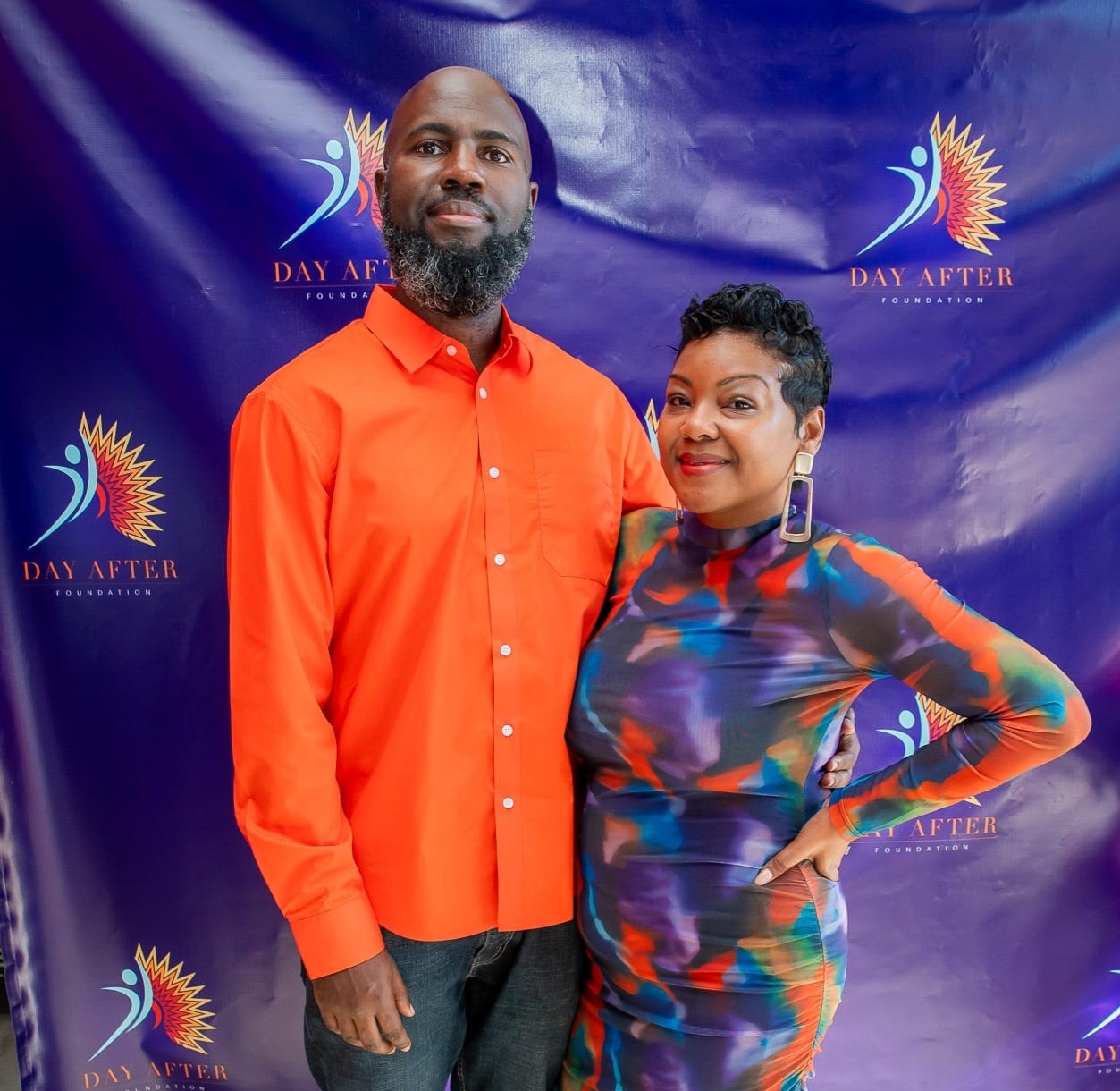
The depiction of a heart — and the words “Organ Donor” — can go unnoticed on a Georgia driver’s license, but the designation means the world to people who benefit from its meaning.
Denisetrice Goodrum Cook of Macon is one of those individuals. She was diagnosed with chronic kidney failure two years ago. She received treatment at area hospitals and at Emory Healthcare in Atlanta, traveling to those spots with her husband Bennett.
She joined the national transplant list in January as — according to LifeLink of Georgia data — one of more than 3,000 individuals in Georgia awaiting a new organ.
The human body has two kidneys — and Bennett, living up to the “in sickness and in health” wedding vow — was willing to donate one of his to the love of his life. One of his bean-shaped organs turned out to be a near-perfect match for Denisetrice.
Organ matchmaking depends on factors like blood type, height and weight, illness intensity and time period, and more, said Tracy Ide with LifeLink. The group, part of a national network, helps area hospitals procure organs. They also offer education services to donors and transplant recipients.
Ide has worked for the group for nearly 19 years, and she said its mission is personal for her. Various family members, including her mother and uncle, have received organ transplants.
Her mother’s transplants — a new kidney, a new heart and then another new heart — forced young Ide to grow up “faster.”
Her work today helps her to honor those who choose to donate their organs. She supports a growing network of transplant recipients and helps boost organ donor numbers. In Macon-Bibb County, 36% of adults are registered donors, according to LifeLink data.
Ide said her work also includes dispelling common misconceptions about organ donation. She said people often think it costs to be a donor — it doesn’t — or that there’s an age limit (there’s not). People also think, she said, that the organ donation process desecrates one’s body, but it doesn’t, she noted.
Ide admitted that the process can be confounding to those who haven’t experienced it. That was the case for Macon native Candice Stephens, who was diagnosed with Type 1 diabetes, an autoimmune disease where the body’s immune system destroys the insulin-producing beta cells in the pancreas, at 7.
Wanting to “be normal,” she said she “broke up” with the disease in college — stopping her regular doctor’s visits and failing to properly manage her condition.
“I was really tired of the blood sugar sticks … the insulin shots … the portion this, portion that,” she said.
Her condition worsened, and she soon developed chronic kidney failure. She was at stage 3 of 5 — indicating mild to moderate kidney loss — and in need of a transplant. She said it was a “sobering” time for her — especially when her doctors told her improvements were unlikely if she did nothing.
Her husband stepped in as her organ donor match. With the transplant complete, the couple recovered together — and Stephens later received a pancreas transplant, which allowed her to cure the insulin-depleting disease.
Stephens said her experience inspired her to help others throughout their transplant journeys. She founded the Day After Foundation in November 2024. The group offers advocacy and support services for those involved in the donation process. She also hosts a monthly support group through the Georgia Transplant Foundation.
Stephens, who is Black, said community education efforts are necessary, especially for minority communities. More than 60% of residents on Georgia’s organ transplant registry are Black, according to LifeLink data.
She said harmful medical experiences have “conditioned” Black Americans to be fearful of the transplant process, but advocacy and support work are breaking barriers and stigmas.
Denisetrice said that Macon’s Black community does indeed lack awareness of the organ transplant process and needs more education regarding availability and procedures. Like Stephens, she’s working to tackle the issue.
She said she’s planning an organ donation seminar for an upcoming women’s conference at her church and will continue awareness efforts at the grassroots level.
She urged members of the public to register for organ donation.
“It’s important to give if you can give,” Denisetrice said.
To register, visit mystorycontinues.com. You can also register when applying for or renewing your driver’s license or even a hunting license.
Author
Related Articles

New podcast to offer locals a taste of Macon
The Melody’s food columnist Billy Hennessey will be launching a brand-new podcast in partnership with Visit Macon and 100.9 The Creek.
Five things we must never forget
In the midst of our forgetfulness, what should we strive to remember?
Newt Collier reflects on 81st birthday, the late Alan Walden, why Macon needs a music district and more
Today, Newton Collier is an ambassador for Macon, an active community volunteer, a beloved grandfather figure in music and an electronic trumpet player.