
After loss, Georgia mom pushes for change in pain and addiction care
A Georgia mother turned loss into change with her organization, Christopher Wolf Crusade.
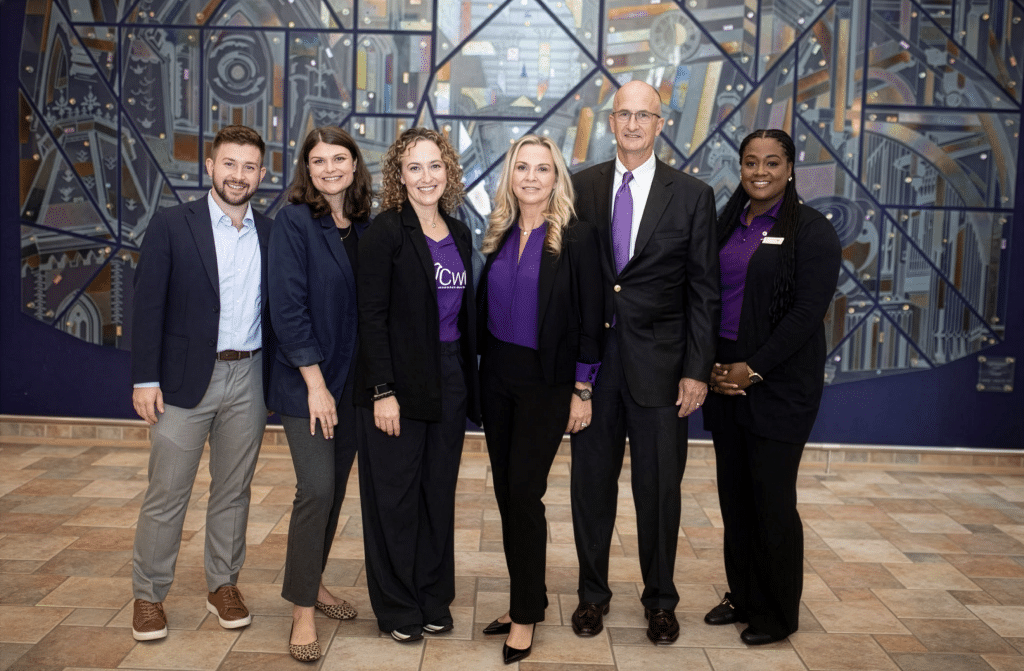
Cammie Wolf Rice’s son was 13 when he was diagnosed with ulcerative colitis in 1996.
He had surgery to remove his colon, spent three months in the hospital and was sent home with a 90-pill bottle of OxyContin — the brand name of a powerful prescription opioid pain medication — to alleviate his suffering.
It was the beginning of Christopher’s 14-year battle with addiction, which culminated in his death in 2016.
For Cammie, that was the catalyst to start speaking out against addiction stigma so that other families don’t experience the same loss.
“We have to talk about it because silence is deadly,” Rice said. “If Christopher had cancer, I would have had casseroles at my door.”
Two years after his death, on what would have been his 35th birthday, the grieving mother set out to establish resources that she said her son did not have — starting with in-hospital support.
She started the Christopher Wolf Crusade, also known as the CWC Alliance, to champion the idea of creating life care specialists who would work with medical staff to develop a holistic approach to pain management.
Rice partnered with Mercer University’s medical school to develop a curriculum for training such specialists. They focus on opioid education, addiction management and treatment strategies, positive mental health outcomes, and identifying and managing trauma and grief.
A pilot program launched at Grady Memorial Hospital in Atlanta led participants who saw an LCS to be discharged with 25% less opioid pain medication than those who did not interact with an LCS. Rice has now zeroed in on rural Georgia, where Mercer specialists say the rates of overdose and deaths are significantly higher than elsewhere in the state. Rice’s group collaborates with the university to determine which rural hospitals could most benefit from implementing a life care specialist role.
Rural places don’t have the same resources — such as case managers or social workers — as their more urban counterparts, Rice said.
This doesn’t mean rural areas can’t be leaders in the fight against opioid addiction, said Dr. Jean Sumner, dean of Mercer’s medical school and leader of the Georgia Rural Health Innovation Center.
“Sometimes it is easier to move that needle in a small community than it is in a city,” she said.
In September, Mercer and the CWC Alliance hosted a conference of students, health care providers and other agencies to facilitate conversations surrounding opioid misuse in rural parts of the Peach State.
“I have a lot of hope for rural communities,” Sumner said. In her mind, these areas “should be the laboratory … we should find solutions and then scale them.”
A new role at the bedside
Following her son’s death, Rice began to think about the knowledge she lacked that could have led to a different outcome for him, such as the addictive nature of opioids like OxyContin.
Rice said she wondered whether other parents and families also lacked full information about the risks of prescription medications.
“It’s like a fire inside of me to really warn people about the dangers of opioids and to know what questions to ask doctors,” she said.
Some individuals don’t even know they’re taking opioids, Rice added.
Of those who abused opioids in the 2000s, 75% started with a prescription, according to the National Institute on Drug Abuse.
Nurses and physicians don’t have the time to offer support and preventative education about opioids to every patient, Rice noted.
Life care specialists now operate in six different hospitals in Georgia, including the most recent addition in Valdosta. There is not yet a participating Macon medical facility, but the program has expanded to Arkansas.
In the past, many hospitals have not had systems for alternative pain control, according to Sumner, who also said she believes “every community should have a life care specialist.”
The specialist’s duties are modeled after the child life specialist role in medical facilities, Rice said. Child life specialists are trained health care professionals who help explain the medical process to child patients. They offer therapeutic distraction, explain medical procedures, and provide emotional support to young patients and their families.
Rice said she wants something similar for adults.
Empathy as a form of care
All life care specialists are certified with the Trauma Resource Institute, an international nonprofit organization focused on recovery and resiliency, and trained in coping skills for pain management.
“I’m really looking for what you’re born with, which is empathy and compassion,” Rice said.
The rest can be taught, she said.
Life care specialist Mandy Kuntz works at Mountain Lakes Medical Center in Rabun County.
Kuntz, who has gone through the substance recovery process herself and is attending school to become a clinical mental health counselor, is the first life care specialist deployed in rural Georgia. Rabun County is the northeasternmost county in the state.
“We’re very limited with the resources that we have in a small town,” she said, noting that they often have to send people to Atlanta for treatment.
Her mission is to treat patients like more than just a number or a nameless data point.
At the medical center, she spends her day talking to those admitted for drug or pain reasons, and she sees all individuals who are deemed a risk to themselves.
Her work doesn’t end when the patient checks out. Kuntz also follows up with them to make sure they continue on the right track and have the resources they need.
The program is now funded through Georgia’s opioid settlement funds, which come from nationwide lawsuits against opioid manufacturers and distributors, with the resulting payments required to support addiction prevention, treatment and recovery efforts.
Rice said she hopes to pave a sustainable financial future for the program by designating it as preventative care and having it covered by health insurance providers. She said her “North Star” goal would be to see life care specialists placed at every hospital in the country.
Before you go...
Thanks for reading The Macon Melody. We hope this article added to your day.
We are a nonprofit, local newsroom that connects you to the whole story of Macon-Bibb County. We live, work and play here. Our reporting illuminates and celebrates the people and events that make Middle Georgia unique.
If you appreciate what we do, please join the readers like you who help make our solution-focused journalism possible. Thank you
Author

Related Articles
‘A real feel-good time’: Locals share magical Christmas memories
Ten Maconites shared their Christmas memories and traditions with The Melody.

COLUMN: Ringing the bell is a life lesson for a little one
Ed Grisamore writes a letter to his grandson about ringing the bell for the Salvation Army.
Miracles Fine Art inspires a new generation of art-lovers
In 1990, the Redd family made it their mission to bring Black art to Macon. Now that art is being introduced to a new generation.