
At west Bibb senior complex, tenants unite over baffling water bills
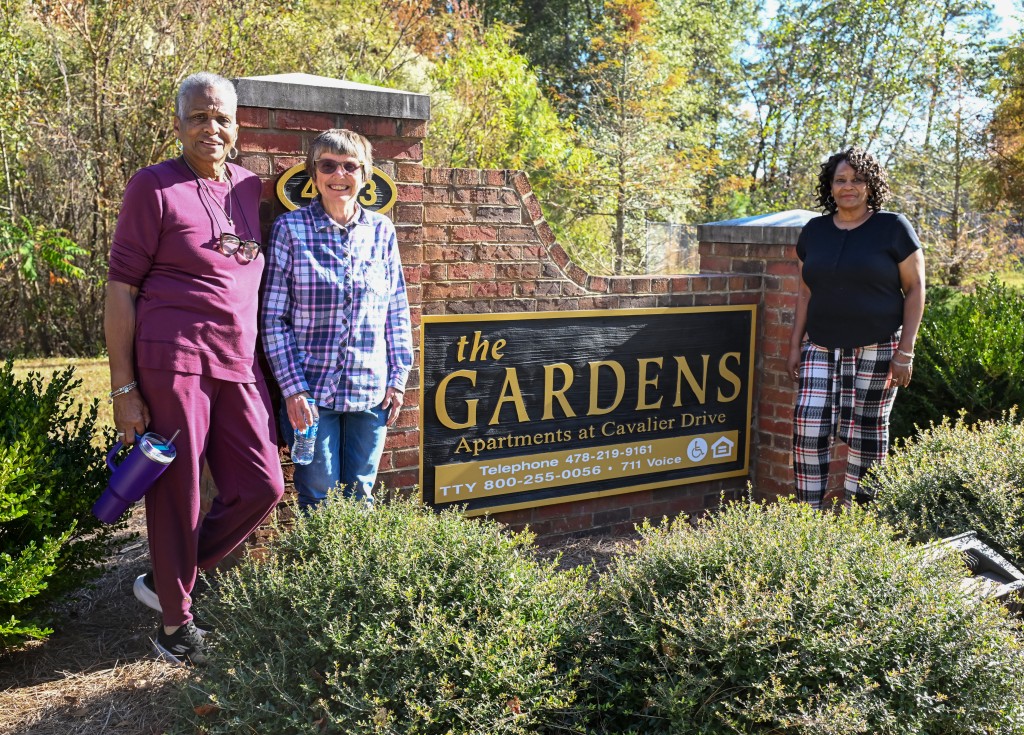
A trio of Macon women noticed ‘astronomical’ water bills and are trying to put a stop to it.
White paint covered the plastic faces of the small water meters inside a wall panel in apartments at The Gardens, an affordable housing development for seniors in west Bibb County.
At least, until recently.
It was a detail tenants hadn’t paid much attention to until earlier this year, when some of them began receiving water bills they describe as “astronomical.”
The bills, from a company with offices across the globe, showed seniors living alone in one-or two-bedroom apartments were using 10,000 gallons of water each month. That’s about what a family of four would use in 30 days, according to the U.S. Environmental Protection Agency.
A trio of women who live in one of the three buildings talked amongst themselves about the bills, which have put each of them in a financial bind as they are on a fixed income. The bills have increased from about $35-45 to more than $75 each month. Some have been as high as $124.
The three are doggedly pursuing answers.
“Most of us here are single women and single men, but the majority is single women,” 65-year-old Deborah Russell said. “We don’t have anyone, you know, to have our backs. We got to have our own backs — and each other’s.”
Russell and her neighbors, 78-year-old Joyce Mason and 62-year-old Pearl Stephens, banded together and decided to make some noise about it. They dubbed themselves “The Thunder Women.”

The women addressed the Macon Water Authority board at its Nov. 6 meeting, and what they described had some on the board raising eyebrows.
Apartments built in 2012 or later are required to have submeters, according to the Georgia Water Stewardship Act. But how those submeters are managed can vary from development to development.
Board Chair Gary Bechtel, a realtor, said apartment complexes typically have one master meter for the whole development, and management will either include water charges in the lease agreement or bill each tenant based on the master meter bill.
In this case, Bechtel said it appeared the tenants were being billed for “probably more than you use.” The company is caught up on its current water bills and in good standing, Bechtel said, so there is little the board can do to help.
Other board members urged the women to hire a lawyer, but that option would require even more money. All of them have to carefully budget expenses each month.
After the meeting, the Thunder Women returned to their apartments and scratched the white paint off the meter so they could start tracking their usage.
In search of a resolution, the trio of women also paid visits to the leasing office. They contacted the Georgia Advocacy Office. They called the billing company.
Russell said she asked a friend from church what to do about the spiking water bills, and the friend told her she needed to find a new place to live.
Her monthly rent for a one-bedroom apartment was $550 when she moved in when The Gardens first opened in 2019. Next year, she said her monthly rent will be $1,200.
“I looked and I couldn’t find nowhere no cheaper,” Russell said, adding that she enjoys the quietness of the apartments and its garden, a tranquil fenced-in patch by a gazebo and grill, where collard green leaves fan up from the dirt.
A tenant who uses a wheelchair made small ramps to access the garden and tends to each row.
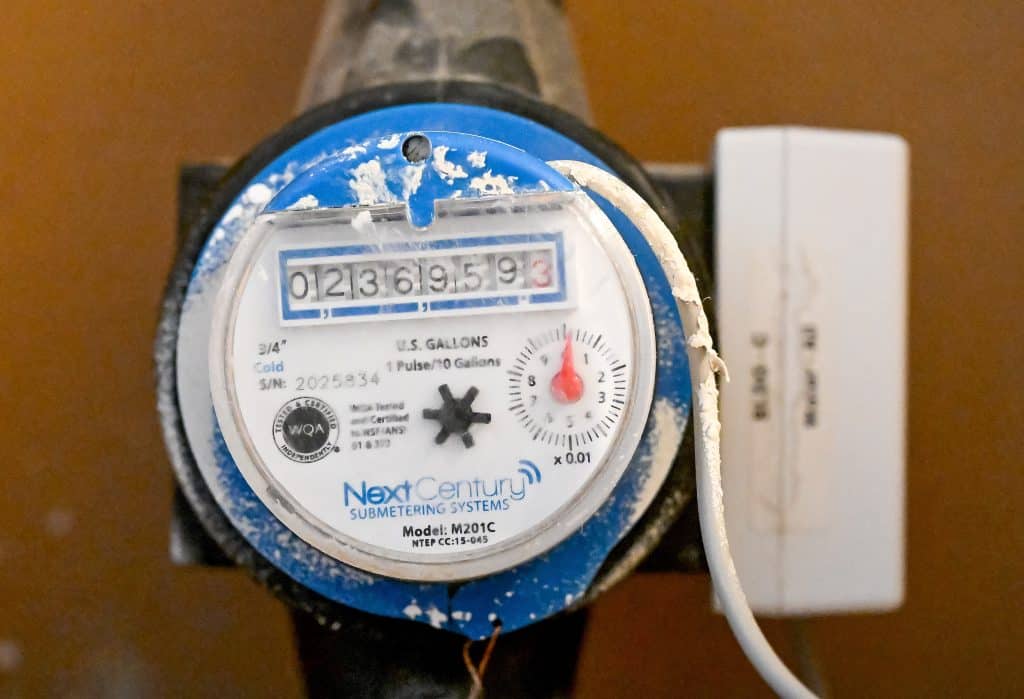
The Thunder Women also individually called the number listed on the bills from Yes Energy Management, the worldwide company the apartment complex recently began using.
“I know they’re in Europe because I’m the kind of person that calls and asks, ‘Where are you from?’” Mason said. “What we all are not doing is asking enough questions, and starting now we need to be advocates for ourselves. … Basically, they’re just getting richer and stealing from the poor.”
Thomas said several other neighbors she’s spoken to say they also received high water bills. She said she’s not home enough to use the thousands of gallons for which she’s billed.
“There’s a lot of people out here who’ve got a lot of problems like we do,” Thomas said. “They’re just scared to come forward.”
Mason said some neighbors keep quiet about the bills because “they’re afraid. They feel like they’re going to get evicted.”
The Macon Melody obtained two years of billing histories for the apartments from the Macon Water Authority.
Those records show the monthly water bill for the entire complex has ranged from as low as $1,620 in October 2023 to as high as $3,125 in November 2025. The apartment also has a history of paying late, receiving notices of service disconnection and collection calls from the authority.
Though the tenants are billed by Yes Energy Management for water, they write checks or issue money orders to Investors Management Co., the Valdosta-based company that owns the complex. Meanwhile, the water authority sends the bill to a post office box in Hicksville, New York, for Gardens Macon LP.
Reached by email last week, David Brown, president of Investors Management Co., said he would look into the water bills because “the usage seems very high.”
Earlier this week, Thomas and Mason said maintenance workers changed the meters in their apartments.
Leah Daugherty, chief operating officer for Investors Management Co., responded to an inquiry from The Melody via email Tuesday and said the company was not aware the meters had been painted over and is working on stripping the paint “so they are clearly visible to both the residents as well as our staff.
“As is our standard practice, we are in the process of submitting reimbursement requests for all residents whose water bill was higher than the average usage. We are enforcing this across the board for all residents whose usage is higher than should be normal; not just the ones who have reported these high bills to the management office.
“This will be completed by the end of the week. In some cases, maintenance staff was able to repair running toilets, etc. that were causing these high usages; in other cases, the bills were high and then came back down to a normal range with no maintenance repairs made.
“We are in communication with YES to determine the cause of this. The Gardens nor the management company profit in any way from the water/sewer utility service provided by YES to the residents.”
The apartment complex was built using low-income housing tax credits. The tax credits are competitive and administered by the Georgia Department of Community Affairs. In short, corporate banks get a break on annual taxes if they loan money to a developer to build or renovate low-income housing.
The state department ensures rents are capped in accordance with a land covenant requiring the complex to ensure 80 of its 100 units are reserved for low-income residents and rent is capped on those for at least 15 years.
Amy Marland, special project specialist at the state department, said her office acts as a kind of last resort for complaints from tenants at apartments built with tax credits.
“We kind of swoop in and get everything resolved so that it’s satisfactory to the resident and that ownership is doing the right thing,” she said. “And they need to be doing the right thing. The management companies, there are certain things they’re supposed to do and if they don’t do them, they get fined. Most of the time, they don’t want to have a fine.”
Marland said her office would look into the issue of water bills at The Gardens, but “most of the time we have owners and management companies that really want to do right by the residents, which they should because … they deserve to be living in a healthy place and a safe environment, especially the seniors. I think they get overlooked because of their age.”
Before you go...
Thanks for reading The Macon Melody. We hope this article added to your day.
We are a nonprofit, local newsroom that connects you to the whole story of Macon-Bibb County. We live, work and play here. Our reporting illuminates and celebrates the people and events that make Middle Georgia unique.
If you appreciate what we do, please join the readers like you who help make our solution-focused journalism possible. Thank you
Author

Related Articles
It formed to save downtown Macon. Now Urban Development Authority’s reach is much expanded
When the Macon Mall opened in 1975, the Macon-Bibb County Urban Development Authority was formed to save downtown. Now, a half century later, it is working to revitalize the mall.
The quiet authority shaping the future of Robins Air Force Base
The Central Georgia Joint Development Authority’s mission is to protect Middle Georgia’s largest employer.
The authorities that run Macon-Bibb: A primer
Get to know the authorities that make decisions on everything from water bills to housing across Macon-Bibb County.