
Bringing AI to Macon’s classrooms: supporting teachers and students
AI is not here to replace teachers. Our educators are the heart and soul of the classroom. But what if AI could handle some of the busywork and free up teachers to focus on what they do best—connecting with students and helping them grow?
As artificial intelligence (AI) rapidly changes the world around us, it’s only natural to ask: What role should AI play in our local classrooms? Here in Macon, where our schools are striving to provide every student with the tools for success, AI could offer an exciting opportunity to enhance both teaching and learning. While I’ve touched on AI in education before, this time I want to focus on the potential right here in our community—how AI can support our teachers, empower our students and strengthen STEM education.
Supporting teachers: AI as a teaching assistant
Let’s be clear: AI is not here to replace teachers. Our educators are the heart and soul of the classroom. But what if AI could handle some of the busywork and free up teachers to focus on what they do best—connecting with students and helping them grow?
Imagine a teacher preparing lesson plans. AI-powered tools like ChatGPT can help generate ideas for classroom activities, tailor lessons to different learning levels, or even provide quick quiz questions. Need a draft of a letter to parents? AI can whip one up in seconds, saving valuable time.
Grading is another area where AI can assist. For objective assignments like multiple-choice quizzes, AI systems can grade and analyze results quickly. This allows teachers to identify which concepts students are struggling with and adjust their teaching accordingly.

Administrative tasks, like compiling progress reports or writing routine emails, can also be streamlined with AI. When teachers spend less time on paperwork, they can devote more attention to their students.
Engaging students: AI as a learning partner
For students, AI opens up exciting new ways to learn, especially in STEM (science, technology, engineering and math). Personalized tutoring apps powered by AI can adapt to each student’s pace. If a child struggles with fractions, for instance, the app can provide extra practice until they master the concept. If another student is ready for algebra, AI can challenge them with more advanced material.
Interactive tools can also spark creativity. Students can use AI to generate stories, create digital artwork or even build simple computer programs. Platforms like Scratch, a coding environment for kids, increasingly incorporate AI features to guide young programmers.
For STEM subjects, AI can simulate complex experiments that might not be possible in a traditional classroom. Virtual labs can allow students to explore chemistry reactions or physics concepts safely and at their own pace. This kind of hands-on learning makes STEM more accessibleing.
Bridging the STEM Gap in Macon
We know that access to quality STEM education can vary depending on a school’s resources.
AI could help bridge that gap. Even in classrooms without the latest technology, AI tools can run on basic devices like tablets or Chromebooks. This means students across Macon, from North Bibb to South Macon, could have similar opportunities to explore STEM fields.
Imagine after-school AI and coding clubs, where students work together on projects like building chatbots or creating simple video games. Partnerships with local institutions like Mercer University, Wesleyan College, Middle Georgia State University, Central Georgia Technical College or the Washington Memorial Library could provide spaces and support for these programs. AI isn’t just for tech giants; it can thrive in our own backyard.
Challenges and concerns
Of course, introducing AI into classrooms isn’t without challenges. Teachers need training to feel comfortable using AI tools. Professional development sessions focusing on prac-tical classroom applications could make this t ransition smoother.
There’s also the human element. AI should never replace the warmth and understanding that a teacher brings to a classroom. Technology should enhance human interaction, not reduce it. We must also remain cautious about issues like bias in AI systems and ensure that the content students receive is accurate and inclusive.
What’s next for Macon’s schools?
So, where do we go from here? School leaders and parents can start by exploring the potential of AI. Pilot programs could introduce AI-powered learning platforms into a few classrooms, giving both teachers and students a chance to experience these tools firsthand.
Community workshops, like the AI sessions I conduct, can provide families with a better understanding of how AI works and how it can support education. Collaboration between schools and local organizations can ensure that AI is implemented thoughtfully and equitably.
For questions or comments, visit askaijoe.com.
Before you go...
Thanks for reading The Macon Melody. We hope this article added to your day.
We are a nonprofit, local newsroom that connects you to the whole story of Macon-Bibb County. We live, work and play here. Our reporting illuminates and celebrates the people and events that make Middle Georgia unique.
If you appreciate what we do, please join the readers like you who help make our solution-focused journalism possible. Thank you
Author

Related Articles

The helpers need our help now
When federal aid sources evaporate, the lines at food banks and community pantries get longer. Shelves empty faster and phones ring more.

‘Big Pig Jig’ tradition always high on the hog
Longtime BBQ judge Jack Cartwright shares his recipe for Coca-Cola BBQ Sauce.
‘Quilt of Names’ brings lost names to the light
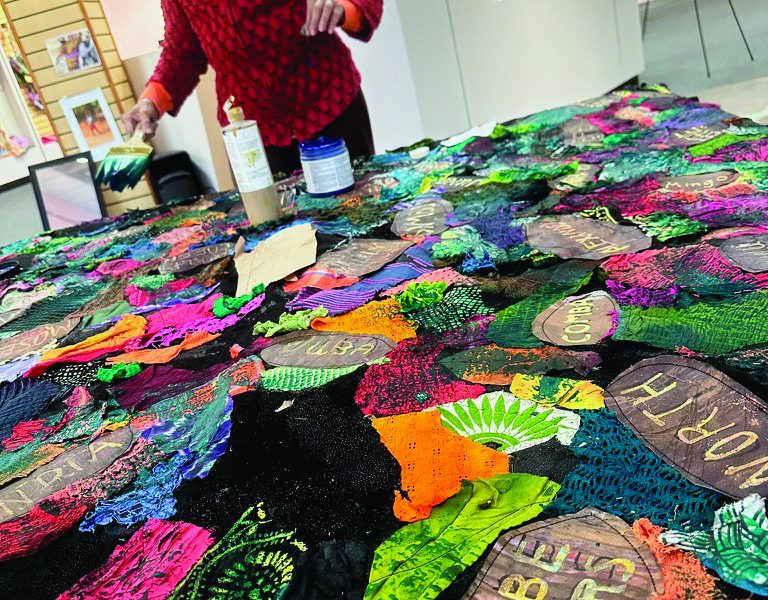
Wini McQueen’s “Quilt of Names” honoring names lost during the decades of slavery in the U.S. and years that came after has its debut showing Oct. 31 and Nov. 1 from 11 a.m. to 3 p.m. each day at Oak Ridge Cemetery