
Commissioner proposes more stringent curfew to address local violence
County Commissioner Stanley Stewart plans to introduce an ordinance to expand the current curfew for residents under the age of 18.
A new chapter for The Melody
Our team and coverage are moving to The Telegraph. Make sure you look for The Melody's community-first journalism as a section highlighting the people, places and moments that are the rhythm of Macon.

Responding to a recent weekend of violence that left four people dead and nine others injured in Macon, County Commissioner Stanley Stewart says he plans to introduce an ordinance to expand the current curfew for residents under the age of 18.
The change is not a “cure-all,” Stewart acknowledged. “It’s just one initiative to try to make sure that we, No. 1, as Macon-Bibb, are doing something proactive rather than being just reactive to a situation. This is one of many things.”
Stewart proposes raising the age of individuals affected from 16 to 17 and extending the curfew to run from 11 p.m. to 6 a.m. Currently, it begins at midnight and ends at 5 a.m. He announced his proposal after a rash of shootings that occurred between Feb. 21 and 22. Commissioners are also discussing other measures to combat crime, he said.
But some experts question the effectiveness of juvenile curfews in reducing the number of young people who participate in or become victims of crime.
Thaddeus Johnson, an assistant professor at Georgia State University in the Department of Criminal Justice and Criminology and former Memphis police captain, notes that there isn’t any evidence that suggests there is public safety value in enforcing a curfew. He said he understands commissioners’ urge to take some action that might keep citizens safe.
But, when it comes to a curfew, “if you’re going to use it, it needs to be time limited,” said Johnson. “You need to make sure that with juveniles who come in contact with the system, they would do so in a way that does not ruin them and their family’s trajectory.” And officials need to make sure that the curfew is enforced “in a just and fair way that won’t impact how these communities feel about the police and the system already.”
Macon-Bibb Sheriff’s Office Col. Henderson Carswell said the department has an outreach unit that works with juveniles, and most of its patrol and specialized units are trained in how to deal with underaged residents.
Last year, two juveniles were among the 24 killed in Macon. Eighty juveniles were charged with committing violent offenses. He said curfews can be helpful as part of a broader strategy.
“It can help because it does give us another mechanism to approach juveniles or folks underage when they’re in those areas at those restricted times,” Carswell said. “It gives us a tool to approach them with.”
If the curfew adjustment is passed, it will immediately go into effect. Right now, juveniles who are caught breaking the curfew are reunited with their parents or guardians if they weren’t involved in criminal activity. Under Stewart’s proposal, if minors are caught out between 11 p.m. and 6 a.m., their parents could face penalties such as a $1,000 fine or six months in jail, the commissioner said.
For Johnson, imposing fines on parents as a punishment for youth being caught out during a curfew could be problematic. Many of them come from marginalized or underserved communities who need support.
“Fines only further push people away from being willing to come forward to call public service when they are having issues with their children,” he said. Also, he added, it could impact affected families’ “views of legitimacy of the system or put folks in debt when they actually need help and support.”
Looking at the broader issue of gun violence involving juveniles, Johnson understands that the public is concerned about the next generation coming up. But people are shot more often by family members, he said.
According to Col. Carswell, most young people out past curfew are just hanging out. Some are engaged in behavior that could lead to them committing felonies. But, many times, juveniles who commit violent crimes tend to do so in the home against family members.
Johnson said that it’s important to think about where youth are developmentally. Programs like Roca, which has locations in three states, or Advance Peace in California connect at-risk young people with services that provide “cognitive behavioral therapies to impact their thinking, to control the impulse control,” he said.
Juvenile violence reduction plans work best when they are tailored specifically for that age group, he said.
Macon-Bibb county has Macon Violence Prevention, an initiative that uses evidence-based strategies to better public safety. The sheriff’s department also has a mentorship program for juveniles and Consider the Consequences, an intervention program that exposes youth to consequences that could come from some of their choices.
The next Macon-Bibb Board of Commissioners meeting will be Wednesday, March 18.
Author

Related Articles
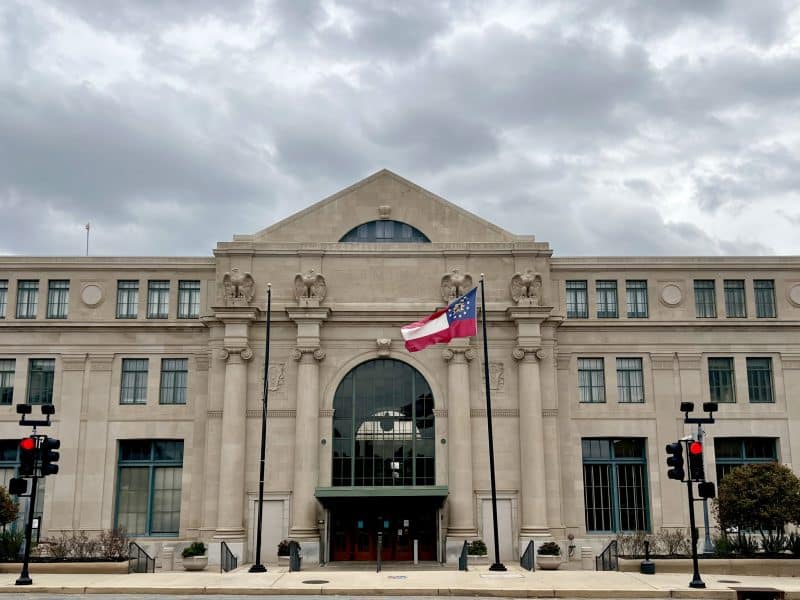
All aboard? GDOT asks residents to weigh in on restoring passenger train service to Macon
The Georgia Department of Transportation is surveying the public through Aug. 6 to gauge interest in Atlanta-to-Savannah rail service that could include a stop in Macon.
Are corporate investors responsible for one-third of all housing sales since 2020?
Learn the answer to this question in the fact brief in partnership with Gigafact.

Macon’s Boys and Girls Club closed for 90 days, families search for alternatives
The club had many after-school programs that are now on hold.