
Economists see transition year ahead for local economy
Slower but positive growth is expected in the Middle Georgia region heading into 2026, economists told locals at a Jan. 23 UGA luncheon.

Macon and Middle Georgia are heading into what economists describe as a transition year, marked by slower but still positive growth as trade tensions, automation and a tightening labor force reshape the regional economy.
The area will experience “rapid change” from those factors, reported Greg George, director of Middle Georgia State University’s Center for Economic Analysis, during a Jan. 23 luncheon for business and political leaders at the Edgar H. Wilson Convention Center in Macon. The event was held by the University of Georgia in partnership with the Greater Macon Chamber of Commerce.
Shifts and challenges
Last year brought small shifts to Macon’s economy, with the unemployment rate and home prices increasing, George said.
Unemployment, median income and home prices run about “a point-and-a-half higher” in Macon-Bibb County compared to neighboring Houston County, but the counties’ numbers are somewhat connected, George said.
George said Macon should collaborate with neighboring counties and think regionally, since business development in one area often spurs development in others.
“Often people tend to compete with each other, and that drives you away from the best outcome,” added Santanu Chatterjee, interim dean of the UGA Terry College of Business. “It’s all about attracting viable, sustainable jobs to the region.”
He did note some areas of concern. The state’s population saw significant growth during the pandemic as remote workers moved in. That gain is expected to taper off soon, he warned.
Chatterjee also said international trade does impact a significant portion of the Georgia economy — but he noted that local policymakers have little control of some political issues, including the impact of President Donald Trump’s tariffs on certain countries and goods.
Potential developments
Data centers pose an economic question mark for the region, Chatterjee noted.
Georgia ranks first in the nation in data center development, and while new centers will create hundreds of construction jobs and some operating jobs, local governments need to ensure proper resources, like water and power, are supplied to run these centers, Chatterjee said.
“It’s all about how you manage new technologies and make them more sustainable,” Chatterjee said.
He said the expansion of data centers across the state could also attract manufacturing companies and firms specializing in artificial intelligence.
Information sessions
Chatterjee said UGA is sponsoring events like this throughout the state to help business owners and local leaders adapt to shifting circumstances. The events also inform the public about policy changes and how they impact the cost of living.
“You can pivot, but to do that, you have to have good information, you have to have good data, you have to have good insights … so that you can start planning for the future,” he said.
Before you go...
Thanks for reading The Macon Melody. We hope this article added to your day.
We are a nonprofit, local newsroom that connects you to the whole story of Macon-Bibb County. We live, work and play here. Our reporting illuminates and celebrates the people and events that make Middle Georgia unique.
If you appreciate what we do, please join the readers like you who help make our solution-focused journalism possible. Thank you
Author

Related Articles
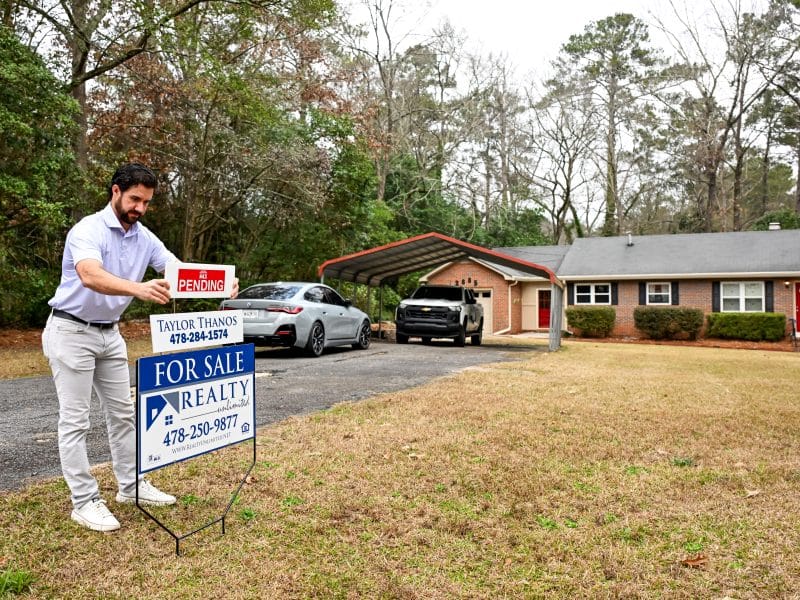
Macon housing market shifts toward buyers as listings linger longer
Prospective homebuyers have more options and stronger negotiating power, said Taylor Thanos, president of the Middle Georgia Association of Realtors. Prices in Middle Georgia are “more attractive” than the rest of the country, he said.

MLK in Macon and Dublin: A road map
Look back on the civil rights leader’s time in Middle Georgia to celebrate the holiday.

Bibb school board acknowledges $5.5 million budget hole
The Bibb County Board of Education voted 4-3 to pass a budget amendment, which included the new expenses but did not advance $1.2 million in unexplained cuts.