
Food critic Raskin serves culinary news from Macon home
Food journalist and founder of The Food Section, Hanna Raskin recently moved to Macon.
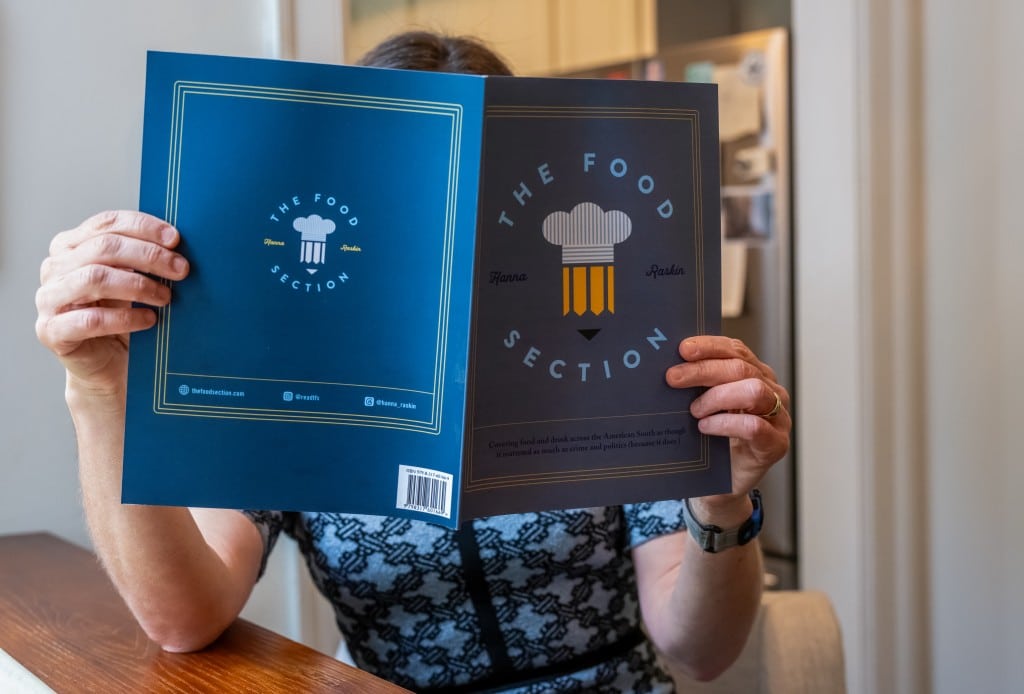
After more than a decade in Charleston, South Carolina, Hanna Raskin said no one ever invited her over for a home-cooked meal.
Apparently, most folks don’t want an award-winning food critic as a dinner guest.
But, Raskin said, it’s not always about serving up a perfectly curated and balanced dish.
There’s a time and a place for everything in food, she said. And she would know. She’s the founder of The Food Section, the first solo newsletter to win a James Beard Award and an award from the Society for Features Journalism — and a relatively new Maconite.
She moved to the area with her husband last summer, where she now runs her publication — which covers nine Southern states — from her home in Shirley Hills.
Although she attended culinary school for a year to gain a foundational knowledge of chef’s practices, Raskin said you don’t need to be a professional cook to be a food critic.
Raskin makes it clear: She isn’t a Michelin inspector who assesses dishes by technical cooking standards and metrics. She isn’t in the business of telling readers whether or not a chef cooked eggs perfectly, and she admitted she is no stranger to a quick and easy pizza made with Publix dough.
Instead, her culinary writing focuses more on “ambiance and service.” When she sits down at a restaurant table and grabs the menu, she thinks: “What kind of experience is this restaurant trying to create, and were they successful in creating it?”
So, what brought Raskin to Macon? The journey to one’s heart, some say, is through the stomach — and Raskin had quite the culinary journey before settling in the heart of Middle Georgia.
‘Roadfood’ and writing chops
Despite her affinity for Southern cuisine, Raskin grew up in a Jewish household in Ann Arbor, Michigan. Her father is from Chicago, her mother New York City.
She described her mother as a “working woman,” who was by no means a notable home cook. As a result, Raskin’s interest in food developed beyond her own family’s kitchen.
“I was totally intrigued by restaurants and all that happened in food culture outside of the home,” she said.
Raskin credited “Roadfood,” a book series by Jane and Michael Stern, with sparking her love for food writing. She said the series brought forward a “pivotal moment in food.”
The first “Roadfood” book — published in 1977 and often found tucked away in a traveler’s glove compartment — offered a comprehensive guide to hole-in-the-wall greasy spoons across the country.
“It was really the first book to recognize and honor vernacular food culture in this country,” she said.
Raskin recalled writing a letter to Michael Stern when she was in high school, inquiring about succession plans for the popular food guide. However, it was Zingerman’s Delicatessen in Ann Arbor that helped Raskin develop her writing chops.
Opened in 1982, the local deli and gourmet retailer released a monthly food catalog that contained detailed written descriptions and no pictures.
“That was my first formative experience with food writing — the idea that, ‘Wow, you can put something into words to connect people with a flavor that can be potentially life-changing or, even more so, educational or edifying in a way they never imagined,’” Raskin said.
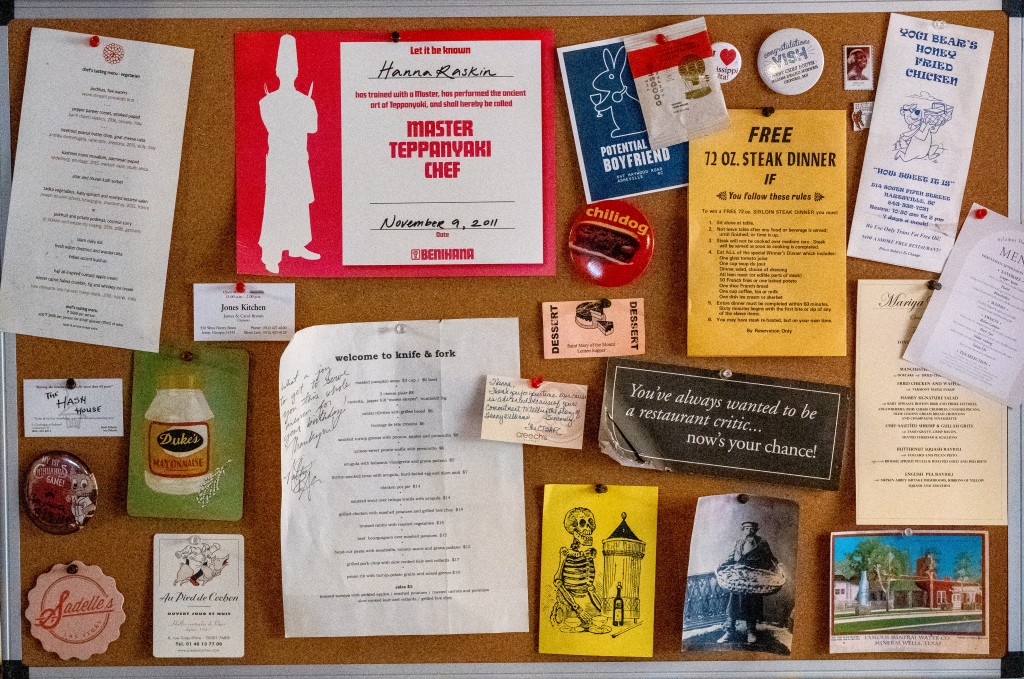
Covering everything but food
Raskin didn’t start her career as a food critic. She studied history and politics at Oberlin College, pursuits that deepened her appreciation for the South. She also worked at the college’s student newspaper.
Her first job out of college brought her to The Commercial Dispatch, a newspaper in Columbus, Mississippi, where she covered everything but food. She said her year in the Magnolia State made her realize just how good food can be and how integral it is to conversation and community-building.
After Mississippi, she covered the night cop beat in Tucson — back in the days when reporters were still embedded in desks at police stations. Raskin departed journalism for a brief while, deciding she wanted to work in museums — and earning a master’s degree in American history and museum studies through the Cooperstown Graduate Program at the State University of New York.
During her studies, she decided museum work wasn’t for her. She instead embraced her love for all things culinary, writing her master’s thesis on the relationship between Jewish people and Chinese food.
Serving up food columns
After earning her master’s degree, Raskin relocated to Asheville, North Carolina, where she worked several odd jobs, including leading mountain bike trips and waitressing.
“There is nothing that teaches you to describe food more than having to sell it,” Raskin said.
By the early 2000s, Raskin officially hit the dining scene when Asheville’s alt-weekly newspaper, Mountain Xpress, hired her as its first food writer. She later worked as a food critic in Dallas and Seattle before settling in Charleston in 2013 to write for The Post and Courier, the city’s main newspaper — all the while collecting a full plate of accolades and awards for her work.
A dream and a grant
In 2021, Raskin applied for a grant from Substack, a publishing platform for independent journalists. She soon forgot about her 100-word application — until she found out she won the prize.
Substack’s seed money helped her launch The Food Section, which became her full-time occupation.
The name of her publication has several meanings, Raskin said. As an experienced food writer, she was already accustomed to calling people and telling them she was a writer from “the food section.”
Additionally, Raskin said she views the South as the food section of America, and the name also serves as an homage to the women’s food sections of newspapers popular in the 1960s-80s.
Raskin started her Food Section journey by taking a train ride through the South to gain a sense of how the food scene had changed during the COVID-19 pandemic.
The writing work then started in earnest. She wrote about a seafood fraud scandal in the coastal South, how a Mississippi restaurant owner helped bust a potential murder suspect, North Carolina’s best liquor retailers and more.
Today, The Food Section has 13,000 readers, including 750 paying subscribers.
Making something in Macon
As Charleston grew and prices skyrocketed, Raskin said she struggled to recognize the city she knew and loved.
She was ready to put down new roots, but Macon’s thriving live music scene is not what drew Raskin — who said her 4’10” stature makes enjoying live concerts challenging — to the Peach State.
It was the city’s “let’s all get together and make something” vibe. It reminded her of Asheville in the early 2000s.
Does the “City of Soul” feed the soul? Raskin said she thinks so. She said Macon is an unparalleled lunch town, but there’s room for growth in the dinner scene.
The Food Section, once a one-woman operation, continues to prosper from Macon — now with a team of four drink writers and four food writers spread throughout the South. The publication also recently expanded its Charlotte coverage, where the work is spearheaded by three food correspondents.
Recently, she drove 1,900 miles on a food tour of Interstate 40. She’s collaborating with an artist to create a glove compartment-friendly food map. It’s set to release in June and is an homage to the original “Roadfood” guides.
And, that letter she wrote to Michael Stern years ago? He doesn’t remember the note from the avid food enthusiast — but he certainly knows Raskin now. In fact, he writes for her as a food correspondent based out of his home in Aiken, South Carolina.
It’s a full-circle moment — or perhaps a drive-thru on the highway of life — for the new Maconite.
Before you go...
Thanks for reading The Macon Melody. We hope this article added to your day.
We are a nonprofit, local newsroom that connects you to the whole story of Macon-Bibb County. We live, work and play here. Our reporting illuminates and celebrates the people and events that make Middle Georgia unique.
If you appreciate what we do, please join the readers like you who help make our solution-focused journalism possible. Thank you
Author

Related Articles
Messages of connection and hope: reflections on Easter
Community members came together Easter Sunday at Loaves & Fishes Ministry of Macon. At the center of it all was Minister Debra Singleton, who led the service with intention, compassion and a message rooted in love.
Redding Center to celebrate one year, plus a mix of upcoming events
The Otis Redding Center for the Arts, a state-of-the-art,15,000-square-foot facility at the intersection of Cotton Avenue and First Street turns one year old this Saturday.
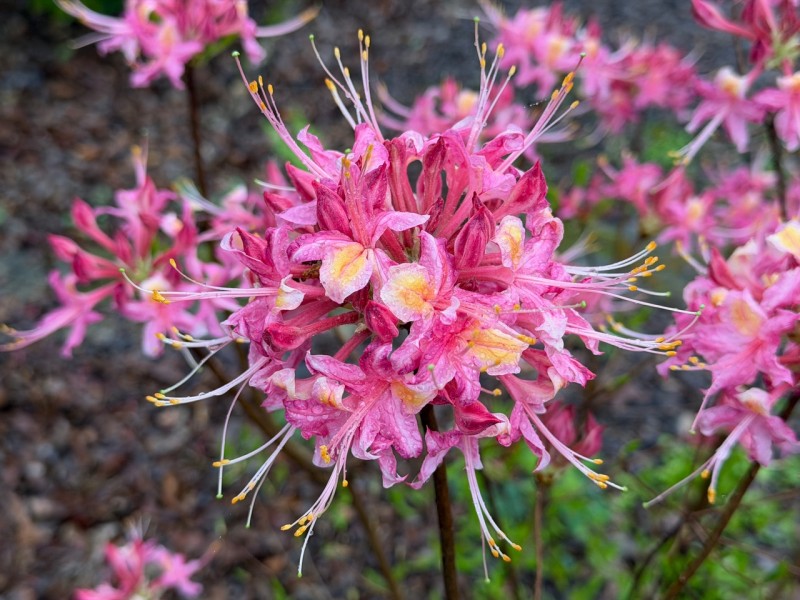
A parade of color: the magic of native azaleas
With careful planning and species selection, one can have native azaleas blooming from March into September in Georgia.