
Land bank converts tax-delinquent properties into community assets
This “Power” installment examines the role of the Macon-Bibb County Land Bank Authority.
This story is part of “Power,” a series by The Melody examining local authorities — quasi-governmental bodies that make consequential decisions about housing, water, transit, development, health care and public spending — that shape life in Macon-Bibb County. A version of this story was originally published in April 2025.
The old Bateman & Wade store operated for decades on the invisible line separating the Pleasant Hill neighborhood from the Ingleside neighborhood.
The era of butcher paper-wrapped meat, candy and salted fish ended when the specialty grocer closed in the early 2000s.
After nearly a decade of abandonment, the small building at Rogers Avenue and Clayton Street was sold in 2013 to a man who converted the place into “R and R Food Mart,” a convenience store with coin-operated gambling machines and smoking allowed inside.
A year after he bought the property, the new owner was among those arrested in the county’s largest-ever commercial gambling raid. The owner lost his liquor license in 2017, which hit the business hard. Not long after that, the store closed for good.
As the years passed, the vacant building seeped into disrepair, turning a once-proud urban landmark into an eye sore.
The owner came to an agreement with Macon-Bibb County in late 2023.
In exchange for ownership of the property, the county agreed to have the Macon-Bibb County Land Bank Authority Board extinguish $9,300 in unpaid property taxes.
The county demolished the building then deeded the property to the land bank authority.
The corner lot today is a greenspace where young saplings are taking root. What will become of the property in the future is unclear, but whatever it is will be better than an abandoned, tax-delinquent eyesore. The county has said the community will have input on what becomes of the land.
The deal to get the property could not have happened without the land bank, the only government entity with the special ability to extinguish back taxes on properties it owns. That is because the land bank has a renewable 10-year agreement with the county and school district to do so.
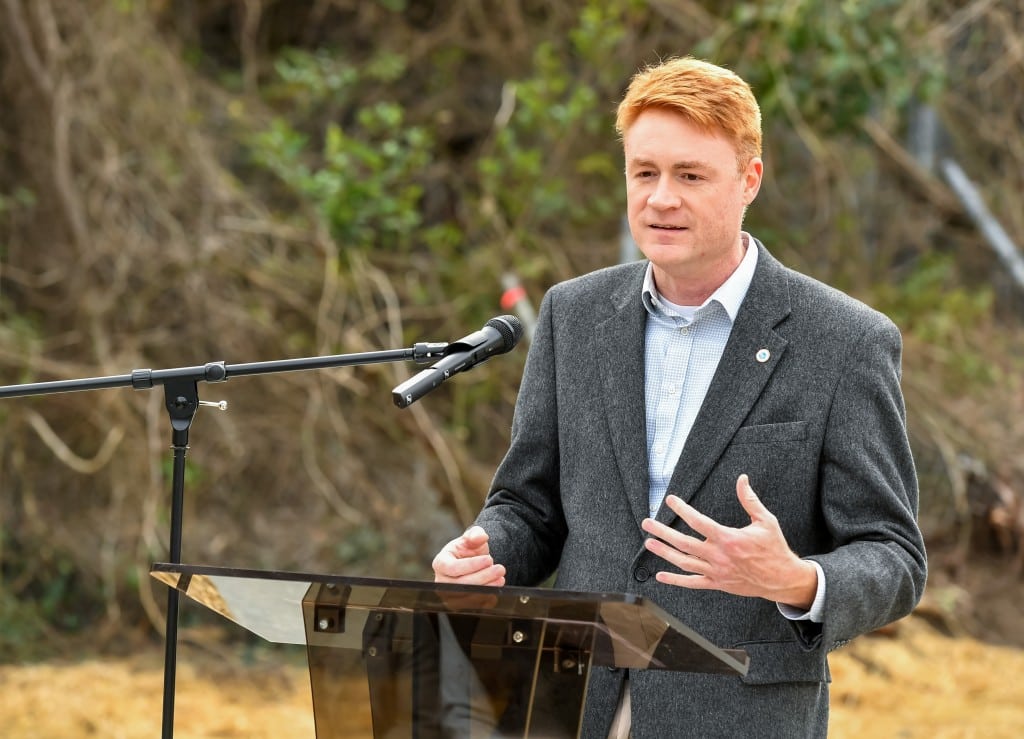
“The main thing we can do that no one else can do is abate property taxes,” said Everett Verner, executive director of the Macon-Bibb County Land Bank Authority. “We’re run by a board of directors appointed by the local government.”
Land bank authorities have been operating in Georgia for 30 years. The first one was created by Fulton County and the city of Atlanta in 1991. The second one was created by the city of Macon and Bibb County in 1996. As of this year, there are 29 land bank authorities across the state, according to the Georgia Association of Land Bank Authorities.
Land banks are tools counties can use to get unproductive tax-delinquent properties, like the old Bateman & Wade, into something productive and useful. Powers of the authority are spelled out in state law and then approved by a resolution at the local government level.
The Macon-Bibb County Land Bank acquires, holds, develops and disposes of properties in coordination with the county and the Macon-Bibb County Tax Commissioner’s Office.
That includes homes owned by people who have not paid property taxes, which subtract from the county’s tax base. The county ultimately wants those properties back on the tax rolls and into productive use, so the land bank works with the tax commissioner and county to identify properties to be sold at a courthouse auction and people or entities interested in developing them.
The land bank also has its own auction each quarter.
“We have an agreement with the tax commissioner where we can actually start the tax foreclosure and that guarantee with him is that we’ll show up to make an opening bid,” Verner said. “That’s the main way we get properties lately, over the last few years. We also buy them directly, depending on the project.”
Verner said the land bank’s current priority is affordable housing and it will work with anyone that wants to work with it, though typically it works with entities or individual developers.
“We work really well with nonprofits when we hold property long term for development,” Verner said, adding that Habitat for Humanity, Historic Macon, River Edge and the Macon Housing Authority are among agencies the land bank has worked with the most.
Fast facts
— The land bank authority’s website is maconlandbank.org.
— The Macon-Bibb County Land Bank Authority Board meets at 4 p.m. on the third Monday of each month at 688 Walnut Street, Suite 102. The public can attend these meetings also through Zoom. Visit the authority’s website for the link.
— Authority board members are nominated by the mayor and approved by the county commission. The board’s bylaws include no limit on the number of four-year terms board members can serve.
— Current board members include Tom Ellington, who served from 2010-19 and was reappointed in 2021; Sundra Woodford, appointed in 2019; Veronica McClendon, appointed in 2022; Sylvia McGee, appointed in 2015; and Bert Bivins, who has served on the authority board since its creation in 1996.
Before you go...
Thanks for reading The Macon Melody. We hope this article added to your day.
We are a nonprofit, local newsroom that connects you to the whole story of Macon-Bibb County. We live, work and play here. Our reporting illuminates and celebrates the people and events that make Middle Georgia unique.
If you appreciate what we do, please join the readers like you who help make our solution-focused journalism possible. Thank you
Author

Related Articles

Economists see transition year ahead for local economy
Slower but positive growth is expected in the Middle Georgia region heading into 2026, economists told locals at a Jan. 23 UGA luncheon.
Macon housing market shifts toward buyers as listings linger longer
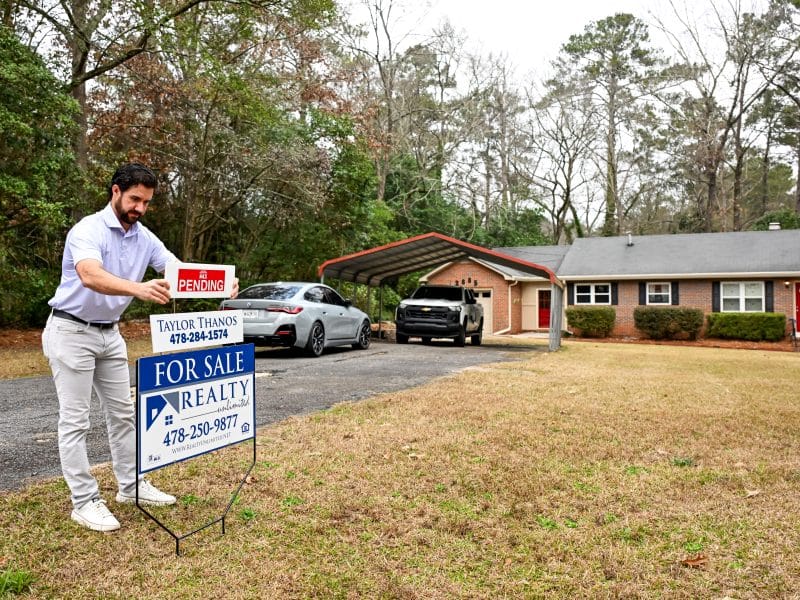
Prospective homebuyers have more options and stronger negotiating power, said Taylor Thanos, president of the Middle Georgia Association of Realtors. Prices in Middle Georgia are “more attractive” than the rest of the country, he said.
MLK in Macon and Dublin: A road map
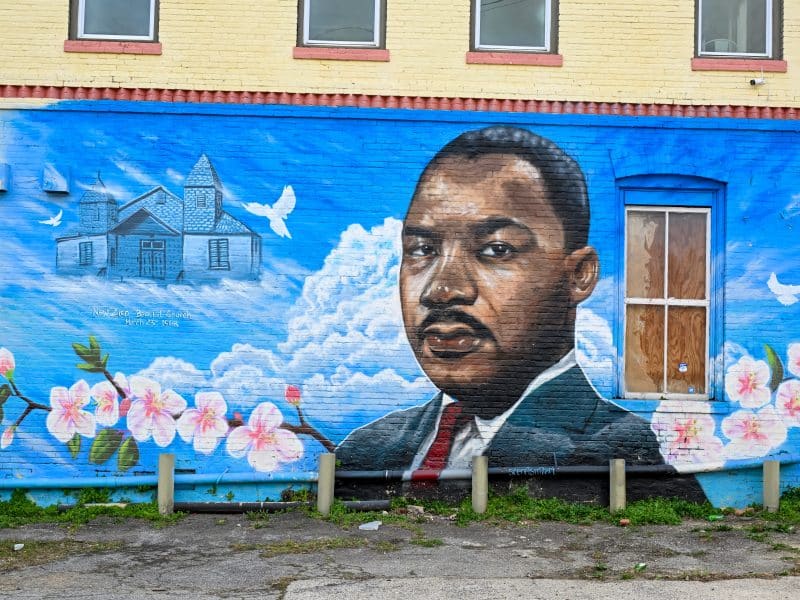
Look back on the civil rights leader’s time in Middle Georgia to celebrate the holiday.