
Lawmakers shouldn’t choose their voters
Macon leader DeMarcus Beckham voices his thoughts on local redistricting news.
A new chapter for The Melody
Our team and coverage are moving to The Telegraph. Make sure you look for The Melody's community-first journalism as a section highlighting the people, places and moments that are the rhythm of Macon.
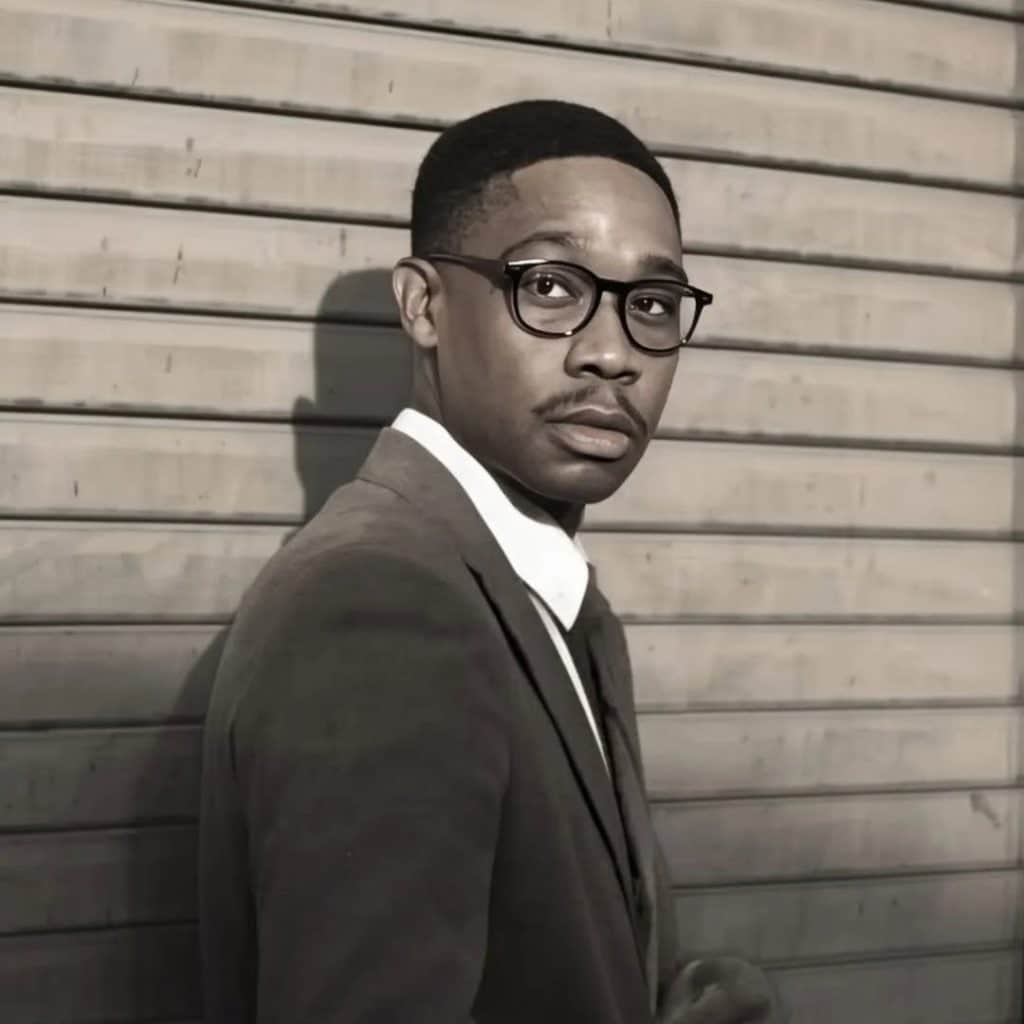
There is a kind of work in this country that most people never see. It is the work of tending to a democracy that is always more fragile than we care to admit. That is the work of an election poll clerk. And before a single ballot has been cast, we sit through hours of training, learning rules, rehearsing procedures and practicing how to guide a stranger.
In those rooms, I was often a few decades younger than the other clerks. But still, we all share a commitment and responsibility to the oath, to protect each voter’s dignity and to do it without fear or favor. We learned how to walk people through the touchscreen machines and how to print and verify ballots. We count every pin, every stylus, every scrap of paper, knowing the smallest thing out of place can shake someone’s faith in the whole system.
On Election Days, we guide voters, step by step, toward the moment their voice becomes a vote. As a poll clerk, we are bound by oath to admit no one to vote unless we firmly believe they are registered and entitled, and to carry out our duties impartially, faithfully and without delay. That oath is not poetry; it holds a lot of weight, privilege and responsibility. It’s our guarantee of free, fair and secure elections.
And it is precisely because of that oath that I cannot ignore what is happening now.
Gov. Brian Kemp has called state lawmakers back for a special session, setting the stage for several unresolved issues to be finally addressed. At the top of that list is Georgia’s voting system. Under a law passed in 2024, voters’ ballots can no longer use QR codes to count ballots after July 1, 2026, yet lawmakers in both the House and the Senate have allowed bills proposing alternatives to sit without action on this pending issue. Multiple hearings have come and gone, but no replacement system has been finalized. With a major election in November, the question of how ballots will be counted remains wide open.
Now, during this special session, lawmakers will be tasked with confronting that deadline head on. And into that already uncertain moment, another major topic has entered the conversation: redistricting. Gov. Kemp has asked the General Assembly to consider new district maps, similar to those recently pursued in other Republican‑led Southern states. It’s an issue that wasn’t originally part of the voting system debate.
This special session did not appear out of thin air. The Supreme Court added Louisiana v. Callais to its active docket in November 2024. In April 2026, the ruling finally came down, 6-3, clearing the way for states to split minority‑majority districts for political gain. This decision by the high court caused the ground to shift beneath minority communities, especially for the many activists old enough to know that they will fight for voting rights.
In a little more than a month, legislatures across the South suddenly began moving at a speed that felt less like governance and more like strategy. Alabama. South Carolina. Tennessee. And now Georgia — again.
Georgia has been here before. In December 2023, our state updated its congressional and state legislative maps after a federal court ruled that the 2021-2022 maps violated the Voting Rights Act. Now, state lawmakers and supporters of redistricting, like Lt. Gov. Burt Jones and Sen. Mike Hodges, chairman of the Senate Reapportionment and Redistricting Committee, seem determined to undo that work. They have been holding the redistricting question hostage, waiting for the Supreme Court to hand them a new playbook.
Gov. Kemp has said that any redistricting done this year would not affect the next cycle but would shape Georgia’s maps for 2028 and beyond. That may be true, but the timing is no accident. When lawmakers redraw the lines that determine who their voters are, they are not simply adjusting boundaries; they are adjusting power. Instead of establishing an independent redistricting commission to create fair maps, as Colorado and many other states have done before, our lawmakers are taking it upon themselves to redraw the lines. State lawmakers and supporters of redistricting understand that power, once adjusted, is rarely returned.
I say this with every bit of fervor in my being. Lawmakers should not be choosing their constituents. Constituents should choose their lawmakers. That would mean multiple major changes to congressional and legislative districts within a very short period. Such instability can create confusion for voters, communities, candidates and election officials.
Communities need consistency and stability in representation, not repeated political disruption. Rural communities, Black communities and so many of our neighbors already stand at the margins of political influence. To redraw the lines now, in a way that further weakens all voters’ voices, is not just a policy choice. It is a moral one. And it will echo long after the 2028 election cycle.
Some days it feels as if certain political leaders have learned to plant seeds of doubt in our democracy. Their words have shaken the faith in our elections, leading ordinary people to question their civic duty. And that doubt, once planted, grows fast.
Every Election Day, our precinct fills with the familiar voters. They come with smiles and manners, sometimes with their spouses or children. But others arrive carrying the weight of rumors and fears. They come ready for a fight. I remember a woman from the 2022 primary who approached my check‑in table with suspicion already rising in her eyes. Before I could greet her, she began expressing her concerns about the Dominion voting machines.
So I guided her gently. I handed her the ballot card. I asked if she needed help. I stepped back to give her privacy. When she finished, I showed her how to print her ballot, reminded her to review the candidates’ names beneath the QR code and made sure her choices were her own. Even as she repeated her doubts, we walked her to the tabulator, reminded her to place the ballot face down, and watched the machine accept her vote.
Only then did I allow myself a small smile. “Well,” I told her, “you made sure your vote counted.”
She nodded, still uncertain, but no longer alone. And that, too, is part of the work.
In that spirit, I remind every voter we have a hybrid system where we will have tabulating machines doing exactly what they’re supposed to do, while also having paper receipts, to give people the confidence that what they’re putting in is what is being counted, and that also those receipts can be used for a hand recount if necessary. There’s no need for hand-counting the ballot, only for extreme circumstances.
I have seen enough elections to know that democracy is not a machine that runs on its own. Democracy is a living thing, tended by ordinary people who refuse to look away, who speak up when something is amiss, who show up and cast their ballots. During this special session, voters must contact their elected officials and make clear that any redistricting plan that dilutes the power of rural or minority communities is unacceptable. Silence, in moments like this, is its own kind of surrender.
DeMarcus Beckham lives in Macon.
Related Articles

The Odyssey embarrasses anti-woke crusaders
While I am no movie critic, I applaud Nolan for his recreation of the epic, but perhaps one of his greatest accomplishments was embarrassing anti-woke crusaders.

A new chapter for The Melody
Macon’s local newsroom is in for some exciting changes. It’s a great time to reflect on The Melody’s past.
Don’t blame data centers for failed public policy
Data centers have become a kind of boogeyman among voters lately. Recent polling even suggests that new data center construction is less popular than the IRS.