
Lessons from a Macon umpire: How sports can forge a path through life
Michael Stewart had the deck stacked against him as a kid in Detroit. Sports had other plans.
A new chapter for The Melody
Our team and coverage are moving to The Telegraph. Make sure you look for The Melody's community-first journalism as a section highlighting the people, places and moments that are the rhythm of Macon.
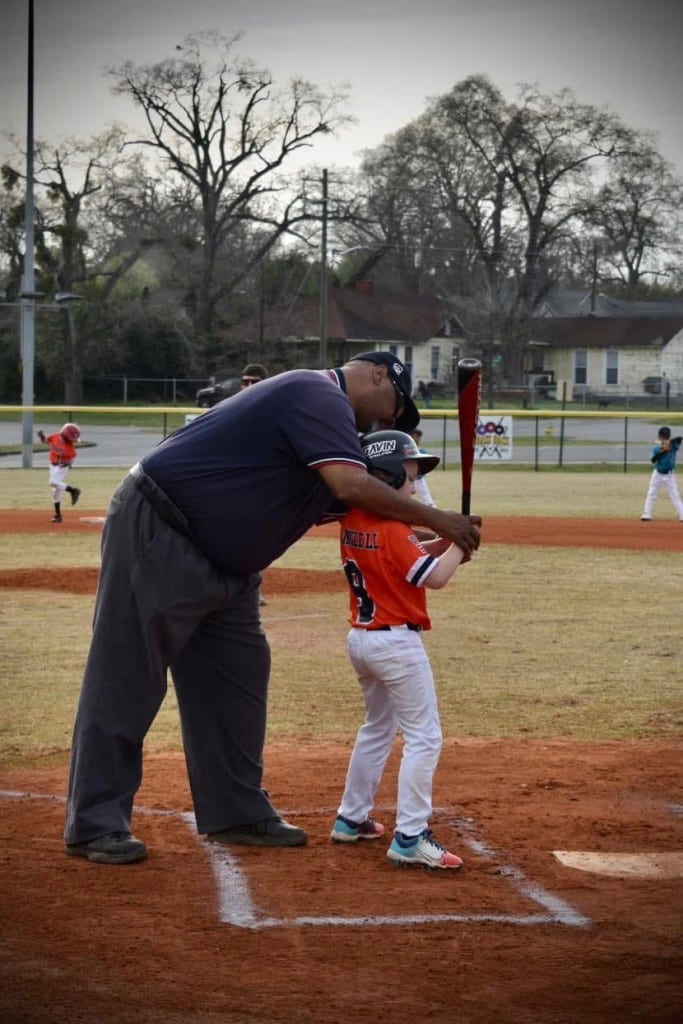
If it’s a weeknight in the spring, there’s a good chance Michael Stewart is busy.
As a matter of fact, he probably can’t talk during the day, either. Or on Saturday mornings — and sometimes not even in the afternoon.
It’s exceedingly clear that Stewart is about as dedicated as they come. He spends all day at his job as a social worker with the Department of Child and Family Services, then races to the baseball diamond to
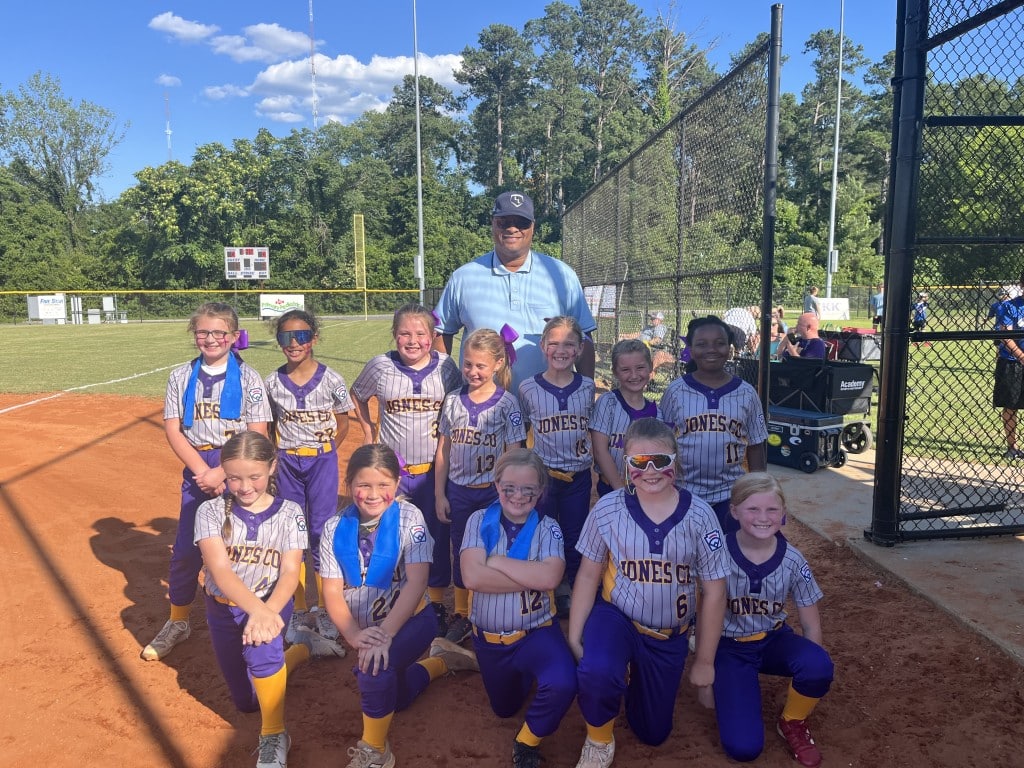
umpire Vine-Ingle softball games several times a week.
Stewart always takes on extra games. To him, it’s not a burden.
“I always work a game if there’s a game available. It’s just the mindset I have,” Stewart said. “I know these kids and their families just want to play ball. They need me — or someone to umpire, whoever — there to do that.”
His efforts have been rewarded with something resembling legend status among Vine-Ingle players, parents and officials, a status accrued through years of taking the extra game, working into the night and answering the call — about 20 years, to be exact, though he has not worked with Vine-Ingle for all those seasons.
Stewart’s road to Macon was no primrose path, however. The umpire, social worker, role model and family man took a long and winding road to Middle Georgia instead, one he said was carved out almost entirely because of sports.
Lessons from the Motor City
Stewart grew up in inner-city Detroit, an experience that shaped him in a variety of ways.
“There was a lot to learn there, but in my youth it was sports that carved me a path. That’s where I became motivated,” Stewart said of his upbringing. “I wasn’t expected to live past 18 years old in Detroit.”
Things did not come easy for him and his family, but Stewart had an eye-opening experience when he started playing AAU basketball to emulate his older brother. He eventually earned a basketball scholarship to a private school, even getting the school to prorate his siblings’ tuition to keep him there.
He played basketball, football and even a little baseball, all while working at the school at the same time as an employee at the gym.
“That job taught me a lot about discipline, about paying attention and getting things done,” Stewart said. “I also had to deal with people that I wasn’t really on the same page with and learned to handle that in a healthier way… Before that I wasn’t very good at dealing with people different than me.
“It made it my mission to meet people where they are. It’s okay to be different. People have circumstances, but they are not defined by them. I can change their circumstances and help them.”
One head coach at the school told Stewart that sports could keep carrying him beyond high school.
“He told me I was not what everybody in life had predicted me to be,” Stewart recalled.
Though it sounds cliche, and a little optimistic, it became a core tenet for Stewart.
“It helped me realize that there was more out there, more to explore, and I thought about it and realized sports could help me live a better life,” he said.
Stewart translated his athletic talent into a unique career after he played more in college, as he carved out a niche in semi-pro football for more than a decade. He played on teams like the Baltimore Renegades and Central Penn Piranhas — these teams changed leagues somewhat regularly, but were similar to minor league baseball teams, Stewart said — and won multiple championships for the teams.
He traveled to play football while having various different jobs as a social worker, many of which were in the Foster Care system.
“Near the end of it, once my wife moved down here to Georgia, I was going back and forth between Baltimore and Forsyth and was running group care homes in Baltimore with Foster Care children. I flew back and forth for about a year,” Stewart said. “In 2005 I finally moved all the way to Georgia.”
Finding a new way onto the field
But not long before he moved to Macon, Stewart blew out his knee playing football in New Jersey. He knew after that game in the early 2000s that he could never play football again, but he also knew that he needed to stay involved with sports somehow.
“I couldn’t stomach not being on a field. I immediately started brainstorming how I could keep sports in my life, after it had gotten me this far,” Stewart said of his thoughts after the injury. “I needed to find something to do that makes me feel like I’m still engaged.
Stewart had been a basketball official in Baltimore and started working hoops as an official in Monroe County. Oddly enough, though, his way back onto the field would come via the sport he played the least in high school: baseball. He started working as an umpire for baseball and softball almost as soon as he arrived in Middle Georgia and found the work immediately fulfilling.
He didn’t start at Vine-Ingle, either. For his first five years as an ump, Stewart was a fixture at the tee-ball fields for North Macon Little League. He became the umpire in chief and directed assignments there in 2010.
“For a while after that I helped out with softball at Vine-Ingle while doing baseball in North Macon, driving back and forth, and eventually Vine-Ingle said, ‘What would it take for you to come over here full-time?’” Stewart said. “And all I said was, ‘make sure I have games to work,’ and that was it.”
Stewart has nicknames across town, though he’s most often dubbed by players as “Big Mike.” One moniker he earned, “50/50,” came from travel ball.
“That’s because I give them a big spiel in travel ball — I say half the people will love me, half the people will hate me. But in the end I’m gonna be right,” he said, laughing. “It’s that relationship that I have with the children that keeps me coming back, keeps me motivated.”
The 57-year-old is motivated indeed. On the night we talk, he calls closer to 10 p.m. after taking an extra softball game and working under the lights.
Stewart works hard, even with his five children already through college — he lists their achievements, ranging from volleyball and lacrosse scholarships to music degrees, without hesitation — and following in his footsteps as social workers.
“They were expected to play sports in school because my wife and I knew that would shape them the right way,” he said. “I think that’s why they became so successful. I’m so proud of them.”
Even many years later, Stewart still remembers that young man from Detroit every time he steps across those white foul lines.
“The pathway of sports led me here,” he said. “I wouldn’t change it.”
Author

Related Articles
Mercer Athletic Director Jim Cole steps down; Bears picked to win SoCon
Get updates from sports across Macon and our weekly sports notepad.
After last year’s state title run, Stratford ready to run it back
After taking home the trophy last year, a talented Stratford team wants to do it all again.
Macon’s first pro pickleball tourney complete; Covenant drops football for 2026 season
Get sports updates from across Macon in our weekly sports Notepad.