
Macon icon, Sam & Dave musician turns 80
Macon-native Newton Collier turned 80 this week. Collier is a Macon icon, loved by many and most known for his stint with hitmakers Sam & Dave.
A new chapter for The Melody
Our team and coverage are moving to The Telegraph. Make sure you look for The Melody's community-first journalism as a section highlighting the people, places and moments that are the rhythm of Macon.
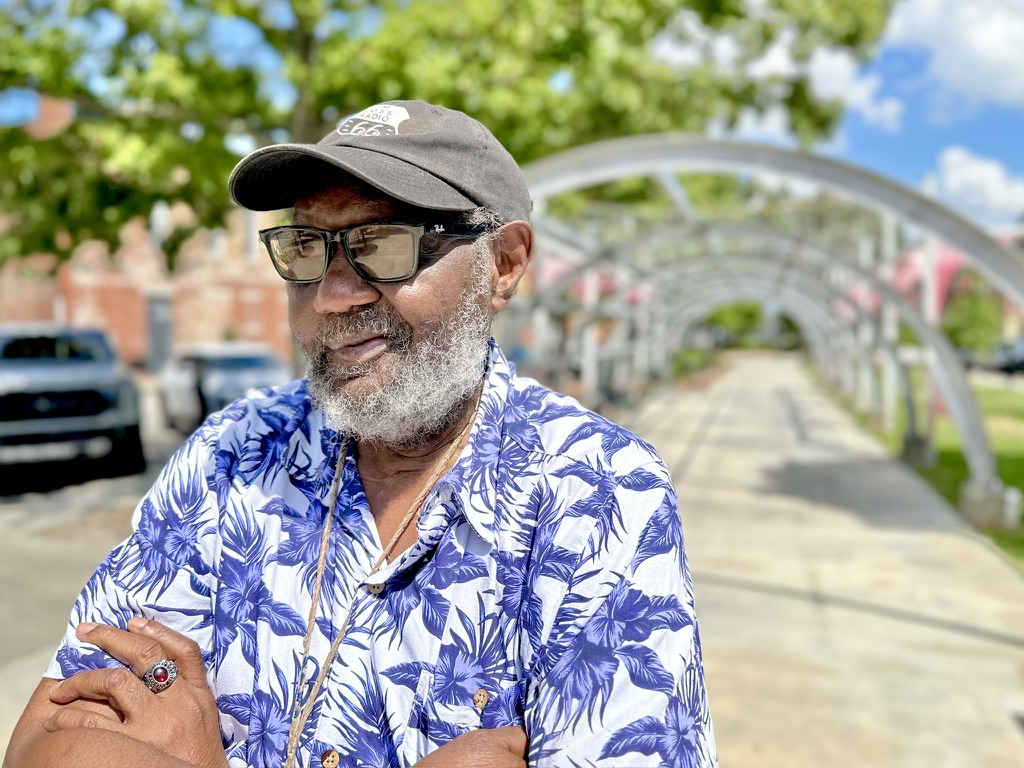
Newton Collier has lived a big life. Turning 80 this week, the Macon-born horn player can look back on decades as a musician enjoying the highest of highs playing with some of the best of the best — including a long stint with soul hitmakers Sam & Dave in their heyday — as well as some of the lowest lows life can dish out.
Through it all, he’s remained one of the more humble, generous people you’ll ever know. His story is worth a lengthy book or two, but here are some highlights and little-known nuggets.
Growing up in Macon, learning to play
Collier was born July 23, 1945, and grew up in the now culturally significant Tindall Heights neighborhood. As a youngster, he and his parents, Lucile Birdsong and Newton Collier Sr., wound up on Campbell Avenue where Collier found himself surrounded by musicians. Not only did his mom and aunt play piano, but there were friends, neighbors and church members who helped him develop his own desire to play.
By 6, he was good on piano and by 10, he had taken up the trumpet, his main instrument, though he played a mean trombone too.
“Growing up, there were always people playing in church and up and down our street,” Collier told me over coffee, smoothies and quiche at Sweet Eleanor’s Divine Desserts downtown. “Mr. Robert Scott Sr., Georgie Fuller, Gladys Wallace, Theodore Smith, they were some early influences along with my mother and aunt. Theodore Smith was our regular church piano player and Mr. Scott taught me later at Ballard Hudson High School.”
There were others. Still, it’s one thing to be surrounded by musicians and quite another to have the passion Collier did in
pursuing them.
“I pestered and dogged them all the time wanting to see what they were doing, wanting them to show me things,” he said. “I know people got tired of me but a lot of them took the time to help me.”
There was a choral group that practiced nearby and Collier tagged along not to learn to sing but to play piano. In church, he said gospel music was almost R&B and his eyes and ears were wide open. If he heard music coming from a nearby park, he’d hurry there to take it in.
Significantly, as years rolled on, a group called Johnny Jenkins and the Pinetoppers started practicing across the street from him. I shouldn’t have to tell you they were big in Macon and Otis Redding’s early band.
When they practiced, I shouldn’t have to tell you where Collier would be.
“That was around 1958-59,” he said. “I was already taking piano lessons from Gladys Williams and understanding what I heard and where the notes go and had picked up the trumpet. I was learning all kinds of stuff.”
Lewis Hamlin and Samuel Coleman, a U.S. Air Force trumpeter, became big influences whom he said he bugged endlessly. Throughout our conversation, Collier kept veering the conversation toward his influences and those who helped him as much as I veered it back to him.
One day, one big day, Sammy Davis Jr. was staying at Gladys Williams’s house and Collier was there. Remember, these were the awful days of segregation and the Green Book, which listed safe places for African Americans to eat, stay, shop and refuel. Williams was in the book.
“I saw all these guys playing,” Collier said. “They said I should play trumpet, so, yeah, I pushed the buttons a little bit.”
Collier said Davis assured him he should be a trumpet player. Of course, it was an amazing encouragement and a great line to be able to tell his folks and others when he wanted to play music above all else.
The big time
As Collier got older, not much older, but older, things began to snowball. Where neighborhood musicians had taught him trumpet and given tips and tricks on being a real, working musician, Scott became his high school band teacher and taught him his way, a more formal way. Still, Scott recognized Collier’s ability, said he had “strong chops,” and would take him aside and teach him things beyond what others were learning.
Collier’s dogged perceptiveness brought him a lot of skill, including an early ear for arrangements. Of course, he had started playing with the Pinetoppers and other bands in clubs around Macon where his mom had given club owners strict instructions about how he was to act and what he could and could not drink. He was working with the best, including Redding.
Right after high school, he mixed a bit of college with moving to Augusta where he’d been recruited to play with The Swingin’ Dukes.
“I was learning all the time,” he said. “All the time. You never quit learning. I was scared the first time I played out of town, which was in Chattanooga, actually. But I got there and once I started playing, it was just like home. All through the years, if I was in New York or Chicago or Europe, if I wasn’t playing I’d be at clubs listening, listening with intent, seeing what they were doing, learning.”
By the late ‘60s, Collier was with Sam & Dave’s band and played with them in little shows then huge shows until the band broke up in 1970. They traveled in station wagons and buses across America. They recorded hit after hit. He was on Ed Sullivan’s show. He toured Europe.
“When we weren’t playing, I’d come back to town and was always tight with people here,” he said. “Sam & Dave were connected with Otis and Phil Walden. People would say they saw me on Ed Sullivan. Of course, I’d let my mother know about it and she’d tell everybody at church and in the beauty shop and around the neighborhood. She was the best PR I had.”
On to other things
When the stint with Sam & Dave ended, the horn section formed a band called LTD and moved to Boston. If you can say Collier had had a crazy good life until then, things got even crazier — good and bad.
Collier played clubs but also worked with bands and clubs and would often take an evening’s receipts to a bank night deposit. One night, on a Boston street, Collier was shot in the face. Maybe it was related to the money thing, maybe not — he didn’t have any money on him at the time — but his trumpet career was done for and almost his life.
“It was devastating, devastating,” he said, with a look emphasizing he really meant it. “I was glad to be alive but …”
If you know Collier, you know he’s not a negative person and we didn’t dwell on the incident. It happened. He recovered — with noticeable damage to his jaw — but he recovered. He’s not bitter. He moved on.
But in another way, his time in Boston was even crazier, more unpredictable than the shooting. Left unable to play, he helped publish the “Progressive Platter Music Review.” He had been studying electronics at Boston’s Wentworth Institute and honed his chops in that field well enough to land a job as an electronic technician at M.I.T. for six years. Then, for almost 10 years, he joined the burgeoning computer industry working for Honeywell Computers.
Along the way, he learned of something new called an E.V.I., an Electronic Valve Instrument. His problem playing trumpet had been that he couldn’t safely create enough pressure in his mouth to effectively blow one or perform other intricacies. The E.V.I. required minimal breath and electronically sounded like a trumpet.
He could — and does — play again!
And there’s more. Earlier, an acquaintance who taught at Boston’s Berklee School of Music invited him to teach his students. Collier said that led to an invitation to attend the prestigious music school, which, due to cost, he turned down. But then the department head told Collier to go ahead and attend
classes, gratis.
Knowing his passion for learning, you know what his response was.
Back to Macon
In 1988, Collier returned to Macon. Here, we’ll skip some of the details and get to the fact he’s become a die-hard Macon promoter, volunteer and beloved by many not merely because of his great musicianship or killer on-the-road stories, but for who he is. You’ll likely meet him on the street greeting people, helping them out. Maybe you have and didn’t realize who he was. You might be one of the many young musicians he has encouraged and mentored or have had him help with an afterschool program you or your kids were part of.
Personally, I first met Collier as a volunteer at the Piedmont Grand Opera House when he showed me to my seat. Since then, we’ve never not shared a few good words when we’ve run into each other.
“Newt is pretty amazing,” said Tim Griggs, who, among other things, is founder of COMP, the Community of Older Music Professionals, which meets once a month for lunch. Collier is a volunteer there too.
“He’s a survivor,” Griggs said. “Shot in the face and still playing trumpet with that E.V.I. He knows everybody here from the ‘60s on. He’s our elder statesman of music. I mean, he’s just a fun guy to hang with so it’s always a good time when you get to see Newton.”
Christèle Parham knows Collier in a slightly different light. She’s a Macon entrepreneur-businesswoman who owns Macon Black Tech, HamDesigns and Crate X, a co-working space.
She’s originally from Haiti.
‘It’s an honor to talk about Newton,” she said. “When he found out I was from Haiti, he was really excited. Not many people I encounter understand or connect with my culture or know about our music the way he did. Every time I have someone visit, he makes them feel so welcome and gives them a curated walk around downtown, sharing Macon’s history.
“He’s so kind and willing to tell his stories — he knows so much. I grew up in a culture geared toward storytelling, generations passing down stories. Every day, my granddad made it his intention to tell me stories about old Haiti. I grew up seeing Haiti through the lens of my grandparents and parents and aunts versus the misconceptions people have about it. People need to know where they come from and the best way is to hear it through stories. It’s empowering. When I’m with Newton and he’s telling me his stories, I get a feeling of being with my grandad and gain a greater impression of Macon and its past. Newton is a treasure; such a gem.”
A short documentary featuring Collier is set to be shown at Theatre Macon on Aug. 22 during the Macon Film Festival.
Contact writer Michael W. Pannell at [email protected]. Find him at @michael_w_pannell on Instagram.
Author

Related Articles

The Odyssey embarrasses anti-woke crusaders
While I am no movie critic, I applaud Nolan for his recreation of the epic, but perhaps one of his greatest accomplishments was embarrassing anti-woke crusaders.

A new chapter for The Melody
Macon’s local newsroom is in for some exciting changes. It’s a great time to reflect on The Melody’s past.
Don’t blame data centers for failed public policy
Data centers have become a kind of boogeyman among voters lately. Recent polling even suggests that new data center construction is less popular than the IRS.