
Mercer, River Edge unveil center for adults with intellectual and developmental disabilities
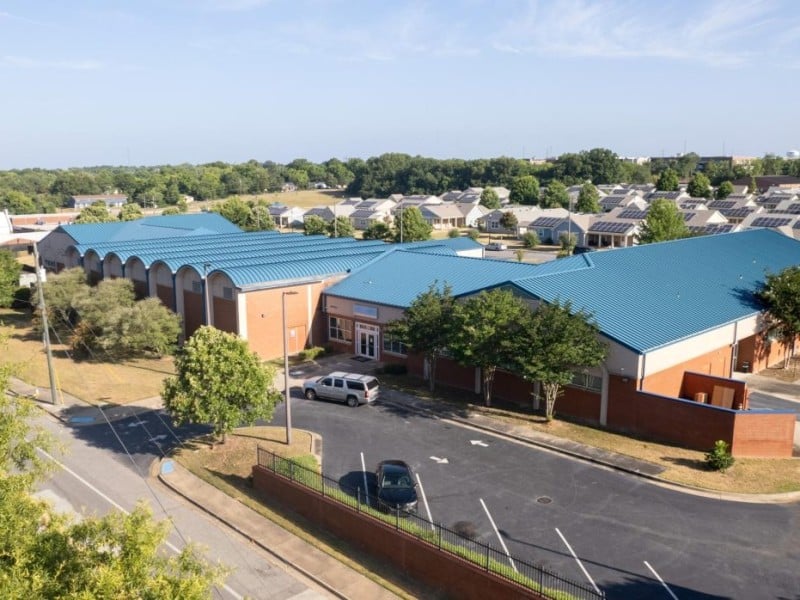
The 34,000-square-foot building off Hazel Street is the first of its kind in Georgia, composed of a crisis stabilization center and outpatient clinic, and can house up to 16 patients.
A new chapter for The Melody
Our team and coverage are moving to The Telegraph. Make sure you look for The Melody's community-first journalism as a section highlighting the people, places and moments that are the rhythm of Macon.

A new $23.7 million health center operated by Mercer University and River Edge Behavioral Health designed to bridge gaps in treatment for adults with intellectual and developmental disabilities celebrated its opening Monday morning.
The 34,000-square-foot building off Hazel Street is the first of its kind in Georgia and can house up to 16 patients.
The center’s construction is partially funded by a grant from the state department of behavioral health and developmental disabilities, and land for the project is owned by Macon-Bibb County.
Folks got a look inside the facility during an open house Monday morning, which proceeded despite the morning rain forcing attendees and speakers into the cafeteria.
Greta O’Dell, chief intellectual and developmental disabilities officer at River Edge, has been working on this project for the past five years. She said the new center will not only address the immediate needs of IDD individuals, but will also prepare providers to continue supporting those needs after patients leave the facility.
“There’s 25 to 30 individuals stuck in emergency rooms around the state because they can’t get appropriate care,” O’Dell said. “This facility will allow for those individuals a place to come.”
River Edge’s crisis stabilization center will treat individuals in crisis, taking care of them for 90-day periods. The center includes a sensory room, two padded calming rooms and a nurse’s station.
The crisis stabilization center will staff 16 individuals including nurses, behavior analysts and a psychiatrist, O’Dell said.
On the outpatient side, Mercer offers several services including primary care, dental, physical, speech and occupational therapy, imaging and more. Both sides will share a pharmacy.
“We always tend to think of IDD patients as that one diagnosis, but in reality there is so much more to the medical part,” said Dr. Jonathan Smith, director of Mercer’s center for IDD care.
Dr. Jean Sumner, dean of Mercer’s medical school, said the center was designed with the goal of making sure patients feel comfortable.
One major benefit of the center will be the ability for Mercer to train medical students and future healthcare professionals, Sumner noted. She said students can get hands-on, experiential learning required to be in the medical field.
“We want to be worth the trip,” she said. “We want to be the people that provide that care and then work with local providers to enable them to get care at home.”
River Edge and Mercer are still finalizing a network of specialists who have experience with IDD individuals.
Hospitals will go through GCAL, the Georgia Crisis and Access Line, which goes to the state department, which will then refer patients to the crisis stabilization center.
The inpatient center will begin accepting patients next week, while the outpatient center will begin accepting clients starting in August.
Author

Related Articles

All aboard? GDOT asks residents to weigh in on restoring passenger train service to Macon
The Georgia Department of Transportation is surveying the public through Aug. 6 to gauge interest in Atlanta-to-Savannah rail service that could include a stop in Macon.

Are corporate investors responsible for one-third of all housing sales since 2020?
Learn the answer to this question in the fact brief in partnership with Gigafact.
Macon’s Boys and Girls Club closed for 90 days, families search for alternatives
The club had many after-school programs that are now on hold.