
Missouri’s Macon hopes to grow, along with its signature trees
Welcome to Macon, Missouri, our sister city from the “Show Me State.’’ And there is plenty to show off here. Like our town, it is a community steeped in rich history and good vibes.

Linda Bush, the retired postmaster in Macon, Missouri, has had six generations of her family live here.
EDITOR’S NOTE: There are six cities and towns named Macon in the U.S. Columnist Ed Grisamore writes about his recent visit to our sister city of Macon, Missouri. Next week, he features Macon, Illinois, the hometown of Atlanta Braves Manager Brian Snitker.
There is a place, besides the one in your wildest dreams, where you can leave Macon and be in Atlanta in 10 minutes.
There is no rush hour traffic, no need to drive fast and furious in the HOV lane. It’s a quick trip up Highway 63 past Long Branch Lake. A sign along the way points to the town of Barnesville.
Please be advised. You are not in Georgia.
Welcome to Macon, Missouri, our sister city from the “Show Me State.’’ And there is plenty to show off here. Like our town, it is a community steeped in rich history and good vibes.
Yes, there is an Atlanta 11 miles north of this Macon. But there is nothing “metropolitan” about it. Atlanta’s population is 379. Macon, the county seat of Macon County, has 5,426 folks.
This is America’s heartland, its midsection, its bread basket … the gateway to the West.
If you head south from Macon on Highway 63 toward Columbia and hang a right along the same latitude, you will end up in Lebanon, Kansas, the geographic center of the contiguous United States.
The Macon-Atlanta State Bank opened its doors in 1935 and changed its name to MA Bank four years ago. Before the rebranding, Andee Bush, the bank’s vice president for marketing, said the bank often would get calls from people in Georgia inquiring about opening an account. Sure, she would tell them, but just to let them know … they would have to travel 800 miles and change time zones if they wanted to make a deposit at the drive-thru window on North Missouri Street.
Andee’s mother-in-law, Linda Bush, is Macon’s retired postmaster, so she knows just about everybody in the small town. She said at one time there were 45 cities and towns named after Nathaniel Macon, a Revolutionary War hero and statesman from North Carolina. By the late 1980s, the number had dwindled to 12.
Now there are six, with the others in Michigan, Illinois, Mississippi and North Carolina. Macon, Georgia, with a population of 157,346 is by far the largest. Macon, Missouri, is a distant second.
Macon rocks in a cradle surrounded by greatness. An hour to the east is the Mississippi River town of Hannibal. It was the boyhood home of Mark Twain, a writer that William Faulkner once called the “father of American literature.’’
And 29 miles to the west is Marceline, the boyhood home of Walt Disney, one of the 20th century’s most creative geniuses. There is a nice museum there in an old train depot.
Macon is known as the “City of Maples.’’ The beautiful hardwood trees are a showcase, and the local chamber of commerce slogan hangs from the downtown light posts: “Come Grow With Us.”
The town can claim its own “Johnny Mapleseed,’’ a man named John Beaumont. In 1872, he owed $116 in back taxes. He settled his debt by donating 10,000 young maples to the city. There are now an estimated 275,000 in Macon.
We are a city of trees, too, so we share that distinction. There are more than 350,000 Yoshino cherry trees in Macon, Georgia, making us the cherry blossom capital of the world.
The two Macons share an interesting family tree when it comes to street names. They both have Maple and Cherry streets, along with Walnut, Magnolia, Dogwood, Elm, Redbud, Hickory, Holly and Mimosa. There also is an Oak Street in Macon, Missouri. That was a major improvement, since it was once known as Weed Street. Missouri’s Macon does not have a Vineville Avenue, but ConAgra, the town’s largest employer, is located on Vine Street.
One of the town’s featured attractions bears the name of the hardwood trees that dot the landscape. The Maples Repertory Theatre, part of the historic Royal Theatre, provides live stage performances of everything from “The Sound of Music” to “Steel Magnolias.” Professional actors, directors, designers, and technicians from California to New York are brought in for the productions, and the performances often attract tour buses from other places.
Macon might not share the same rich musical heritage as its Georgia relative, but it does have a unique stage history. Actor Henderson Forsythe, a native son, played the role of Dr. David Stewart for 31 years on the soap opera “As the World Turns.”
The town also had a brush with greatness when Hollywood producer Albert Ruddy married a local woman, Wanda McDaniel. The Ruddys bought an estate outside of town and often entertained the likes of actors Clint Eastwood and Donna Douglas, who played Ellie Mae Clampett on “The Beverly
Hillbillies.’’
Ruddy died in May at the age of 94, was the producer for “The Godfather” and “Million Dollar Baby,” which he co-produced with Eastwood. Both films won Academy Awards for Best Picture. He also was co-creator of the CBS sitcom “Hogan’s Heroes.’’ McDaniel, who once interned at The Macon Chronicle-Herald, became an executive for Italian designer Giorgio Armani.
The most recent local celebrity buzz came when actor Butch Patrick, who played the werewolf son, Eddie Munster, in the 1960s sitcom “The Munsters,” got married in Macon and bought his grandmother’s Victorian mansion. Patrick, whose real name is Patrick Alan Lilley, lived with his grandmother, Marjorie Greenstreet, in Macon when he was in the eighth grade. After he moved back, he could be spotted driving his “Dragula” car around town. He originally had planned to turn the house into a haunted theme, like the Munsters’ fictitious house at 1313 Mockingbird Lane. He no longer lives in Macon.
Theodore Gary, who once owned the patent on the dial telephone, was one of Macon’s major philanthropists, along with Col. Frederick Blees. Blees opened the renowned Blees Military Academy in Macon in 1899, which later became Still-Hildreth Sanatorium, the world’s first osteopathic psychiatric facility.
Blees used his immense wealth to finance many of Macon’s commercial properties, including a carriage factory, theater, sewage system and the paving of city streets. In February 1902, he bought the first Studebaker electric car manufactured in the U.S. The second was purchased by a guy named Thomas Edison, who helped design its electrical system.
Like its Georgia soul sister, Macon’s location made it an important hub for the railroads and other forms of transportation. It was situated on the crossroads to the West and major Native American footpaths.
There was a time when Macon might have been known for its automobile production. In 1915, the Macon All Steel Motorcars Company was set to begin production of 60 automobiles. The company already had orders from as far away as California. But sparks from a nearby train caught the assembly plant on fire, and the former carriage company burned. No cars were ever built.
“They say we could have been a little Detroit,’’ said Margaret Hall, whose husband, Bill, is Macon’s unofficial historian and who spent 48 years working for the Macon Chronicle-Herald, which ceased publication in 2014.
Aviator Charley Meyer was one of the town’s most famous sons. A stunt pilot, he was close friends with Charles Lindbergh, who made the first solo transatlantic flight across the Atlantic Ocean. Meyer opened the Marie Meyer Flying Circus at Lambert Airport in St. Louis. His wife, Marie, was a “wing walker,’’ performing daring stunts as he piloted the plane.
R.T. Jones, another Maconite, was a nationally recognized expert in aircraft stability. He is credited with designing the “swept back” wings used on aircraft that fly faster than the speed of sound. In 1935, Macon made national headlines when a TWA flight carrying a Hollywood film crew went down in a heavy fog north of town. The crash killed four people, including Bronson Cutting, a U.S. Senator from New Mexico. The tragedy prompted Congress to commission a report on air traffic safety that helped lead to the establishment of the Federal Transportation Safety Board.
Macon once boasted its own Coca-Cola bottling plant. There also was a factory that manufactured Toastmaster toasters. The irony was not lost on the locals, since the town of Chillicothe, 60 miles down the road, bills itself as the “Home of Sliced Bread.’’
When Wal-Mart opened in the 1980s, it ripped out the heart of many of Macon’s longtime businesses and mom-and-pop stores. However, there is at least one original one-stop shopping Mecca that survived by reinventing itself. The Ben Franklin store on North Rollins Street shed its five-and-dime image to become a unique destination for antiques, flowers and home decor.
Six generations of Linda Bush’s family have lived in Macon. Although there has been a decline in the town’s population – a trend in smaller communities – she sees signs of encouragement in the years ahead. Highway 36, already a four lane running east and west between Hannibal and St. Joseph, will soon become part of the interstate system.
“There was a lull, but the young people are coming back,’’ she said. “They are tired of the big city.’’
The town hopes to grow, right along with its signature trees.

Before you go...
Thanks for reading The Macon Melody. We hope this article added to your day.
We are a nonprofit, local newsroom that connects you to the whole story of Macon-Bibb County. We live, work and play here. Our reporting illuminates and celebrates the people and events that make Middle Georgia unique.
If you appreciate what we do, please join the readers like you who help make our solution-focused journalism possible. Thank you
Author

Related Articles

Merry Christmas to those who make Christmas happen
The most wonderful time of the year comes with a lot of work; there’s the decorating, the shopping, the wrapping and, ever-increasing in importance as I get older, the meal prep and cooking. A merry Christmas doesn’t just fall out of the sky.

Safety first this holiday season
There are so many options to choose from in the toy department that sometimes you may not know where to begin when choosing safe and appropriate toys for the holiday season.
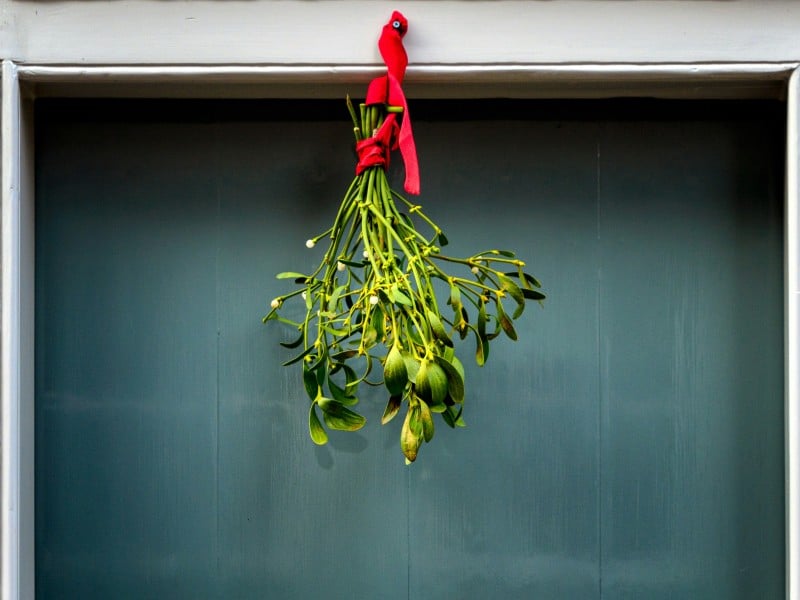
Mistletoe: The romantic parasite of the Yuletide season
The collective term, “mistletoe”, refers to any of the more than 200 species of semi-parasitic shrubs found worldwide.