
Nurturing creativity: art and mental health
Local artists talk about creating and using art as a diagnostic and restorative tool.
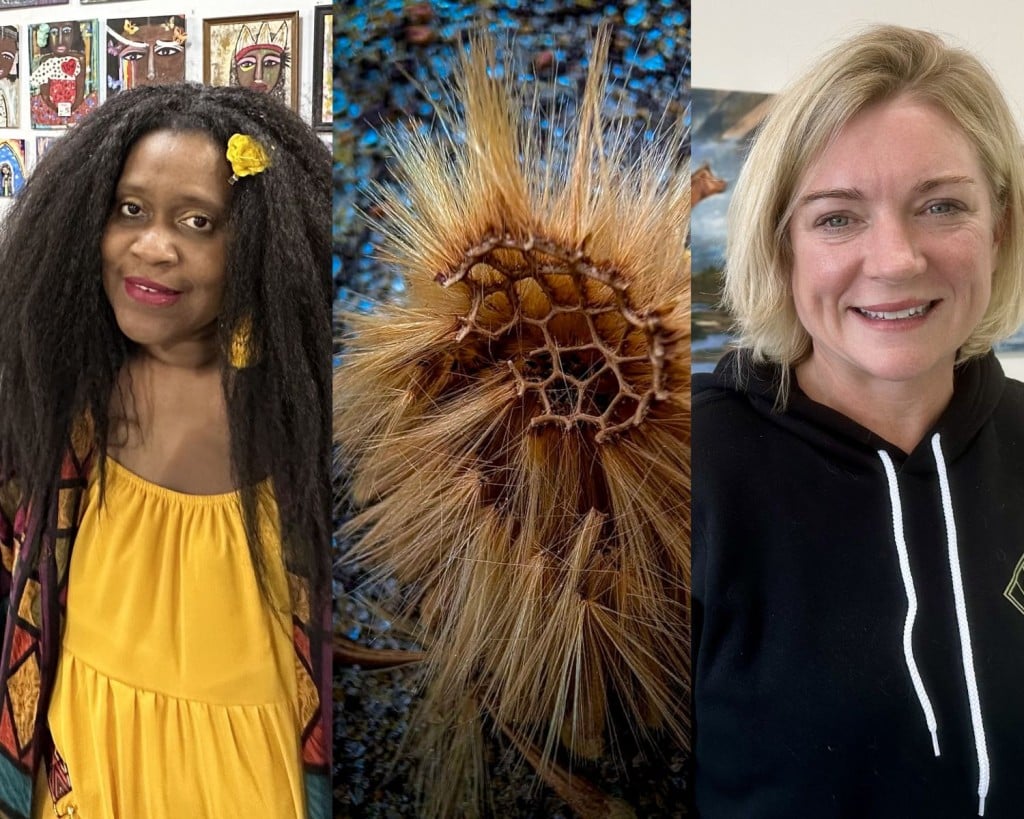
May is Mental Health Month, so I talked with three well-known area artists who understand the connection between art and mental health and have spoken openly about mental health struggles in the past.
They talked about creating and using art as a diagnostic and restorative tool, though noted that while helpful for mental health, art is not a cure.
Here’s what they had to say.
Rhonda Miller
“Art is very important to mental health, and, for me, it’s played a big role,” Rhonda Miller said.
In recent years, Miller’s folk-art paintings — often portraits — have grown increasingly popular for their bright colors and expressive style. She has been open about the trauma she has faced, from abuse to battling and beating cancer.
“Painting allows me to release what I carry inside,” Miller said. “I started creating art because it gave a voice to my emotions and expressed things I couldn’t say with words.”
When she can’t explain how she feels in words, Miller expresses herself through colors, text and even texture.
“It’s about survival, but also about healing, reflection and freedom,” she said. “Most of all, I like seeing that I can transfer my pain into beauty; silence into expression. I’m not taking pills, so that says something.”
Miller, an unschooled artist creating vivid work, began not with painting but with journaling, adding doodles and drawings. That grew into greeting-style cards, then painting. She sees her creative growth as key to surviving early trauma, becoming an empty-nester and enduring breast cancer and radiation treatments.
Miller said she still suffers from PTSD and bouts of depression, but creating art helps her endure it. She was also the first to say what all three expressed: art is an aid — a good one — whether you create it or observe it, but it’s not a cure. She said seeing a good therapist, staying connected with others and finding other wellness tools are important.
The 567 Center for Renewal and The Bohemian Den will feature Miller’s art starting June 5, on First Friday. She also has work displayed at the Tubman African American Museum.
Pam Pinkston
When asked if art was important to mental health, Pam Pinkston responded with a resounding “Absolutely!” Pinkston expresses creativity in many ways — drawing, knitting and embroidery — but her primary medium is photography.
A military veteran with a degree in psychology, Pinkston loves the outdoors and is a committed hiker. Nature is the subject of most of her current work.
“I was raised to be very logical, very reasonable, and art wasn’t a viable career and never encouraged,” she said. “I wound up in the military because I had gotten lost on life’s journey and didn’t know what I wanted to do.”
Pinkston said she still faces diagnosed mental health issues but lives beyond the diagnoses as an organizer of healing-focused hikes and nature-based art activities.
“I think most people don’t understand that each of us has a creative side,” Pinkston said. “Even if, let’s say, your job is accounting or something you think is the furthest thing from art, there’s still a creative side that needs to be nurtured for the other parts of our lives to come together. You don’t have to paint or draw, take pictures or whatever — just do something as a creative outlet.”
Pinkston said art and creativity work in practical, proven ways. Creative activity engages different parts of the brain, she said, helping mental and overall health. It can foster calmness and relaxation — like a walk in the park — which she often pairs with drawing, journaling or photography.
When her mental health was deteriorating, art helped her find her way. In those days, people didn’t talk about trauma, PTSD, depression or mental health, she noted. She said it took a while to realize something wasn’t right and she was no longer able to work in the way most people think of work. But it didn’t mean she couldn’t do anything — Pinkston turned to art.
“Once I realized I was a creator and started calling myself an artist, I realized how much that helped. Art didn’t cure everything, but it’s a tool I can use if I’m feeling overly anxious, having intrusive thoughts or something similar,” she said. “Art helps me process things. I figured out that art, hiking and mindfulness go together for the creator and the one who sees the finished work.”
Pinkston collaborates on art and healing hikes as well as monthly mental health and wellness workshops with Artspace Macon, Macon Mental Health Matters and the women’s hiking group, We Hike to Heal.
Though there is crossover, Pinkston uses @dragonflypaws on social media to show her photography and creative work and @southernqueerfolkhikes to share hiking information.
Hazel Caldwell
Hazel Caldwell is an established painter and art therapist who works with River Edge Behavioral Health as an art therapist and traditional therapist. In her private practice, she offers art therapy to individuals and groups. Caldwell also teaches art at Stratford Academy.
Caldwell defines art therapy, writing that it “enriches the lives of individuals, families and communities through active artmaking, creative process, applied psychological theory and human experience within a psychotherapeutic relationship.”
She describes her own work as “an exploration of human emotions and the evolution of societal norms using different painting techniques to translate them as accurately and as rawly as possible.”
Art is one of the most important facets of mental health and can encompass many different disciplines, such as music, drawing, painting, singing and writing, Caldwell said.
“Art is an acceptable way to express oneself even if it feels like what you have to express is not socially acceptable,” she added. “Art gives permission to be and act exactly as you feel, but you’re doing it in a positive way versus going to the grocery store and yelling how you feel.”
Creating offers an opportunity for validation and by being authentic, she said, there’s the possibility of reaching people — letting your emotions and humanity engage with others in the peculiar way art can. Being seen by others is an important component of mental health, and expressing the universality of humanity can be powerful and healing, she noted.
As a creator, seeing you’re not alone and having others identify with your work is all part of the power of art, she said.
“If you reach someone, it may not be that you’ve experienced the exact same thing in the same way, but the underlying emotion — the feeling we have, such as grief or loss or joy — is the same,” Caldwell said. “Art is a safe, protective and even rewarding way to be expressive and boost human connection and mental health.”
Caldwell holds a bachelor of arts in studio art from the College of Charleston and a master of science in art therapy from Eastern Virginia Medical School. But she said it’s her own experiences — trauma, broken relationships and life’s storms — that give her work gravitas through her personal need for art’s emotional healing power.
In this glimpse — not a treatise — into art and mental health from some of our artful neighbors, each would encourage those in need to seek available help, including, or perhaps especially, artists and creators who are struggling. Jot down 988, the number of the National Suicide & Crisis Lifeline that routes calls to Georgia operators and services.
Contact writer Michael W. Pannell at mwpannell@gmail.com. Find him on Instagram at michael_w_pannell.
Before you go...
Thanks for reading The Macon Melody. We hope this article added to your day.
We are a nonprofit, local newsroom that connects you to the whole story of Macon-Bibb County. We live, work and play here. Our reporting illuminates and celebrates the people and events that make Middle Georgia unique.
If you appreciate what we do, please join the readers like you who help make our solution-focused journalism possible. Thank you
Author
Related Articles
Georgia heat is no joke: how to protect your health this summer
While summer can be one of the best times of the year, the Georgia heat can be dangerous.
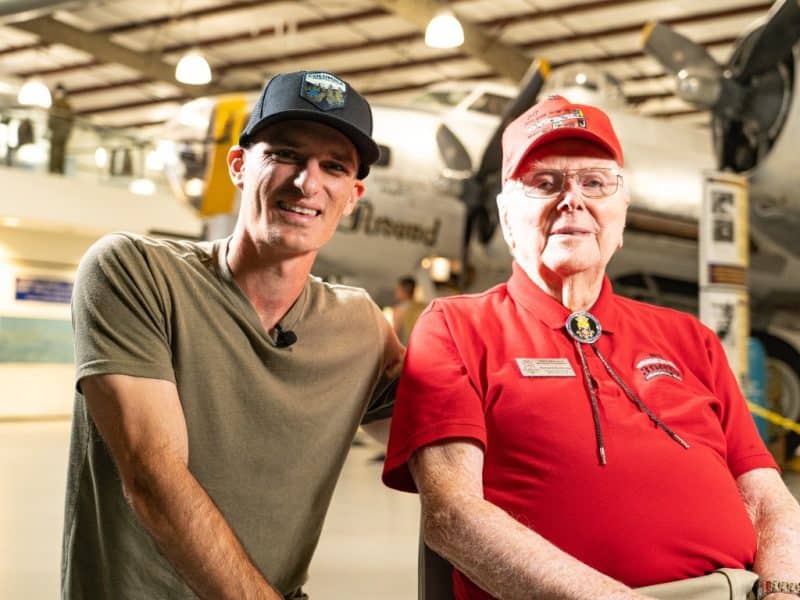
Local documentary on World War II veterans to air in Macon
Director Trent Jones tells the story of veterans who served on a “Flying Fortress” during the war.
Phoebe Bridgers made a surprise stop in Macon — and it meant something
Even though the concert was shrouded in secrecy, a fan in attendance reflected on the meaning of the performance.