
Why Bibb schools are facing a budget crisis
The Macon Melody explores some of the challenges facing the Bibb County school district, which serves more than 20,000 students.
A new chapter for The Melody
Our team and coverage are moving to The Telegraph. Make sure you look for The Melody's community-first journalism as a section highlighting the people, places and moments that are the rhythm of Macon.

For months, members of the Bibb County Board of Education have grappled with budget woes.
As board members looked to adopt a new fiscal year spending plan, they were confronted with a looming budget deficit, one that threatens to deplete the district’s fund balance. They found no easy answers to the district’s challenges — declining enrollment, unfunded state mandates, the ever-increasing costs associated with a workforce and stagnant inflation.
The fixes aren’t easy, either — and could prove to be politically unpopular for the elected board members. They could cut the district’s spending, which might involve staff reductions, or raise property taxes. They might even close schools.
How did the district get here? The Macon Melody explored some of the challenges facing the district, which serves more than 20,000 students.
Fewer students
Enrollment in Bibb County’s public schools is steadily dropping, according to the Georgia Department of Education.
In 2016, the number of enrolled students was 24,236, but this year, that number was 20,556. District officials are projecting another drop in enrollment for the 2026-27 school year, with an anticipated 20,212 students attending public school in the county.
State contributions to the district’s coffers are determined through a formula mandated by the 1985 Quality Basic Education Act. State funding is dependent on the number of full-time students attending district schools, the training and experience levels of local educators, and a number of other factors.
Over the years, the state has increased the amount it reimburses the district per student — from an average of $6,602 in 2024 to to an average of $8,557 for the new fiscal year — but there’s a lag, with the state basing its payments to the district on an earlier enrollment count rather than current figures.
Bibb County School District Chief Financial Officer Eric Bush said the impact of decreased enrollment has been somewhat mitigated by additional funding for raises and benefits, but he still estimates the district losing $2 million in state revenue next year due to enrollment losses.
The enrollment decrease can be attributed at least in part to the Georgia Promise Scholarship. The school choice voucher program, which started in fall 2025, currently offers $6,500 per year for a public school student’s enrollment in private school or another non-public education option.
In its first year, the program handed out 582 scholarships to Bibb County students, which at the time constituted 2.75% of the district’s population.
State strains
More than half of the district’s funding comes from the state as a mix of grants and an allotment of general funds, but the Georgia General Assembly has added a number of unfunded mandates to the district’s obligations.
Lawmakers have offered the district some financial relief in the form of a one-time poverty grant and equalization funds, but district officials said the new legislative mandates have strained an already complicated situation.
Since 2022, the state has tacked on $11 million in state health benefit increases, with the largest jump being a $5.5 million increase between 2024 and 2025.
That’s more than a 100% increase, Bush told board members last month, and even though the state does reimburse some of those expenses, not every teacher’s benefits are fully covered. The district is also paying more — $3 million more this year — for retirement benefits, according to budget documents.
The state has also dictated that literacy coaches are to be placed in every elementary school, a move approved by legislators this past session. Those new employees will cost the district a total of $2.38 million, with the state only providing $1.14 million of that.
Additionally, lawmakers have hampered the district’s ability to raise property taxes. Senate Bill 33, passed earlier this year, limits increases in a home’s assessed value to the rate of inflation. That valuation is used to determine tax rates.
Board President Daryl Morton said board members will need to study state funding levels from future legislative sessions, saying Senate Bill 33’s impact is not yet known.
“It’s going to be a wait-and-see until you see the practical impact,” he said.
Rising costs
The Consumer Price Index, recorded by the U.S. Labor Department, is the average change over time in prices paid for consumer goods and services. According to a district presentation, the rate of inflation, as measured by the index, has outpaced the district’s total tax revenue growth by 3%.
Additionally, rising fuel prices have squeezed the district’s budget and prompted board members to inquire about the use of district vehicles and travel funds.
Bush said costs have increased across nearly every budget line, resulting in a cumulative effect that is difficult to quantify purchase by purchase.
Potential fixes
To counter the difficult financial situation, the board has decided to cut salary step increases, eliminate vacant roles, outsource paraprofessional hires and make spending cuts across departments. Those cuts amount to around $10.86 million. Another option, which would have put numerous positions on a five-day furlough and saved about $1.4 million, was explored but didn’t make it to a board vote.
Despite the state’s recent action capping increases in property values, the board could still decide to increase the millage rate, which is the tax rate used to calculate local property taxes. In May, the board discussed an increase of two mills, which could bring in an additional $9 million in revenue, but the matter didn’t move forward at the time. Last year, board members opted to increase property taxes by 5%.
Declining enrollment and aging facilities have also led the district to explore closing schools. District officials considered shuttering L.H. Williams, Porter and Hartley elementary schools last year, and the school board recently ordered district staffers to again review consolidation opportunities.
Redistributing students into fewer schools could save the district $1.14 million per elementary school, according to district documents — as long as schools meet the state Department of Education’s 450-student enrollment threshold for maximum funding.
The district has engaged a slew of consultants to explore better efficiency practices and redistributing. The final results of those studies are expected later this summer.
What’s next
These challenges have left the board with few palatable options as it works to finalize its spending plan. The new fiscal year starts July 1, and the board must approve a budget by June 30. Members adopted a tentative budget, one leaving the district with a $14.9 million deficit, on June 3.
As required by state law, the board is soliciting public feedback on the budget. A public hearing was held June 17, and another will be held at 4 p.m. Thursday at the district’s Professional Learning Center at 2007 Riverside Drive.
The board is expected to vote on the final budget after the Thursday hearing. Board members don’t have to immediately vote on raising taxes — they have to wait until the tax digest, the county’s certified property value totals, come in. They’re expected to take that matter up again in August.
Author

Related Articles
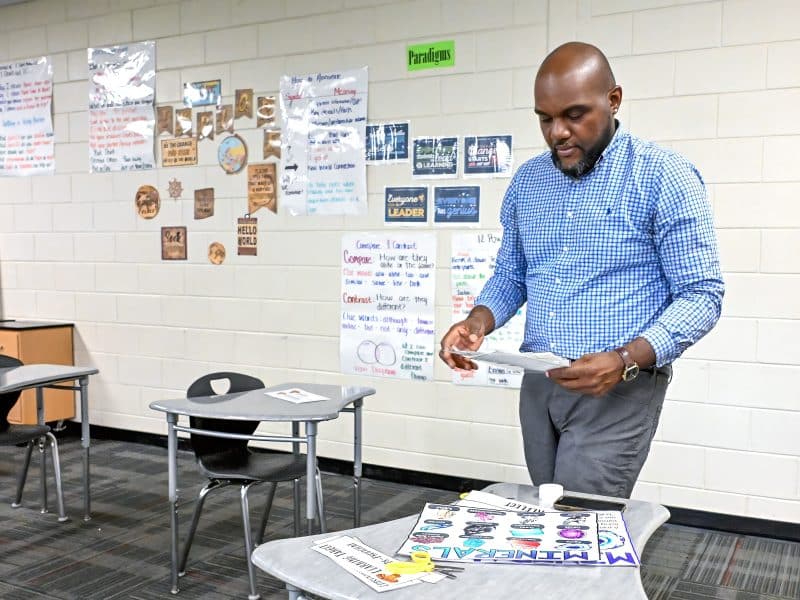
Clear-eyed optimism: New Bibb County teachers prep for back-to-school
First-year teachers in the Bibb County School District shared their excitement ahead of the 2026-2027 school year.

Macon summer lunches reach hundreds of hungry students
The Bibb County School District provided 32,000 meals to students during summer school in June.
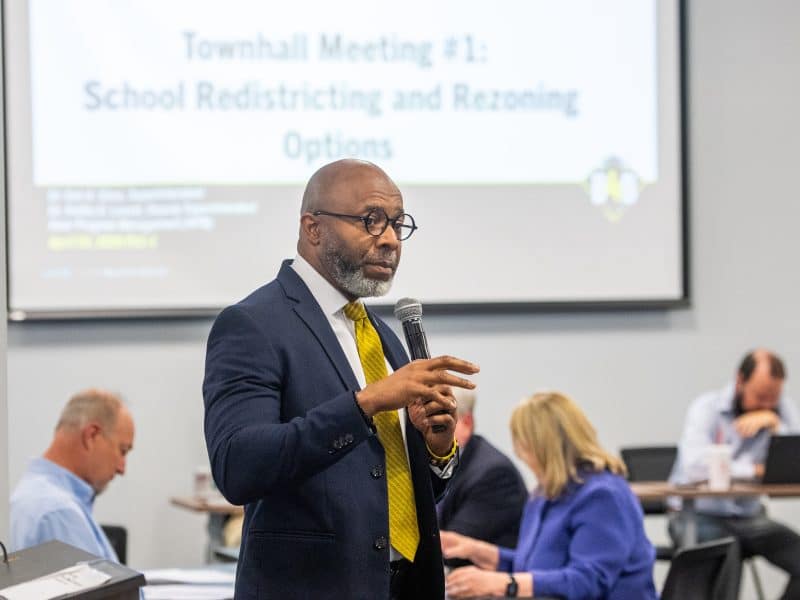
Bibb school board seeks private loan for expenses, brings back structured raises for staff
Financial staff at the Bibb County School District were authorized to procure a tax anticipation note, or a loan to cover expenses because of a cash flow mismatch at its July meeting.