
‘You got to put your foot down’: Blight tax collections surge as Macon-Bibb targets neglected properties
The county has accelerated its blight fight efforts over the past several years.
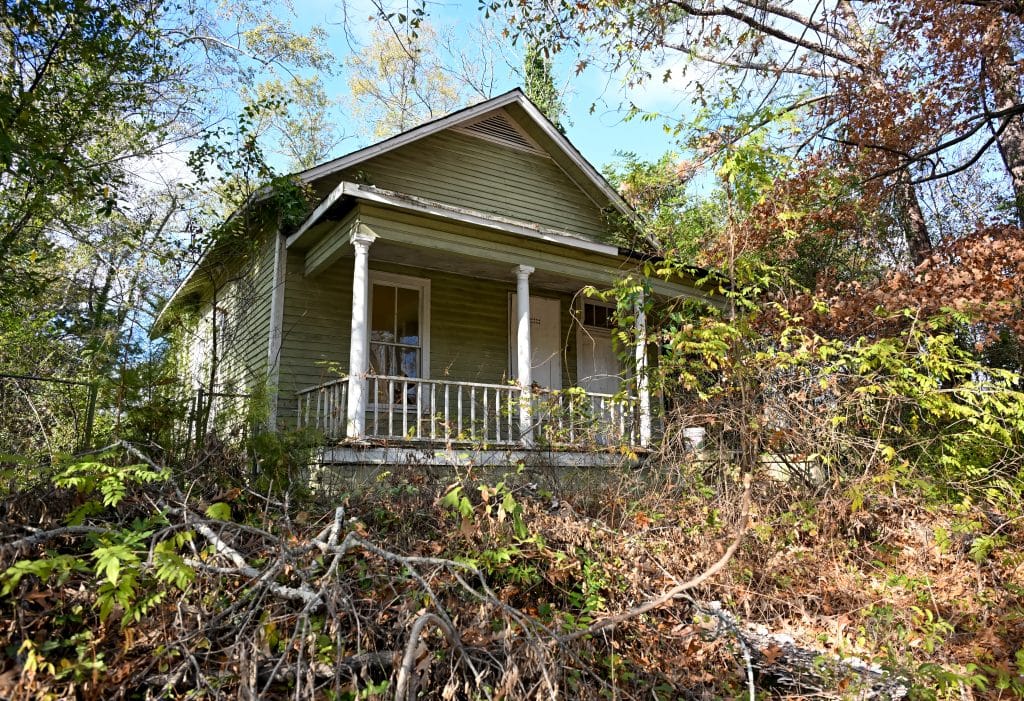
When potential homebuyers go to take a look at houses that seem picture-perfect in real estate listings, there are things none of them want to see in the nearby properties: broken windows, peeling paint and cracked foundations.
“If they ride through the neighborhood and they see one or two blighted houses, that’s probably going to give them concern, and most likely they will look somewhere else,” said J.T. Ricketson, Macon-Bibb County’s director of code enforcement.
Dilapidated buildings don’t just scare off prospective homebuyers. They take away from community pride. And they’re potentially dangerous. So, over the past several years, Macon has stepped up its so-called “blight fight.”
“It’s a team effort,” County Commissioner Paul Bronson said. “It’s not an attack on anybody or any entity, but you get to a point where you got to put your foot down.”
For properties in Macon-Bibb County that have been deemed blighted by the Department of Code Enforcement, the county can charge a “blight tax” to incentivize upkeep of the land or structure that officials have red flagged.
Bronson said that he has focused on community cleanups in his district, which includes much of downtown Macon, and “litter literacy” programs put on by Keep Macon-Bibb Beautiful that work to eliminate illegal dumping.
He added that, when homeowners are hit with the higher tax rate, they will work to get their property back within code. The blight tax, he said, is one way to “ensure people are being held accountable” for their properties.
Authorities have deployed various tactics to reduce the number of properties that are red-flagged. While the tax is not new, the amount of money that it collects each year has quickly grown as more properties have been placed on the blight list since the introduction of the county’s Department of Code Enforcement in 2021.
Ricketson said his officers look for overgrown grass, dilapidated structures and other signs of neglect while assessing properties. He added that running utilities are also inspected because, without them, the structure’s safety could be further compromised.
Only properties that are vacant may be charged a blight tax. After a review by county attorneys, a county website says, a notice is sent to the property owner with an option to appeal the county’s blight designation. A similar process is used when the county wants to raze blighted structures.
Mayor Lester Miller told The Macon Newsroom that he believes many of the properties designated as blighted are “speculative properties.” County officials said that these properties, left unkempt by owners who apparently live in other cities or states, can impact neighbors and prospective property owners in the area.
Ricketson added that blight notices are sent to “wherever we have an address for the owner, no matter where they are.”
Records obtained by The Melody show that more than two dozen properties that were charged a blight tax in 2020 were owned by limited liability corporations based in Atlanta and states as far away as California.
Once the notices are sent out, Ricketson said, property owners often try to repair the property to avoid the blight tax being added the following August, when the list of blighted properties in Macon-Bibb County is sent to the tax assessor’s office and the tax begins to accrue.
While a property’s overgrown landscape is one thing code enforcement assesses, Ricketson said that addressing only cosmetic issues will likely not be enough to clear a property off the blight list.
Since 2020, money collected from the blight tax has been directed into the county’s Blight Elimination Revolving Loan Fund to partially pay for the demolition of dilapidated structures around the county. Under Miller’s administration, the county has ramped up blight tax collection. The county commission voted in October to raise the millage rate for the tax to 15 mills, from 9.575, starting in 2026.
In Miller’s first year in office, the county charged $251,156 in blight taxes. By 2024, property owners in Macon-Bibb County were charged more than $1.2 million in blight tax, on top of other taxes, a more than 400% increase over four years.
Bronson believes that the years-long endeavor is paying off.
“We can see the light at the end of the tunnel, and this is one of those big pushes to try to help us get us over the finish line,” he said.
Before you go...
Thanks for reading The Macon Melody. We hope this article added to your day.
We are a nonprofit, local newsroom that connects you to the whole story of Macon-Bibb County. We live, work and play here. Our reporting illuminates and celebrates the people and events that make Middle Georgia unique.
If you appreciate what we do, please join the readers like you who help make our solution-focused journalism possible. Thank you
Related Articles
Charter changes, taxes and more: Bibb lawmakers prep for Gold Dome business
Here’s what Macon-Bibb County’s delegation is focused on as the legislative session begins.
The authorities that run Macon-Bibb: A primer
Get to know the authorities that make decisions on everything from water bills to housing across Macon-Bibb County.
Jail renovation contract divides commissioners
Macon-Bibb County commissioners voted 6-2 to hire a local company for preconstruction work on the county jail.