
What does Marco Rubio’s AI impersonation mean for all of us?
Someone used artificial intelligence to impersonate U.S. Senator Marco Rubio with a synthetic voice so convincing it fooled people at the highest levels of government.
The line between real and fake just got a whole lot blurrier.
This week, a story broke that sounds like science fiction. Someone used artificial intelligence to impersonate U.S. Senator Marco Rubio, not with a fake quote or edited video, but with a synthetic voice so convincing it fooled people at the highest levels of government.
The impersonator reached out through the encrypted messaging app Signal, using the name Marco.Rubio@state.gov, and left messages that sounded just like Rubio. They contacted foreign ministers, a U.S. governor and a member of Congress. It wasn’t a prank. It was a serious attempt to manipulate trust and authority using advanced AI.
We don’t yet know who was behind it or why, but we do know this: the line between real and fake just got a whole lot blurrier.
A new kind of deepfake
We’ve heard of deepfakes before, videos or audio clips that show someone doing or saying something they never did. Usually it’s a celebrity, sometimes it’s political and often it’s floating around social media. This incident was something different. It wasn’t about spreading misinformation online. It was about using AI to directly impersonate a real person to real people in positions of power.
Think about how this could work in your own life. If someone left you a voicemail and it sounded exactly like your boss, or your child or your pastor, wouldn’t you believe it? Most of us would. AI doesn’t need to be flawless. It just needs to sound close enough to pass.
The fragile nature of trust
The State Department responded quickly, warning diplomats and partners to verify communication through secure channels. The FBI is investigating, but the real issue is bigger than any one incident. We’re heading into a world where the sound of a voice or the appearance of a face is no longer proof of identity.
That affects all of us. Imagine a scammer using AI to sound like your friend, your kid’s school principal or your doctor. It’s no longer far-fetched. The tools are widely available and getting better every day.
This kind of manipulation doesn’t just trick people. It chips away at trust. If we start second-guessing voices we once knew by heart, what happens to our sense of connection?
Signal isn’t the problem
One thing that stood out in this story was the use of Signal. The app is known for its strong privacy features, including end-to-end encryption. This wasn’t about breaking into a system. It was about pretending to be someone you trust and walking through the front door.
Even the best technology can’t protect you if the person on the other end isn’t who they claim to be. Encryption can secure the message, but it can’t guarantee the identity behind it. That’s a whole new kind of risk we haven’t fully reckoned with.
The emotional toll of a fake voice
There’s something deeply unsettling about hearing someone’s voice, especially your own, say something that was never said. It’s not just a tech issue. It’s a psychological one.
Rubio hasn’t made a big public statement about the incident, but imagine how strange it must feel to know that your voice was used to deceive others. Even if the message didn’t cause harm, it creates doubt. Every time he leaves a voicemail now, the person receiving it might pause and wonder, “Is this really him?”
That’s what makes this technology so disruptive. It doesn’t just fool people in the moment. It creates long-term uncertainty.
What we can do
There’s no easy fix, but there are steps we can take.
We need better tools to verify identity. Just like we use two-factor authentication for logins, we may need verification methods for voice and video communication. A digital stamp saying, “This message is
verified,” could help.
We need to raise awareness. The more people know that AI can mimic voices, the more cautious they’ll be. That doesn’t mean living in fear, but it does mean being smart.
And we need accountability. If someone uses AI to impersonate a public figure, there should be consequences. And if tech companies are building tools that make this easy, they need to build in safeguards too.
Most importantly, we need to talk about this around dinner tables, in classrooms, at churches and, yes, in columns like this one. The more open the conversation, the less power this kind of deception has.
Why this matters in Macon
You might be thinking, “This happened in Washington. Why should we worry here in Macon?” Here’s the thing. If someone can impersonate a U.S. Senator, they can
impersonate a mayor, a school superintendent or a small business owner.
The tools are no longer limited to hackers and big tech companies. Anyone with a phone and an internet connection can access AI tools that generate voice, video and written content that looks and sounds real.
Macon is a place where relationships matter. We know our neighbors. We trust familiar voices. AI can try to copy that, but it can’t replace it. So let’s hold on to what makes our community strong. Let’s be alert, informed and connected.
In a world filled with artificial voices, the real ones matter more than ever.
Joe Finkelstein (AI Joe) has been a technology educator in Bibb County for more than 20 years. For questions and comments visit askaijoe.com
Before you go...
Thanks for reading The Macon Melody. We hope this article added to your day.
We are a nonprofit, local newsroom that connects you to the whole story of Macon-Bibb County. We live, work and play here. Our reporting illuminates and celebrates the people and events that make Middle Georgia unique.
If you appreciate what we do, please join the readers like you who help make our solution-focused journalism possible. Thank you
Author

Related Articles
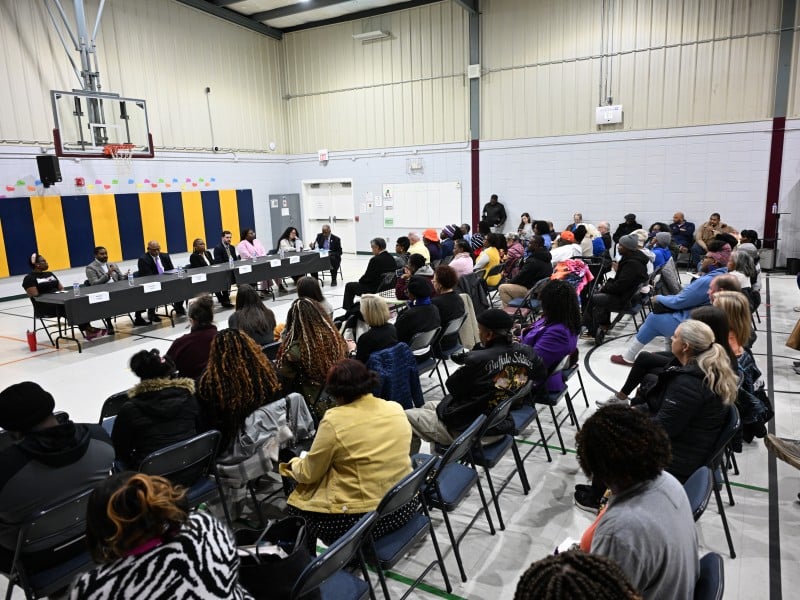
In District 5, a reminder of what politics can be
A recent candidate debate for Macon-Bibb County’s District 5 commission seat demonstrated what civic life is supposed to look like, according to The Melody’s executive editor Joshua Wilson.

Pizza, potholes and the case for smart local procurement
The American Society of Civil Engineers gave Georgia a middling C+ for its infrastructure, and some locales are worse than others and need help.
Good care, good people and goodbye, appendix
Joshua Wilson writes about his first stay at Atrium Health Navicent, as well as a trip to Miami for collaborative talks with others at a media forum hosted by the Knight Foundation.