
Fall is best for treating problematic vines, fire ants
Learn how to remove unwanted vines and prevent fire ants.
At the end of a hot, humid summer in Central Georgia, many of us home gardeners are “just done” with gardening and are ready to move on to other activities. However, I’m here to tell you that autumn is an important time for gardening! What you do in your yard in the fall will reap rewards in next year’s growing season.
While there is a whole menu of action items on my fall gardening to-do list, I will briefly mention two: problematic vines and fire ants.
Problematic vines
Removing unwanted vines, such as smilax (aka greenbrier), or non-native invasive vines, such as English ivy, seems like an impossible task. Yet, these vines will only grow stronger over time.
While digging may provide the best control for small vines, chemical use may be required for larger ones. In that case, fall is the ideal time to treat them with herbicide because the plants are actively directing nutrients from the leaves to the roots in preparation for winter dormancy. When the herbicide is applied, this natural plant process will carry it more effectively into the root system.
Although plant foliage can be sprayed, vines in sensitive areas, including those growing up trees, are best treated by the “cut-vine method.” Cut the vine off a few inches above the ground and immediately “paint” the stem or fresh-cut stump with undiluted herbicide. A good tool for this purpose is a sponge-on-a-stick, available anywhere you can buy paint.
There are two main types of vines, herbaceous and woody. Herbaceous vines have green, flexible stems that die back in winter. Woody vines produce a perennial hard woody stem above the ground but depend on trees or other structures for support.
University of Georgia Extension recommends using a product with the active ingredient glyphosate for herbaceous vines or one with the active ingredient triclopyr for woody vines. Look for these chemical names on the front product label, usually found in the bottom left corner. Both chemicals are systemic, working within the plant’s vascular system; so, they have very little soil activity. Carefully read the label before use and remember that the label is the law.
This job may not be once-and-done, particularly if the vine is well established. If it resprouts, treat it again and be persistent.
Fire ants
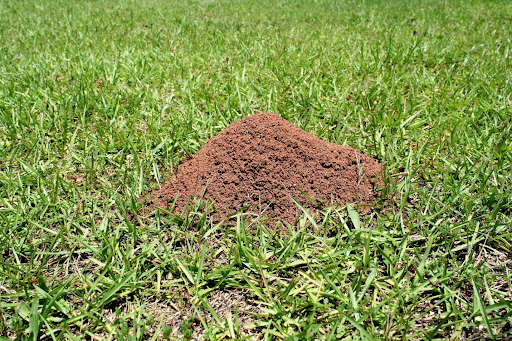
By this time of year, fire ant colonies have grown to their peak size. Ants are most active when temperatures are moderate. Workers will move up higher in the ground and actively forage for food. Consequently, fall is the best time to control them.
UGA specialists recommend broadcasting a fire ant bait (many formulations and brands are available), according to label directions. Without disturbing the mound, spread fresh bait granules in late afternoon when the ground is dry. It can be applied in either of two ways: across the entire home lawn, using a clean spreader not used for fertilizer, or sprinkled around the perimeter—not on top—of each active mound. Worker ants will carry the bait into the mound and expose other ants, including the queen, and the food supply.
If there is still ant activity after 10-14 days, you can target the mound by applying a contact insecticide, such as acephate (sold under the Orthene name).For more tips and action items on the fall gardening to-do list, plan to attend a free community class at the Washington Library on October 1 at 6pm. For more information on the class or the topics in this article, contact us at bibb.extension@uga.edu.
Before you go...
Thanks for reading The Macon Melody. We hope this article added to your day.
We are a nonprofit, local newsroom that connects you to the whole story of Macon-Bibb County. We live, work and play here. Our reporting illuminates and celebrates the people and events that make Middle Georgia unique.
If you appreciate what we do, please join the readers like you who help make our solution-focused journalism possible. Thank you
Related Articles
Prune for better fruit: late-winter cuts pay off
Proper pruning can feel drastic, but thoughtful cuts now lead to better fruit later.

New director to lead Mercer center for strings, symphony orchestra concert fast approaching
The McDuffie Center for Strings will welcome a new director this fall. Also, the Macon-Mercer Symphony Orchestra will perform Monday.
Roses need love, too: Prune soon
For beautiful garden roses in April, start pruning around Valentine’s Day.