
It formed to save downtown Macon. Now Urban Development Authority’s reach is much expanded
When the Macon Mall opened in 1975, the Macon-Bibb County Urban Development Authority was formed to save downtown. Now, a half century later, it is working to revitalize the mall.
A new chapter for The Melody
Our team and coverage are moving to The Telegraph. Make sure you look for The Melody's community-first journalism as a section highlighting the people, places and moments that are the rhythm of Macon.
This story is part of “Power,” a series by The Melody examining local authorities — quasi-governmental bodies that make consequential decisions about housing, water, transit, development, health care and public spending — that shape life in Macon-Bibb County. Read other parts of the series at maconmelody.com/power.

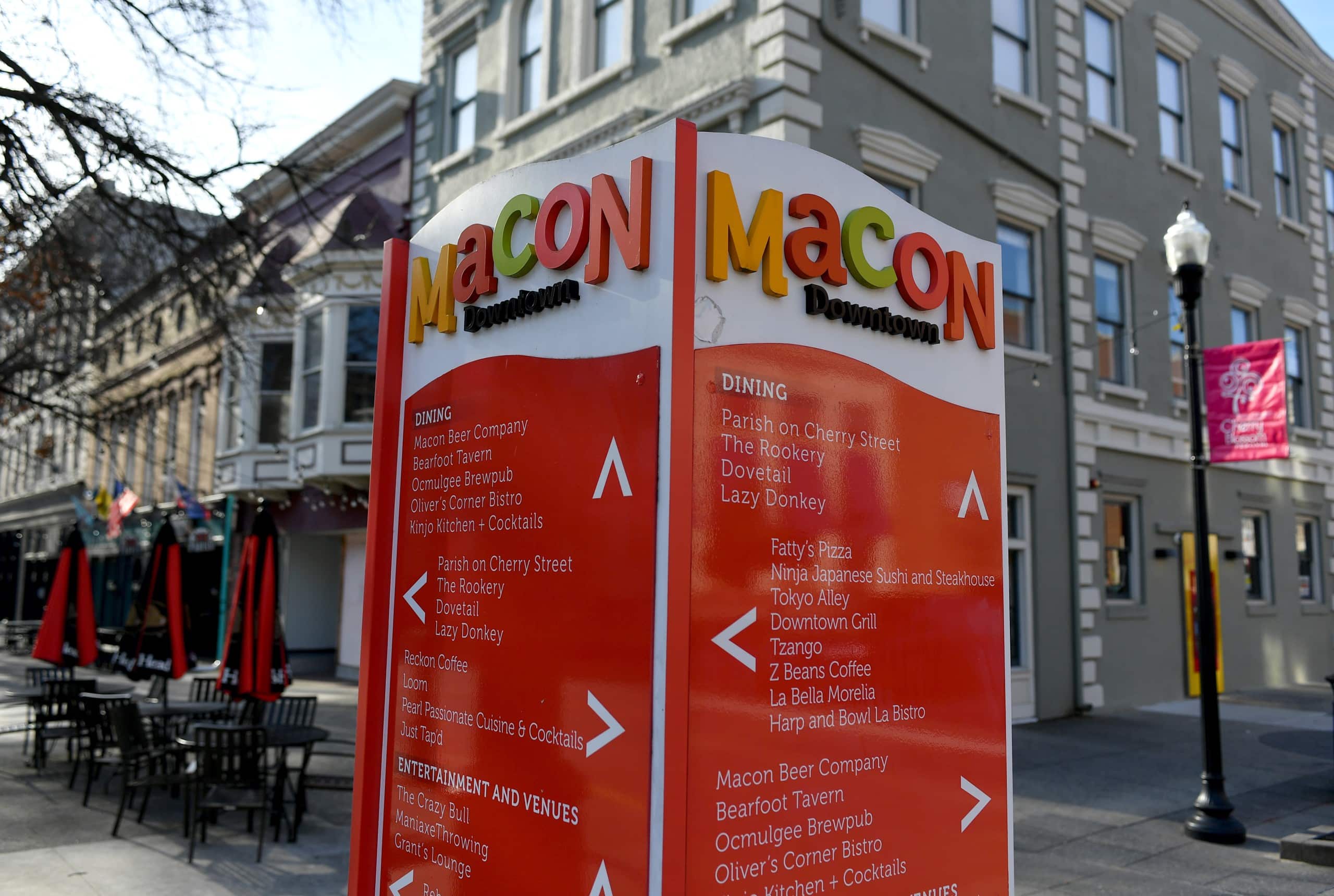
As the Macon Mall was preparing to open in the mid-1970s, downtown was on the edge of a precipice, in danger of falling into a death spiral of closed storefronts, empty streets and low foot traffic.
The central business district’s largest retailers had announced plans to open up shop at the behemoth indoor shopping complex four miles away.
Worried business leaders with the Greater Macon Chamber of Commerce knew they needed to act. So, at the chamber’s behest, the Macon-Bibb County Urban Development Authority was formed in 1974, in anticipation of the mall’s opening in July 1975.
“They definitely were seeing the early stages of downtown decline and wanted to create an authority, a downtown development agency, to do something about it,” said Alex Morrison, executive director of the Urban Development Authority (UDA).
Back then, the No. 1 priority of the joint city-county board was to save the city’s core. It aimed to expand existing businesses and recruit new ones to that area.
Now, some 52 years later, one of the UDA’s main focuses is on rescuing the very same mall that once threatened downtown.
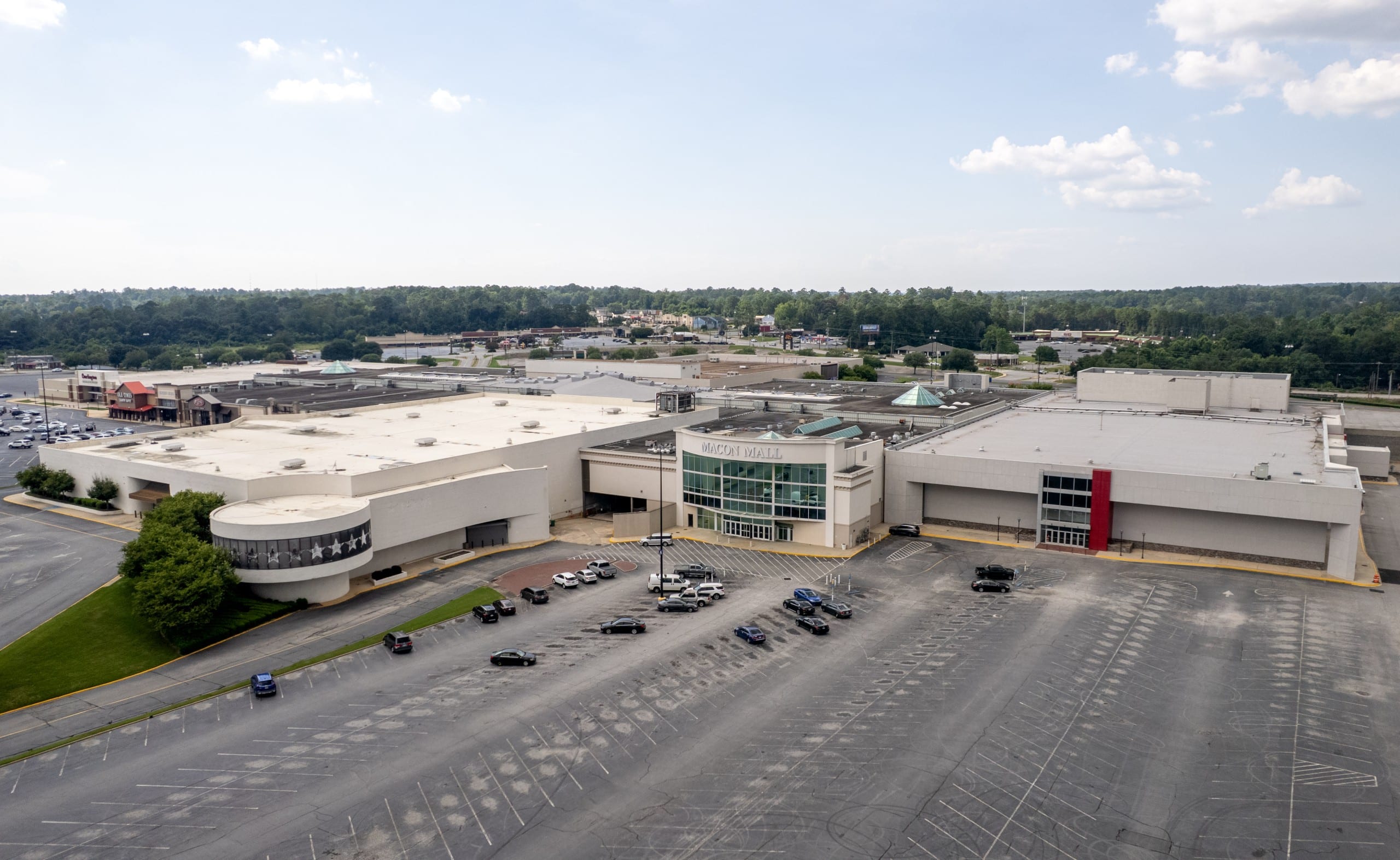
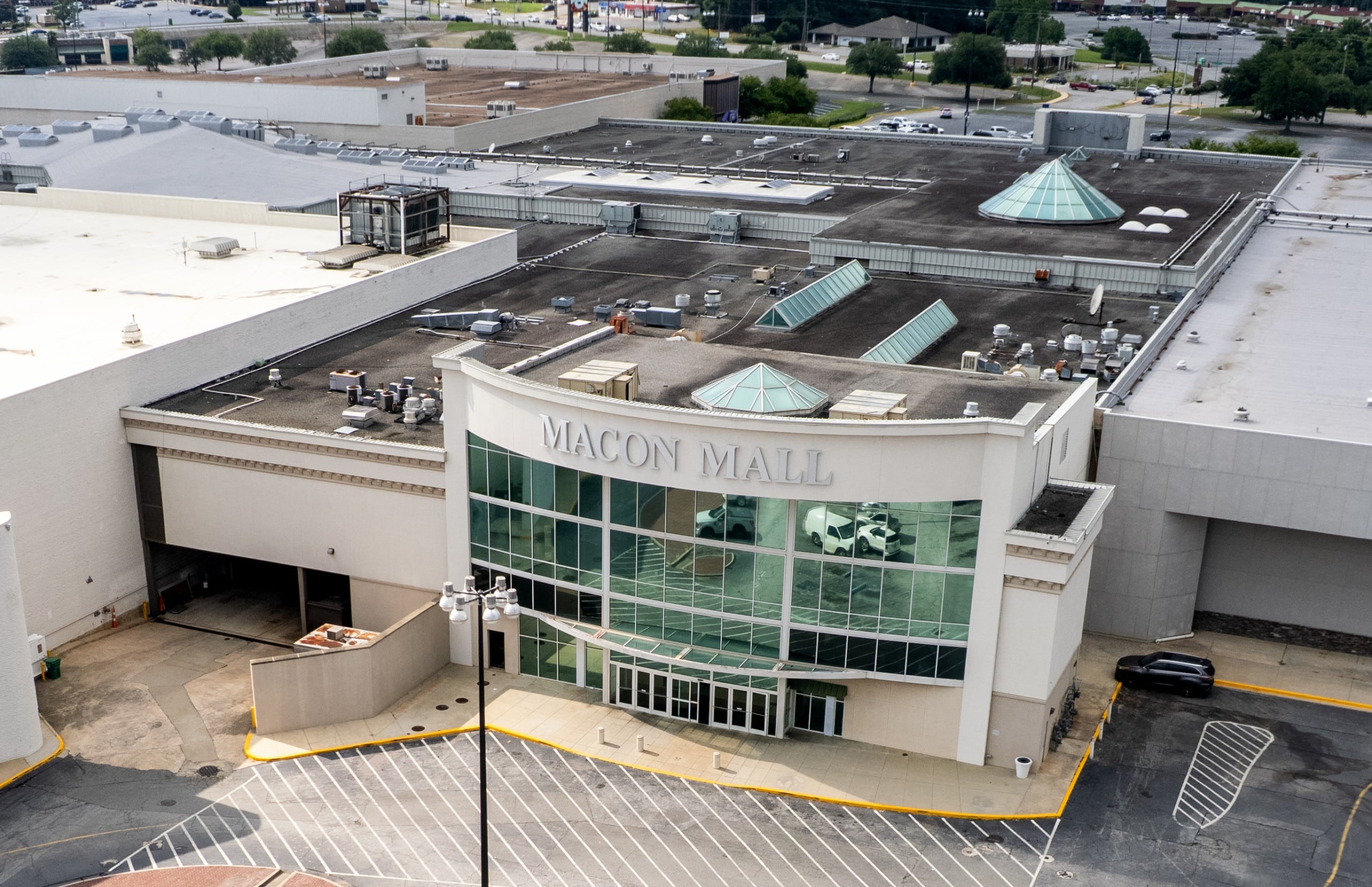
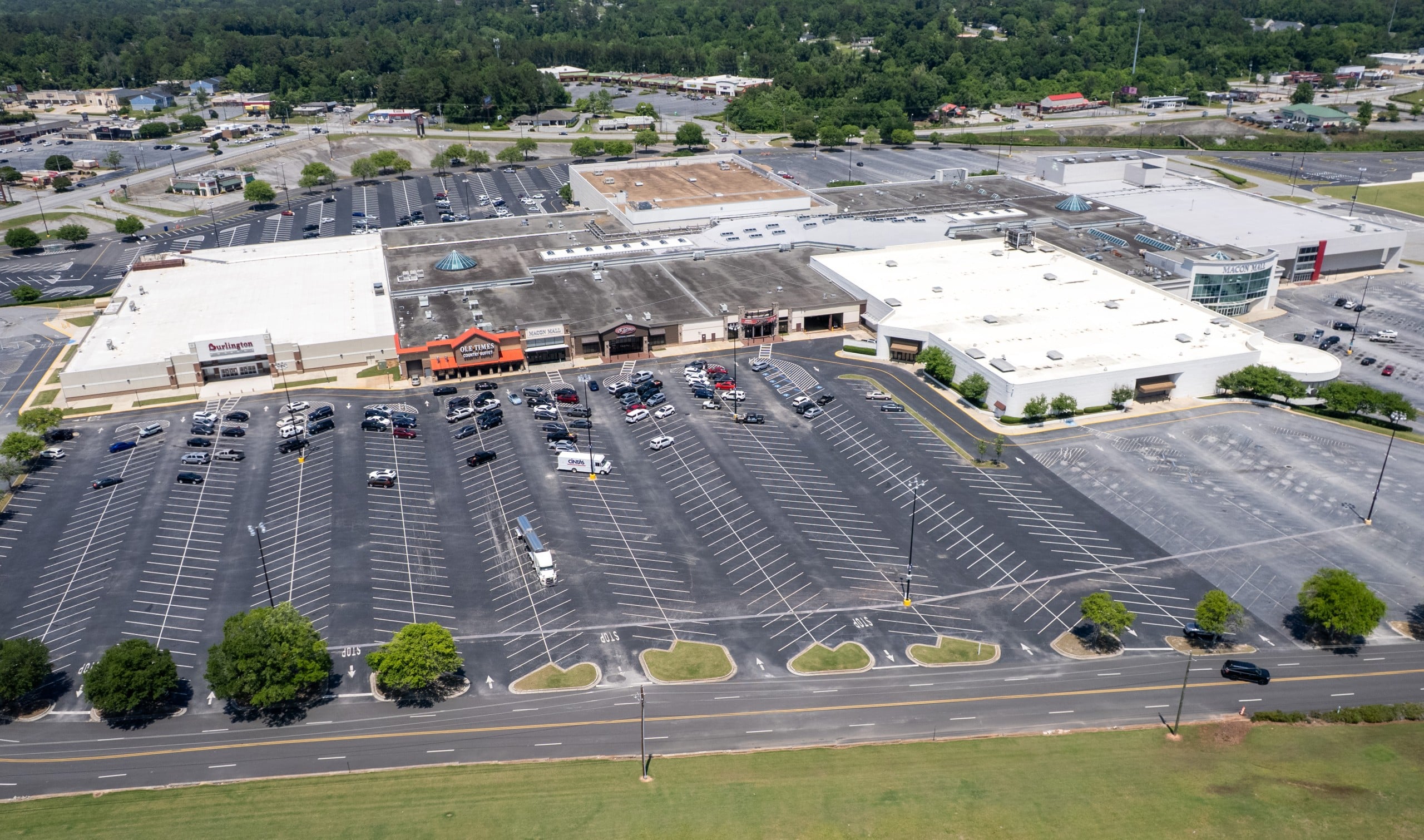
“There’s an inherent irony in that,” Morrison said. “In as much as one thing is symbolic of downtown suffering the way that it did, the mall is that thing. Then the downtown agency ends up owning the mall some 50 years later. … Of course, it speaks to the economic forces that live far beyond Macon. That story of, ‘Mall takes away from downtown and then mall dies while downtown succeeds,’ I mean, that’s a trope at this point. That is a commonality among a lot of cities.”
As the UDA’s mission has expanded over the years, so has its reach. It has projects in the works not just downtown and not just at the mall. The authority’s footprints are all over the county.
Old mall, new purpose
Sprawl and de-urbanization in the 1970s through the 1990s helped shape Macon and other cities across the country.
The first blow to downtown retail occurred in September 1961 when Westgate Shopping Center opened at Eisenhower Parkway and Pio Nono Avenue. It was the first air-conditioned mall in Georgia with 30 stores under one roof. When the Macon Mall opened 14 years later, many retailers moved shops there from Westgate.
“That was where everybody went to recreate, to have leisure, to shop, to eat, to dine, to hang out with friends. That’s where you passed the time,” Morrison said of the Macon Mall. “Different retail trends — and specifically the internet — took away that type of societal bond.”
In 2006, when the Shoppes at River Crossing opened on the north side of the county, some stores in the Macon Mall relocated to the new shopping center; others closed for good.
Meanwhile, downtown “kind of became en vogue again because it had that natural ‘live-work-play’ element, and malls didn’t have that ‘live’ aspect to it, so they didn’t have that natural cause for revitalization,” Morrison said.
In 2010, the Hull Property Group bought the Macon Mall out of foreclosure. The Augusta-based companydemolished the east wing, a $50 million expansion built in 1997 that included Parisian and a two-story food court.
Then, in 2021, Hull Property Group donated more than half of the mall to the UDA.
When the city and county consolidated into a single government eight years earlier, Morrison said it “meant that we have the ability to do projects in more areas throughout the county,” such as the Macon Mall.

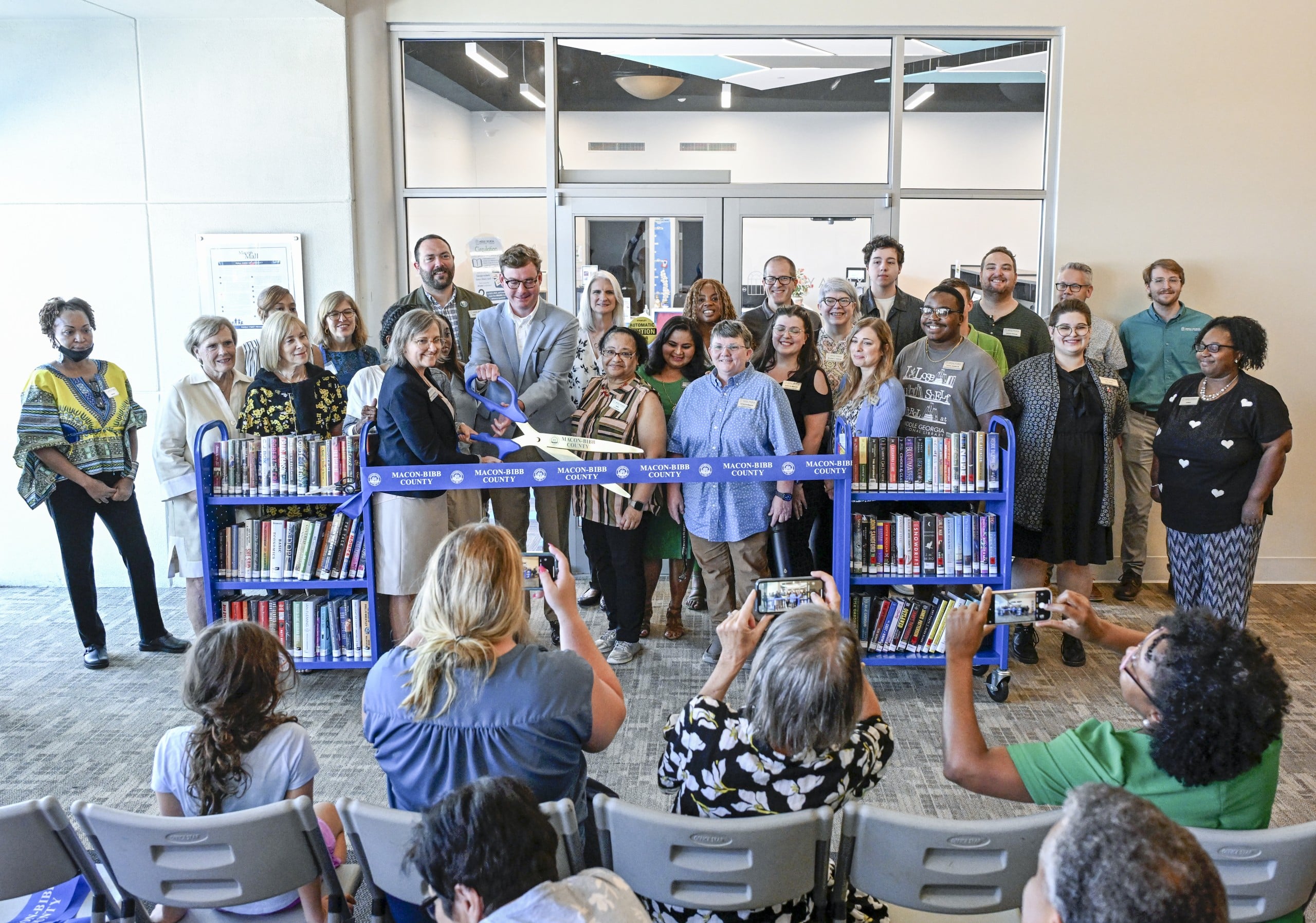
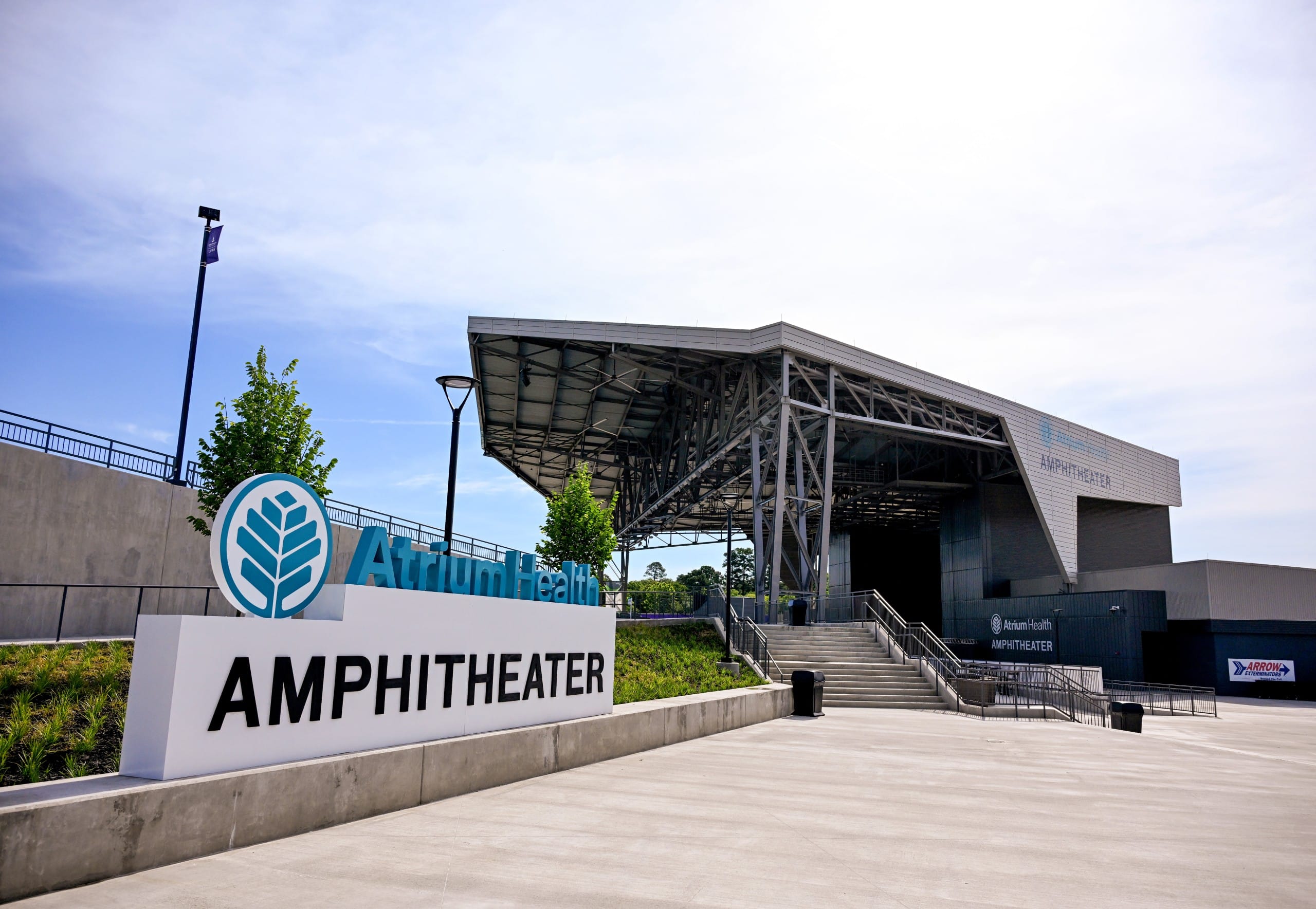
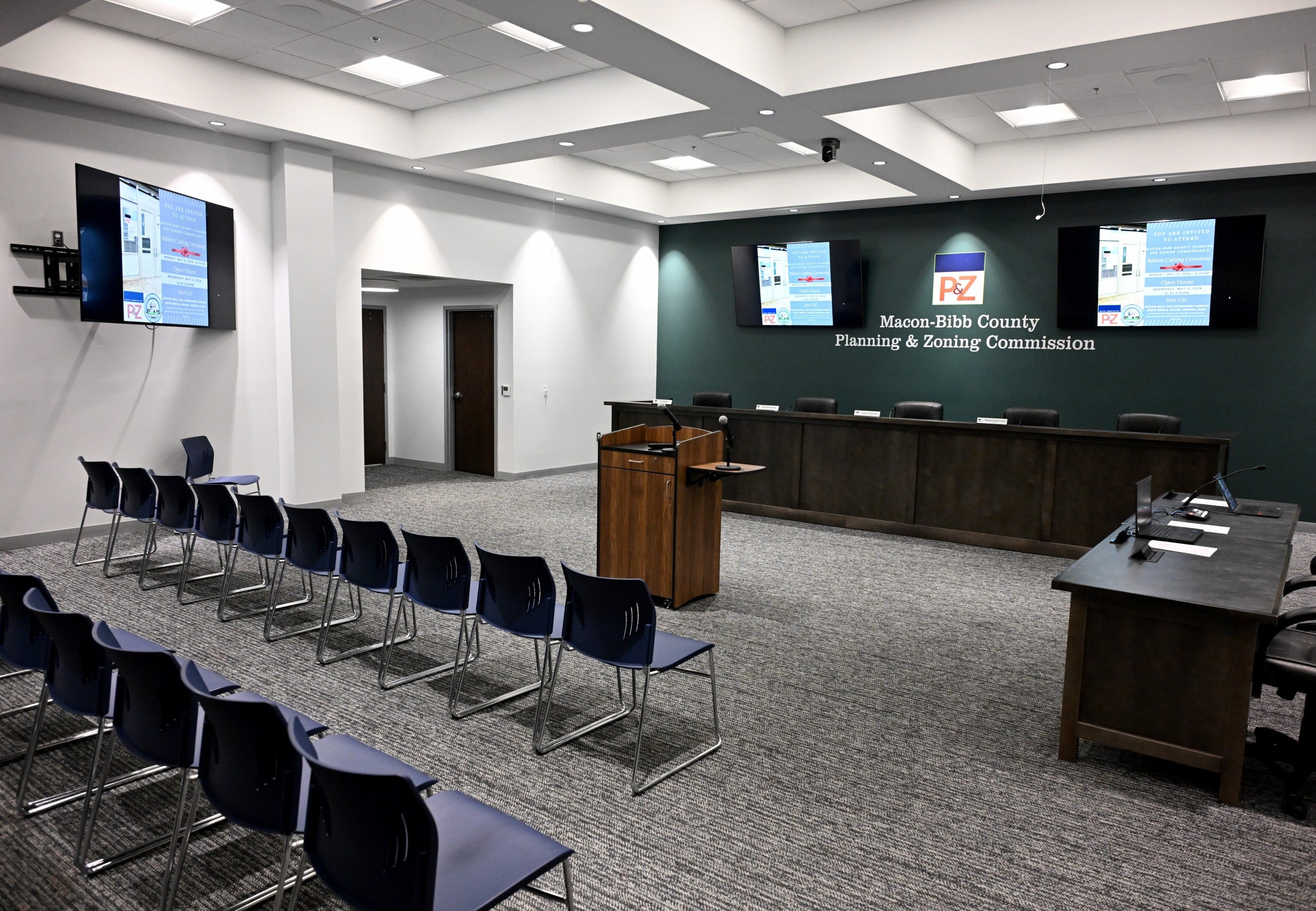
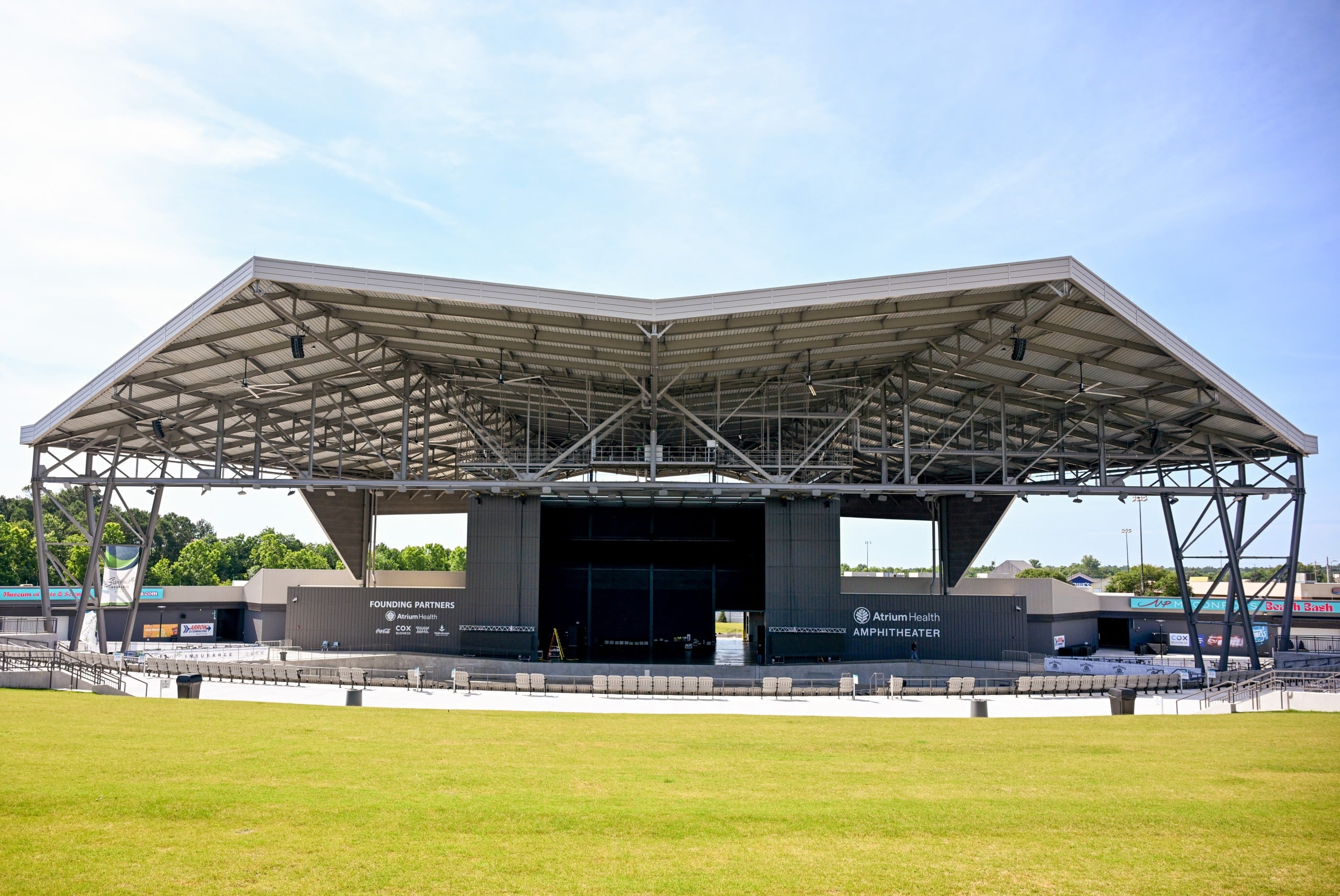
Since then, Mayor Lester Miller has relocated several county and county-adjacent offices from downtown to the mall, including the Middle Georgia Regional Commission, the planning and zoning board, a library branch, a courthouse annex and the elections office.
The county also built an amphitheater in the parking lot. It repurposed part of the mall for 32 pickleball courts.
Morrison said the aim is to spur revitalization of the area and return equity to homeowners.
“As the mall’s property value decreased, it was dragging down the property values of people in the miles around it, commercial and residential, meaning that promise that had been there from the mall – that this mall is always going to support your home equity – that diminished,” Morrison said. “While Macon-Bibb County did not create that problem, it did have an opportunity to step in and provide stabilization and a redevelopment opportunity for that corridor, which is the exact reason the urban development authority was created. … There is a cosmic irony that it’s full-circle.”
An ‘internal redevelopment agency’
While the UDA remains “a separate governmental agency” from the county, it “exists as really this internal redevelopment agency” for the county, Morrison said.
When the city and county consolidated, Morrison also became the county’s assistant director of economic development. In recent years, that job title was changed to director of planning and public spaces. The dual roles of executive director of UDA and county director of planning and public spaces allow for staffing and operational efficiency, he said.
Powers of the seven-member UDA board include the ability to: issue public-purpose bonds; offer developers financial incentives, including tax breaks; buy, sell and lease property; establish downtown parking rules and oversee enforcement.
Like many other authorities, all appointments to the UDA board are now made by the mayor and county commission instead of the city and county governing boards.
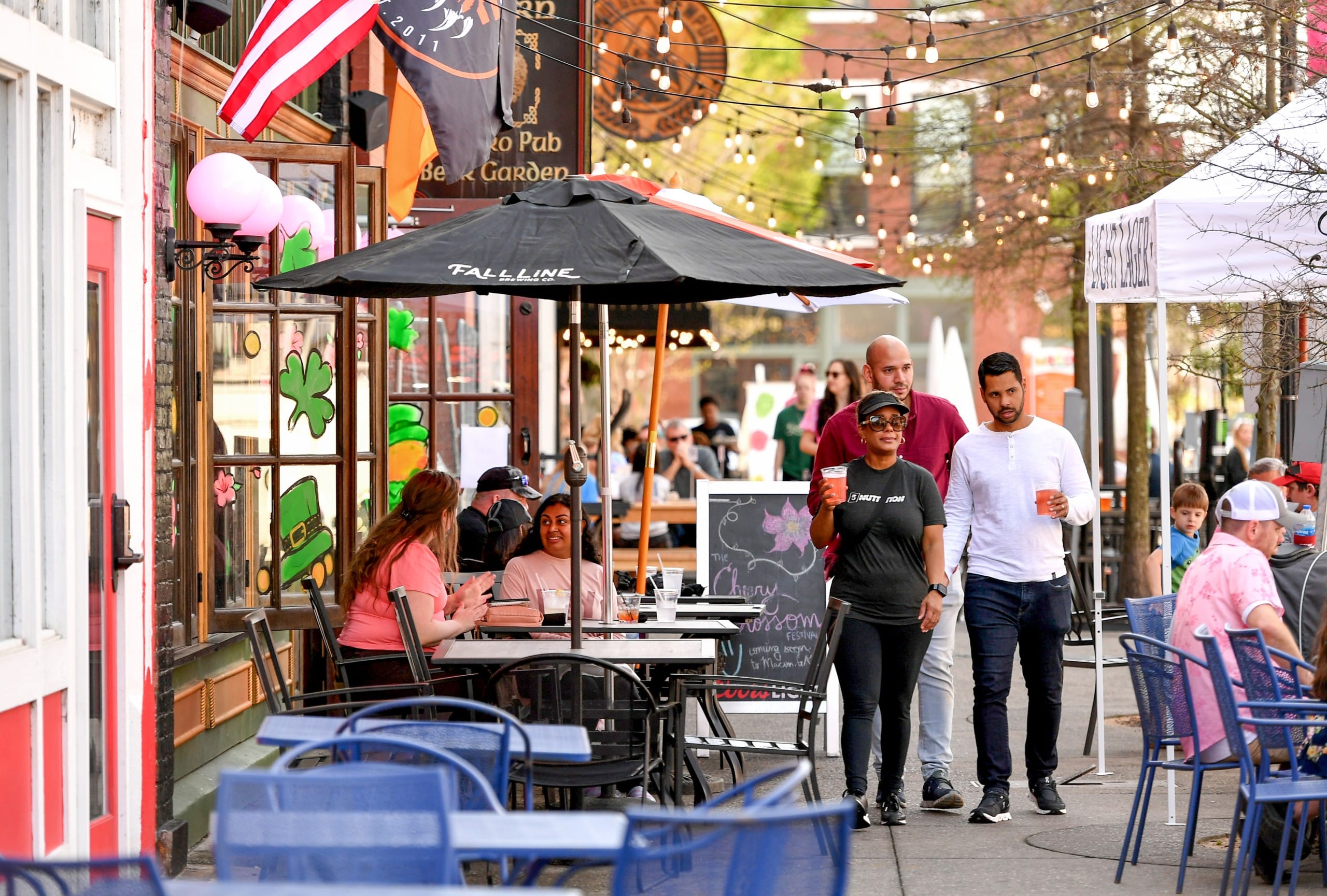
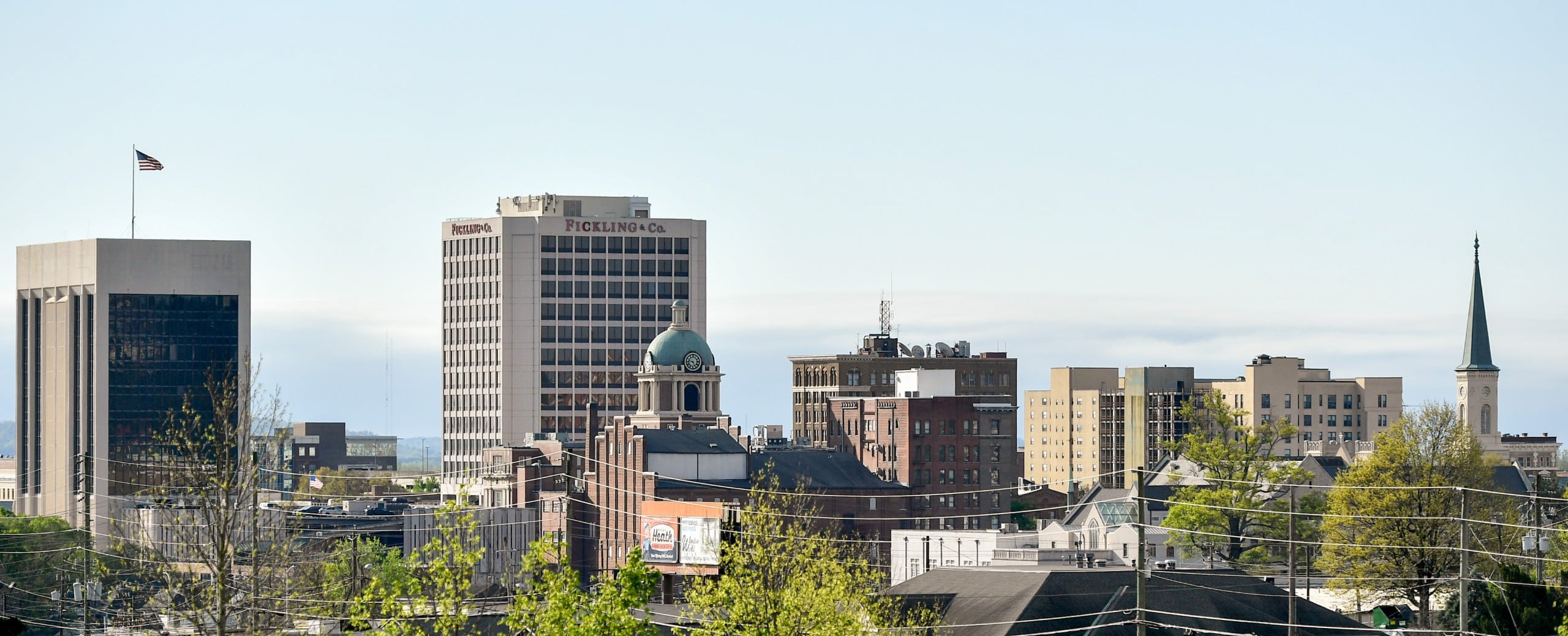
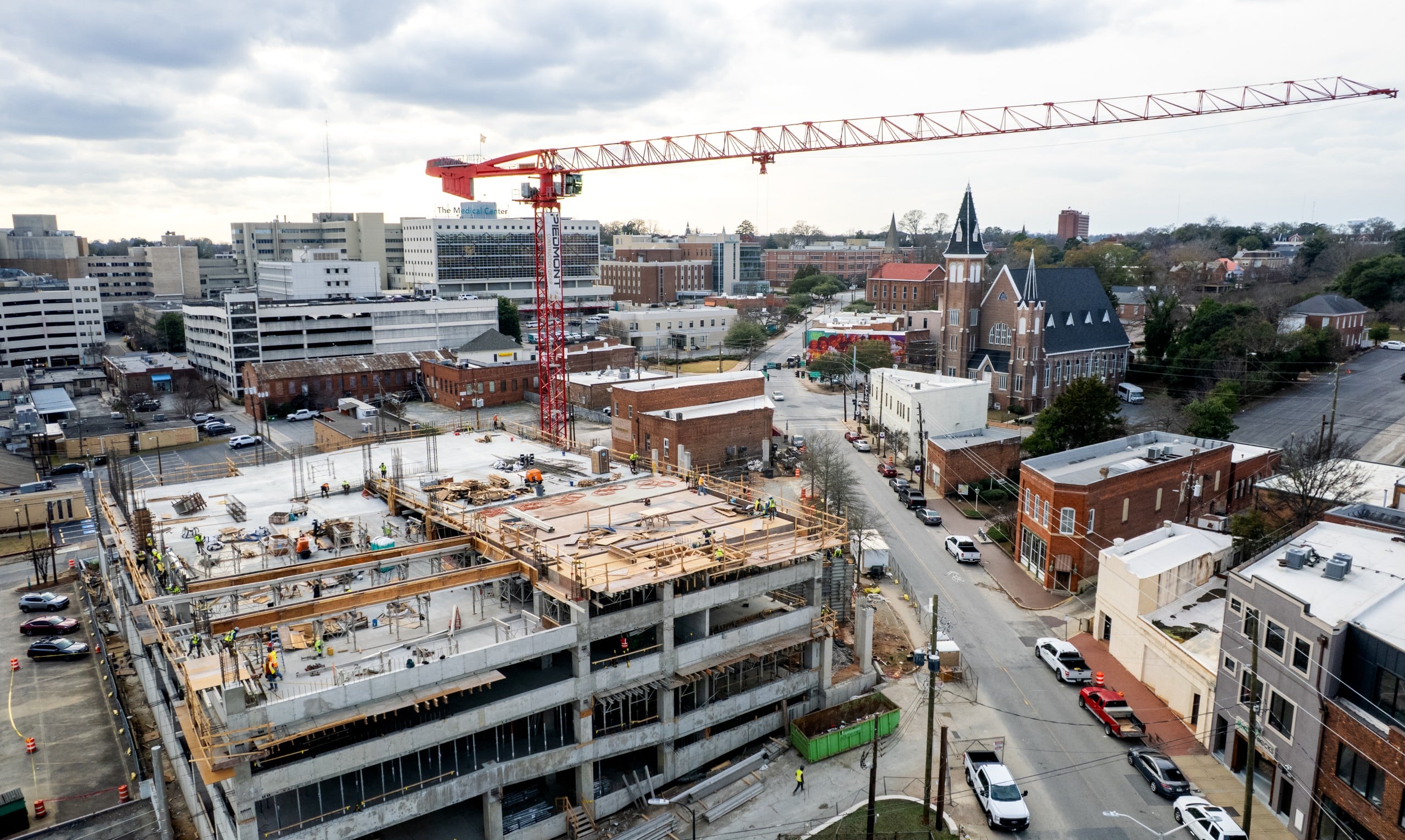

The UDA handles the bidding process for some county contracts, including the construction of the health department’s new headquarters on Forsyth Street.
The UDA also has the power to exercise eminent domain, which requires approval from the county.
Morrison said he only recalls one instance when the UDA has used eminent domain. The property on the city’s east side was near the old Bibb Mill, which the UDA and the Macon Arts Alliance developed into the Mill Hill Arts Village.
The project included renovating deteriorated homes around the old mill and selling them to buyers. It also included a new greenspace, Bicentennial Park, which features large-scale art and an open field to be used as a stickball court. A $310,000 grant from the National Park Service helped the UDA restore the DeWitt-McCrary House nearby on Hydrolia Street.
On the east side of Pleasant Hill, the UDA took charge of improving Linear Park, which lacked desired amenities such as shade trees and pavilions. The park was designed by residents and built by the Georgia Department of Transportation.
In addition, the UDA owns the old Macon Health Club and a bank building at Cherry and First streets, properties it acquired in 2023 as part of a land trade agreement with the Macon-Bibb County Hospital Authority and the Macon-Bibb County Industrial Authority.
All of this is encompassed in the UDA’s broad redevelopment powers.
“That’s why it’s so hard to grapple with what the Urban Development Authority is because it doesn’t have that one thing that you can say it does,” Morrison said. “It’s not housing. It’s not industrial. It’s not land bank. It’s not water. It’s kind of everything else.”
In December, the UDA announced it may buy the Marriott Hotel near the Coliseum for $13 million if another entity doesn’t buy it in the coming months.
Morrison said it is likely the county will ask the UDA to issue bonds for the sports and events arena planned near the Coliseum. Construction is set to start this summer though a final cost has yet to be determined, and contracts with the companies selected to build it have not been finalized.
The authority’s work has one goal: improving lives, Morrison said.
“We are always trying to make sure that the work we do is benefiting people — financially, of course, emotionally. We want to make sure that Macon is always becoming an even better place to live, and that’s the underpinning of our work.”
Fast facts
- Board members: Kaitlynn Kressin, Ryan Griffin, Jonathan Barton, Jan Beeland, Charles Richardson, Jim Crisp, Lisa Berrian
- To visit the UDA’s website, click here.
- Click here to read the UDA’s bylaws.
- Click here to read the UDA’s most recent audit.
- Public meetings take place on the second Thursday of the month at 8:30 a.m. with a work session on the fourth Thursday of the month at 8:30 a.m. in the mayor’s conference room at Macon City Hall, 700 Poplar St.
Author

Related Articles
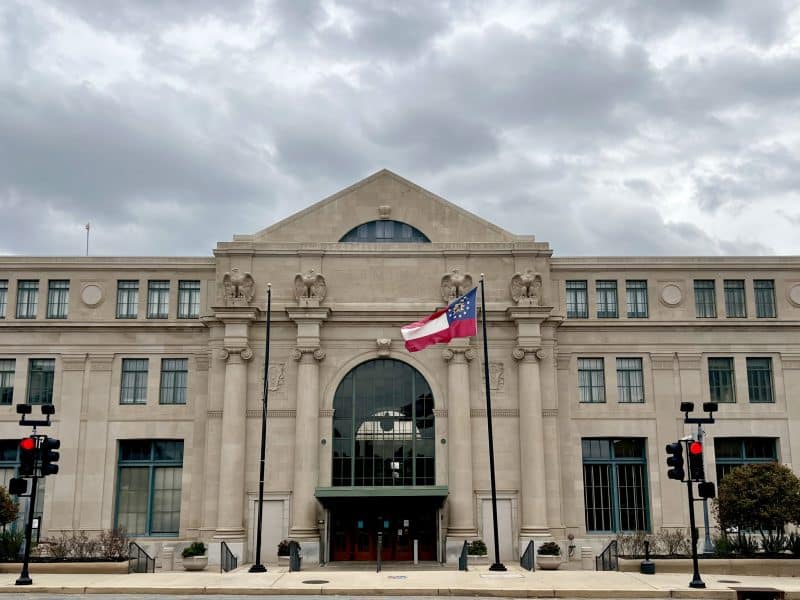
All aboard? GDOT asks residents to weigh in on restoring passenger train service to Macon
The Georgia Department of Transportation is surveying the public through Aug. 6 to gauge interest in Atlanta-to-Savannah rail service that could include a stop in Macon.
Are corporate investors responsible for one-third of all housing sales since 2020?
Learn the answer to this question in the fact brief in partnership with Gigafact.
Macon’s Boys and Girls Club closed for 90 days, families search for alternatives
The club had many after-school programs that are now on hold.