
‘If you can help somebody, help’: Macon faces a homelessness crisis with no simple fix
Communities across the country have found that homelessness is a complex problem with no simple solutions. This is also true for Macon.
A new chapter for The Melody
Our team and coverage are moving to The Telegraph. Make sure you look for The Melody's community-first journalism as a section highlighting the people, places and moments that are the rhythm of Macon.

From her perch on Cherry Street, Teresa Spencer has observed downtown Macon for nearly four decades. When she assesses the homelessness problem in the city’s core, she feels fairly confident in this: “It’s worse,” she said.
“Now,” added Spencer, owner of Paramount Barber and Style Shop, “you’re seeing ladies with children.”
Just before the pandemic, she started noticing an uptick. It’s a sad situation, and people clearly need help, she said.
Spencer is far from alone in her belief that the number of homeless people is rising. In Macon, numbers from a recent count of homeless people have yet to be released. But a Bibb County Sheriff’s Office spokesperson said law enforcement officers have seen an increase in homeless encampments across Macon.
South Bibb County residents took to social media to express concern about an encampment near woods close to Houston Road and Hartley Bridge Road. Some of the residents complained about accumulating trash from the encampment and wondered whether drug and alcohol addictions prevented people from seeking help; others were sympathetic to the plight of homeless people.
That encampment was recently cleared. Another, near Riverside Drive and Spring Street, has been swept multiple times.
Communities across the country have found that homelessness is a complex problem with no simple solutions. It’s driven by poverty and a lack of affordable housing, but also made more complicated because many people living on the street have mental illnesses and drug addictions.
“You have to take into consideration that there is a percentage of this world that’s going to need help forever. But how do we make that happen?” said Alison Bender, the director at Brookdale Resource Center, a transitional housing and support center for people who are homeless. “How do we have enough empathy as a society to be able to do that?”
While she believes that the number of people who are homeless has increased, her center has seen a slight decrease in those seeking Brookdale’s long-term services.
Bender noted that affordable housing is a crisis across the country and, specifically, that there aren’t many options for housing for people who have mental health or substance abuse challenges, unless they are in a program that can provide shelter.
River Edge Behavioral Health offers help, but there are limits to what it can do in terms of housing availability, she said.

On weekdays, an average of 100 homeless people visit Macon’s Depaul USA Daybreak Resource Center for meals and to take advantage of housing placement programs, laundry and shower facilities, the health clinic and enrichment classes.
Sister Deborah Mallott, a Daughters of Charity nun and director of the center, applauds Mayor Lester Miller’s efforts to make more affordable housing available.
Downtown, Shauna Ramirez, store manager of Carrie’s Bridal Collection on Second Street, said she often encounters homeless people outside her store.
“I find them a lot of times on my stoop or the front area wanting to sleep, and I always have to run them off,” she said.
She tells them, “Listen, 10 o’clock, I have customers. You have to go away.”
In early March, members of the Downtown Macon Community Association came together to discuss how to better respond to people experiencing homelessness in the area.
Last October, the Downtown Business Improvement District approved more than $100,000 to fund outreach, sanitation and safety efforts aimed at addressing homelessness.
Despite the growth of the problem, Terrence Gordon, owner of Incisura Clothing & Accessories on Poplar Street, said that the homeless people he comes in contact with downtown are very polite.
Spencer believes that the homeless people downtown won’t go to the shelters because of the rules and choose to stay downtown where they can be free.
Mallott doesn’t disagree. She said she would be interested in seeing if a low-threshold shelter, with fewer rules, would be accessible to more people. Having that, she said, would make it possible for people to be safe and out of the weather — as long as they aren’t violent, in possession of a weapon and aren’t doing drugs.
In itself, homelessness isn’t a crime, and it shouldn’t be treated as one, advocates for people without homes say.
Bibb deputies respond to incidents involving homeless people based on the specific circumstances.
Homeless individuals who are not engaged in criminal activity are rarely reported to law enforcement, the sheriff’s office spokesperson said. However, if a person becomes a nuisance, such as soliciting money, that may be considered a criminal offense under Georgia law. If an individual is lying in a public roadway without a medical or mental health concern, that is considered obstruction of a public roadway, which is also a criminal offense.
When necessary, the sheriff’s office coordinates with Code Enforcement to clear encampments. The frequency of these efforts varies depending on the location and property owner. Encampments can crop up quickly and in areas that are not immediately noticeable.
Bender at Brookdale believes that there should be a way to cater to people in different situations.
One of the reasons why her facility’s name was changed to include resource center “is because the goal was to be the place where people could come to get the help that they need, in a one-stop shop situation,” Bender said. “For us to continue that path is to be more open to helping folks that don’t need to stay here or that need the assistance in a different capacity.”
She would be interested in opening a new shelter that could do just that. Or, she said — if she had the money — she’d want to build affordable housing on the properties that have been cleared by the city in its effort to reduce blight.
She realizes there are limits to what Brookdale can do: “My program manager has this great saying. She says, ‘We can do anything, but we can’t do everything.’”
Meanwhile, many of the people who find themselves without shelter say they are just trying to survive.
Angela Payne, who is a native of Macon, has been homeless for about three years now. She has visited Daybreak, as well as Loaves and Fishes and Macon Outreach at Mulberry. But because she receives food stamps, she said, she doesn’t go as often anymore and “wants to save … resources for people who actually need it.”
She just wants a place to lay her head at night, she said. She was recently arrested for criminal trespass for sleeping in front of a building and would like the city to be more understanding.

Thomas Parrish III is originally from Hartford, Connecticut, but has lived in Macon for over 20 years. He said he works at a restaurant downtown.
He doesn’t have a home because he doesn’t make enough to be able to save and cover his daily expenses.
He remembers the time he saw a man going through the trash. He decided to give him his last $5. Parrish was with a woman at the time and her response was, “How can you give somebody something and you’re homeless, too?’”
“I said, it ain’t got nothing to do with being homeless,” Parrish said. “If you can help somebody, help. Simple as that.”
Author

Related Articles
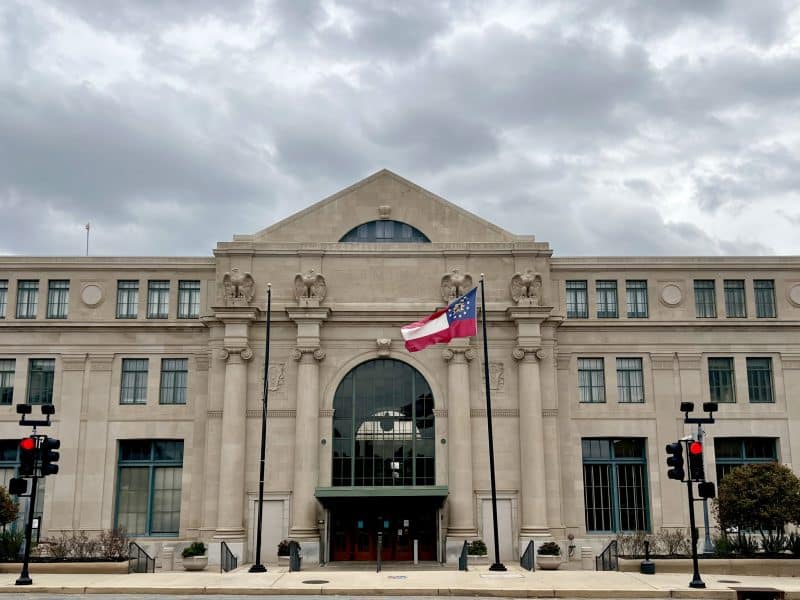
All aboard? GDOT asks residents to weigh in on restoring passenger train service to Macon
The Georgia Department of Transportation is surveying the public through Aug. 6 to gauge interest in Atlanta-to-Savannah rail service that could include a stop in Macon.
Are corporate investors responsible for one-third of all housing sales since 2020?
Learn the answer to this question in the fact brief in partnership with Gigafact.
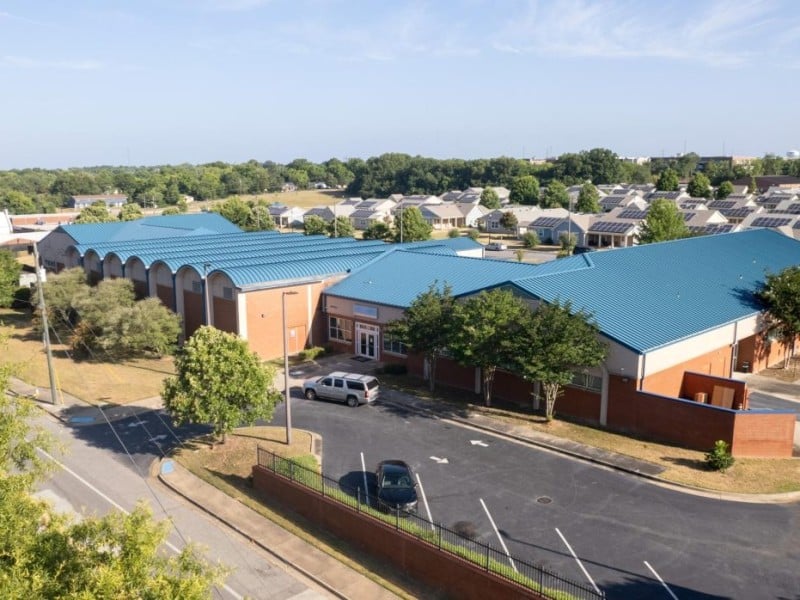
Macon’s Boys and Girls Club closed for 90 days, families search for alternatives
The club had many after-school programs that are now on hold.