
Big buzz, no bite: What to know about cicada killers
Cicada killers (Sphecius speciosus) are solitary wasps native to North America. As their name suggests, this wasp species hunts cicadas.
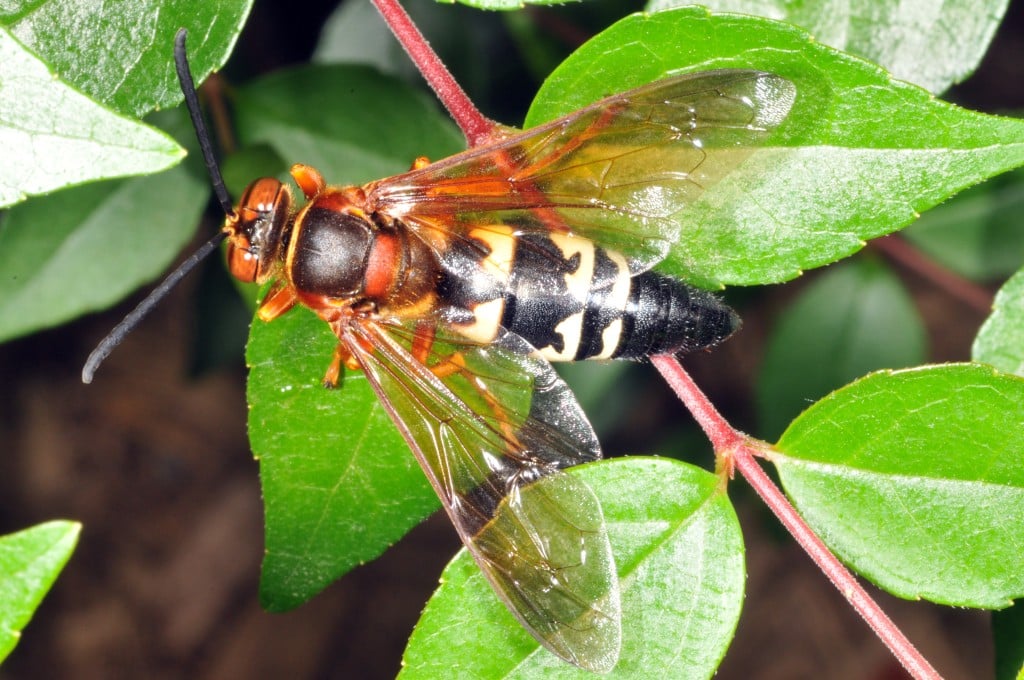
During the late summer months, you may notice large, wasp-like insects buzzing low over lawns, gardens or bare patches of sandy soil. With such an imposing size and intimidating appearance, cicada killers can certainly grab your attention — but don’t be quick to panic. These wasps are surprisingly non-aggressive and beneficial to the ecosystem.
What are cicada killers?
Cicada killers (Sphecius speciosus) are solitary wasps native to North America. With males varying in size between 1 to 1.5 inches and females between 1.5 to 2 inches, they are one of the largest wasps in the United States. Cicada killers have black and yellow markings similar to yellow jackets, but their size, reddish-brown wings and relatively docile behavior set them apart.
Upon mating during the summer months (late June through early July,) the females begin digging burrows to make their nests. Nesting commonly occurs in areas of full sun where vegetation is sparse — like lawns, embankments, golf courses and sand traps. These burrows can reach 6-10 inches deep with noticeable “U-Shaped” mounds and loose soil at the entrance.
As their name suggests, this wasp species hunts cicadas. Cicadas are captured mid-flight and paralyzed by the venom of the wasp’s sting — no small feat given the cicada’s size. The immobilized cicada is hauled to the bottom of the burrow, where it will serve as provisions for the wasp larva before it pupates and emerges the following summer.
Are cicada killers dangerous?
No, they are not considered dangerous to humans or pets. Contrary to yellow jackets, hornets and other social wasps, cicada killers do not build colonies or defend their nests. Males may appear territorial as they patrol an area, but they have no stinger and cannot hurt you. They do not damage turf or plants and typically leave the area once their nesting season ends in late summer.
What are the benefits of cicada killers?
Cicada killers help manage cicada populations. While individual cicadas do not pose harm, large emergences can damage young trees and ornamental plants. These wasps provide a natural, chemical-free way to keep cicada populations in check. Adult cicada killers feed on flower nectar, making them incidental pollinators — where an animal moves pollen from one plant to another, but is it not their primary objective. This is both an added bonus for gardeners and native landscapes.
How can we coexist with cicada killers?
If you happen to stumble upon one in your backyard, it is best to leave them alone. They may look intimidating, but they’re important players in your local ecosystem. They do not spread disease, overpopulate or disrupt other species, and they usually disappear after a few of the summer. Consider taking a step back and appreciating one of nature’s most misunderstood insect species – the gentle giants of your garden.
For more information on cicada killers, go online.
If you have any gardening or landscape questions, contact us at 478-310-5350 or email us at bibb.extension@uga.edu.
Before you go...
Thanks for reading The Macon Melody. We hope this article added to your day.
We are a nonprofit, local newsroom that connects you to the whole story of Macon-Bibb County. We live, work and play here. Our reporting illuminates and celebrates the people and events that make Middle Georgia unique.
If you appreciate what we do, please join the readers like you who help make our solution-focused journalism possible. Thank you
Related Articles

Oliver’s Corner Bistro isn’t just a restaurant — it’s a vibe
In his latest food review, Billy Hennessey explains what makes this downtown Macon restaurant a local staple.

A look ahead at Macon’s arts and entertainment scene
Melody columnist Michael W. Pannell reflects on some art and entertainment highlights of 2025 and looks forward at what’s to come in 2026.

Family over screen time: Tips for a healthier holiday break
In today’s world, families often wonder, “How much screen time is OK?” Dr. Paritosh Kaul recommends developing personalized limits and alternative activities.