
Caution and respect: A practical approach to poison ivy
Poison ivy is characterized by sets of three leaflets which have inconsistent, jagged margins. This common native plant, Rhus radicans, plays an important role in the web of life.
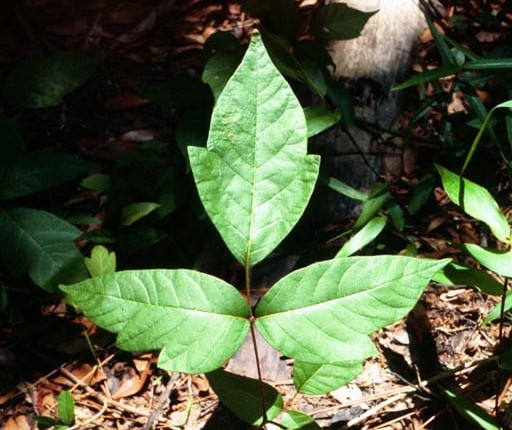
Many of us who love the outdoors have learned to fear poison ivy due to the intensely itchy rash that can result from touching it. No one wants it to grow in areas where family and friends like to work and play outside. However, this common native plant, Rhus radicans, plays an important role in the web of life.
We notice it at ground level, where it grows until it finds a tree. There, it climbs and develops into a thick, hairy vine. In the fall, it produces white berries high in the tree. Birds eat these berries and spread the seeds, a vital food source for them each fall. Because of its role in the ecosystem, we need to be smart enough to co-exist with this plant. We can judge when to remove poison ivy and when to leave it alone.
Proper identification is the first priority. This can be challenging, as the vine varies quite a bit in appearance — its shades of green differ, and leaves range from shiny to dull. Poison ivy is characterized by sets of three leaflets which have inconsistent, jagged margins. Some red is usually noticeable where the leaflets join, sometimes on the stalk. The vines often have “hairs” to grip the trees as they climb.
There are several other plants that look similar. Compare pictures to Virginia creeper, box elder and blackberry, common harmless look-alikes in our area. Virginia creeper has sets of three to seven leaves, usually five; box elder grows into a tree form and blackberry has thorns. Each of these look-alikes has regular serrated leaf edges. Despite these differences, it is easy to overlook a single poison ivy plant within a crowded patch of weeds.
As a defense, poison ivy produces urushiol. This oil causes an allergic dermatitis reaction in many people — ranging from minor itching to weeks of intense itching and blistering. Upon contact, the oil transfers undetectably from any surface of the plant, alive or dead, to your skin or clothing. From there, you can spread it around your body even further. It can also transfer from a surface (like pet fur or the outside of shoes) to your skin. If poison ivy is burned, the smoke can carry oil into your lungs, where severe allergic reactions can result.
Your first line of defense is proper outerwear: gloves, long sleeves, pants, socks and shoes. If you suspect exposure, rinse with cold water within five minutes. If this is not possible, wash with soap and water within 30 minutes. Beyond that, apply a commercial product which may help prevent an allergic reaction, such as Tecnu, Ivy-Block, or Ivy-X. Symptoms usually occur 12-48 hours after exposure, sometimes longer.
To remove poison ivy, there are mechanical and chemical options. Mowing, tilling or clipping over time will control and eventually kill individual plants. String trimmers are another option. Beware of clippings blowing back onto exposed skin. Clean any tools that come into contact with the plant. The safest (and slowest) option is hand-pulling, with the added benefit that the entire root system will often come out as well. Walter Reeves, a Georgia horticultural celebrity, recommends covering your gloved hand with a long plastic bag, grasp and pull the ivy, carefully turning the bag inside out so that the ivy is enclosed. Tie the bag off and toss it in the trash.This method works well when we are only removing a few plants.
Finally, repeat applications of herbicides are warranted under certain circumstances.
Visit UGA’s website for more information. You can also contact the Bibb County Extension office at bibb.extension@uga.edu or (478)310-5350.
Written by Bibb County Master Gardener Volunteer, Maryann F. These volunteers are trained in horticulture by the University of Georgia.
Before you go...
Thanks for reading The Macon Melody. We hope this article added to your day.
We are a nonprofit, local newsroom that connects you to the whole story of Macon-Bibb County. We live, work and play here. Our reporting illuminates and celebrates the people and events that make Middle Georgia unique.
If you appreciate what we do, please join the readers like you who help make our solution-focused journalism possible. Thank you
Related Articles
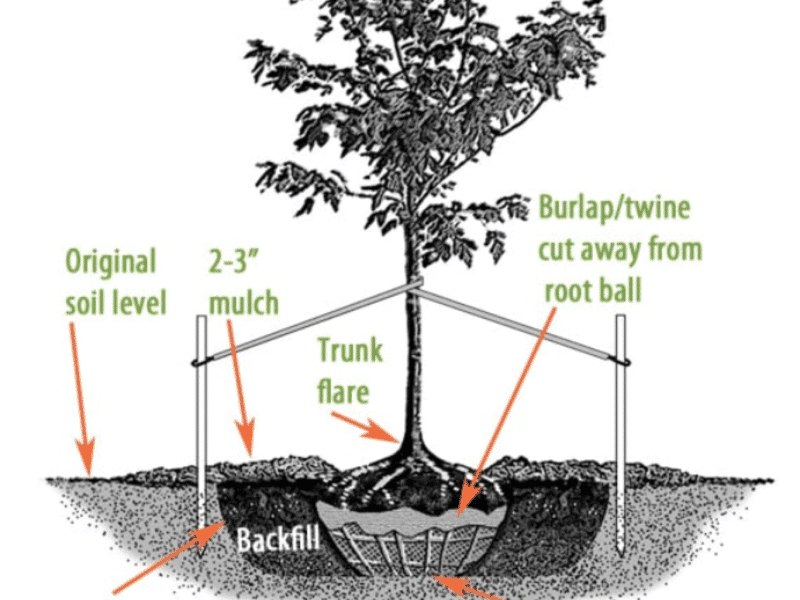
Now is the prime time for planting
Here’s some good planting practices from the volunteer master gardeners at the Bibb County Cooperative Extension.
Oliver’s Corner Bistro isn’t just a restaurant — it’s a vibe
In his latest food review, Billy Hennessey explains what makes this downtown Macon restaurant a local staple.

A look ahead at Macon’s arts and entertainment scene
Melody columnist Michael W. Pannell reflects on some art and entertainment highlights of 2025 and looks forward at what’s to come in 2026.