
Hydrangea blooms, a southern staple
Learn about the most common types of hydrangeas and how to care for them.
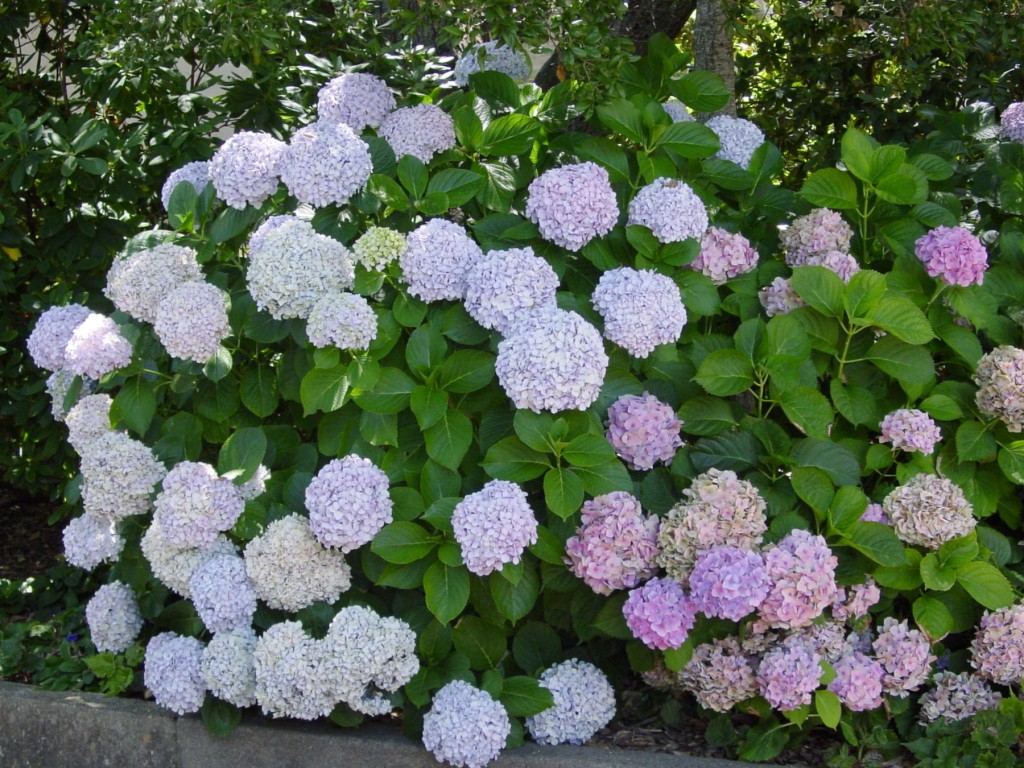
Growing up in middle Georgia, hydrangeas never played a dominant role in my childhood memories. Although I’ve admired them through the years, these southern staples only claim a very small shady corner in my yard. It is time to change that! This summer I’ve been captivated by the hydrangeas that continue to bloom beautifully in local landscapes this summer!
Our most common types of hydrangeas include smooth (H. arborescens), oakleaf (H. quercifolia), panicle (H. paniculata) and bigleaf (H. macrophylla).
Smooth hydrangea — These hydrangeas are native to the eastern United States. They are deciduous shrubs that bloom from mid to late summer. Smooth hydrangeas produce a big “pompom” bloom that is naturally white. The shrub grows 3-5 feet tall and wide, with a rounded form and a golden-yellow fall color. Common varieties include ‘Annabelle’ and ‘Grandiflora.’
Oakleaf hydrangea — A native of the southeast U.S., oakleaf hydrangeas get their name from the leaf shape. They are larger than the smooth hydrangea, and exhibit a loose, irregular form. The shrubs grow to 6-8 feet tall and wide. The white flowers are on long panicles or flower clusters with leaves that turn deep red in the fall.
Panicle hydrangea — A larger shrub or small tree, the panicle hydrangea grows up to 25 feet tall. Cone-shaped blooms start off white then gradually change to pink as summer wanes. In the fall, their deciduous leaves turn gold. Panicle hydrangeas tend to be more tolerant of the sun than some of the other hydrangea species. ‘Limelight,’ a cultivar that has gained popularity over the past decade, is known to tolerate full sun. Nonetheless, this species can still benefit from some protection from the afternoon sun.
Bigleaf (or French) hydrangea — This is the quintessential hydrangea, dotting our southern landscapes. Flower colors include blue, purple, red, pink and white. The numerous cultivars of bigleaf hydrangeas are divided into two major groups – mopheads, which have large solid flower masses often bending the stem, and lacecaps, which have non-showy flowers in the center surrounded by a showy outer ring. Typical plants grow 3-6 feet high and wide as rounded mounds. For the older, traditional cultivars, blue flowers are seen when the soil pH is between 5 and 5.5, with more alkaline, or higher pH soils, producing pink blooms. The color variability is tied to the plant’s ability to take up aluminum.
Of course, I mention hydrangeas now so you can admire them, too, and pick out your favorites for future planting. Like many of our other woody shrubs, hydrangeas will do best when planted in late fall.
Pruning for hydrangeas does not have a quick, easy answer. The timing depends on the species. Smooth and panicle hydrangeas should be pruned in late winter. Smooth varieties will respond well when pruned hard, within 6-12 inches above ground. However, panicle hydrangeas should not undergo hard, or severe pruning. Oakleaf and traditional bigleaf hydrangeas should be pruned immediately after flowering, as they set their flowers on old wood. Cut ¼ to 1/3 of the older stems of these hydrangeas to the ground to promote new growth. Reblooming hydrangeas, such as “Endless Summer” are pruned immediately after blooms fade, but if a hard freeze kills the buds, they can be pruned in late winter and will still bloom.
For more information, visit the UGA Extension publication page.
If you have any gardening or landscape questions, contact us at 478-310-5350 or email us at bibb.extension@uga.edu.
Before you go...
Thanks for reading The Macon Melody. We hope this article added to your day.
We are a nonprofit, local newsroom that connects you to the whole story of Macon-Bibb County. We live, work and play here. Our reporting illuminates and celebrates the people and events that make Middle Georgia unique.
If you appreciate what we do, please join the readers like you who help make our solution-focused journalism possible. Thank you
Related Articles
A Smart Start to Spring Gardening
There are several simple steps you can take to prepare for a healthy and thriving garden this spring.
Billy’s Let’s Eat Review: Brasserie Circa
Read Billy Hennessey’s latest local food review as he takes a bite out of another Macon restaurant.

Lit Fest to bring Middle Ga. book lovers, authors together
Avid readers, local authors and more will gather for the Middle Georgia Lit Fest Feb. 7.