
Local hemp businesses pinched by new state regulations
The Georgia Hemp Farming Act went into full effect on Oct. 1, making it illegal to sell hemp products previously found in stores around the state.
Terry Passmore used to sell hemp products out of his shop downtown Macon, but just last week new regulations that impacted his business led him to shutter its doors at the end of September.
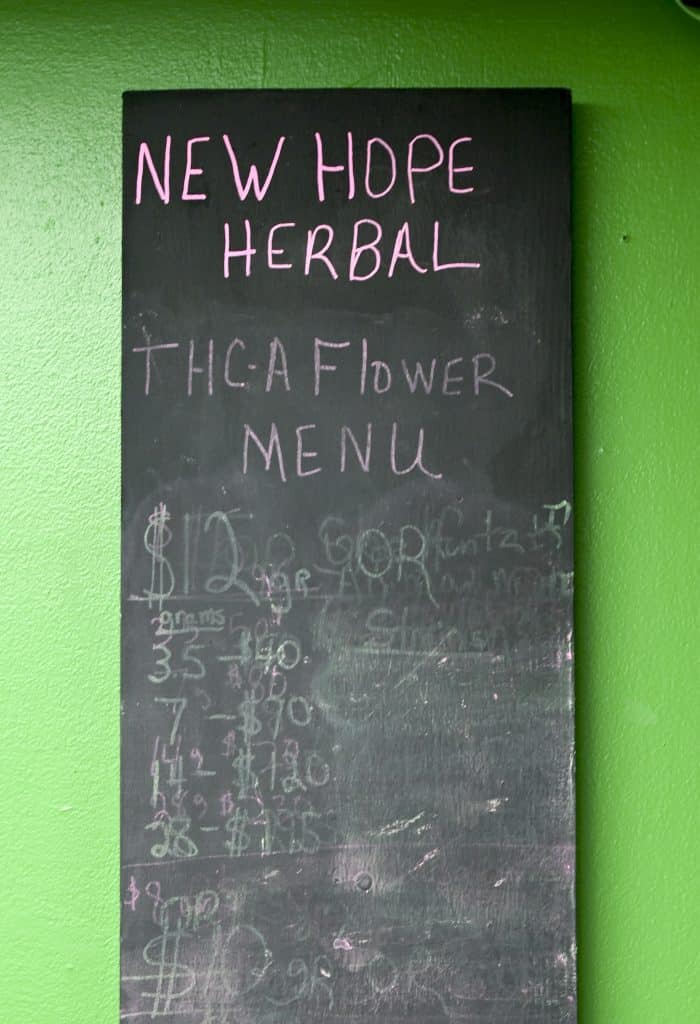
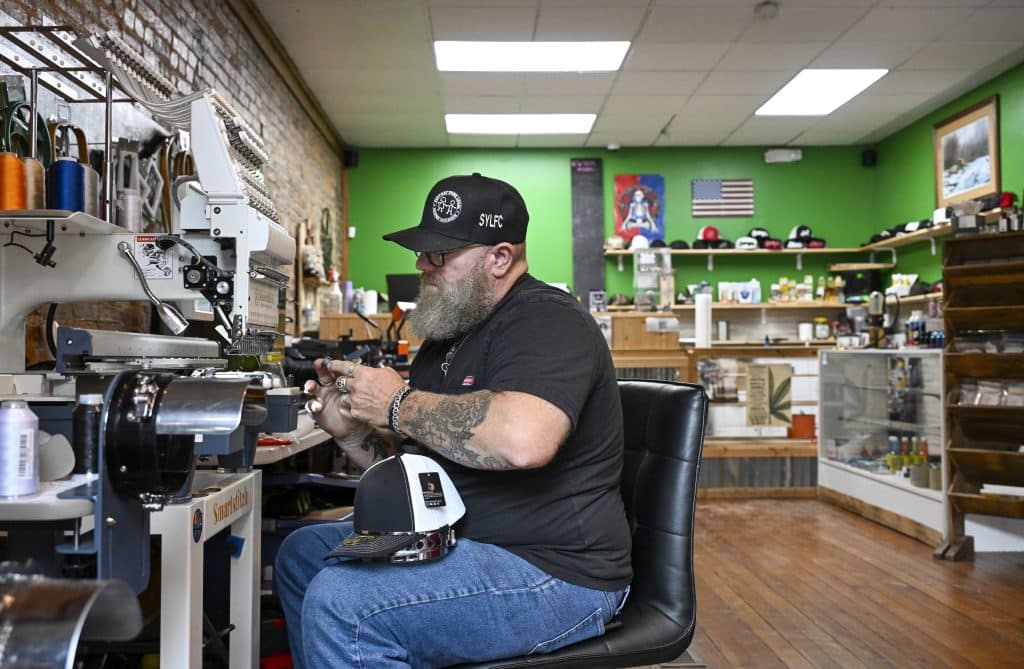
The shelves and cases at New Hope Herbal on Cotton Avenue used to be filled with CBD oils, gummies, ointments and sleep aids, but now they are lined with rows of custom hats.
After selling off all of his product, Passmore set up an engraving station in his shop and founded Macon Stitches, a graphic design company.
“I’ve always followed the law,” he said. “[The new law] has really hurt us. This was supposed to be my retirement.”
Senate Bill 494, known as the Georgia Hemp Farming Act, was signed into law by Governor Brian Kemp at the end of April and went into full effect Oct. 1.
The bill prohibits the sale of “unprocessed hemp flower or leaves, food products [containing hemp] and beverages containing both alcohol and hemp,” according to the Georgia department of agriculture. It also prohibits the sale of hemp products to persons less than 21 years old.
“Here in Georgia, the safety of our residents is top priority, especially that of our children and young people,” Governor Kemp said in a press release. “Consumable hemp products are dangerous to minors and unregulated hemp products are a danger to all Georgians.”
Hemp, like marijuana, is considered a type of cannabis, the only thing differentiating the two being the level of THC. Hemp products have a delta-9 THC concentration of less than 0.3% whereas marijuana has a level greater than 0.3%
Passmore, the owner of New Hope Herbal, opened his store five years ago, where he started selling just CBD oils before expanding to hemp. In addition to the vapes, gummies and oils, he sold THC-A flower as the store’s main product.
He’s never sold hemp to anyone underage, he said, and has consulted with lawyers on what he can and cannot sell. He said his store serves 6,000 people in Macon, many of whom are seniors.
“We’ve seen people come off so many types of pharmaceutical medicine and convert over to something more natural,” Passmore said. “They said it worked better for them with less side effects.”
It became possible to produce and transport hemp under the 2018 Farm Bill, which declassified hemp as a federally controlled “Schedule 1” substance, the same classification as heroin, LSD and cannabis.
Katherine Russell, the director of policy at Georgia’s Department of Agriculture, said the new law “really just cleaned up what was already existing.”
The Georgia Hemp Farming Act codifies federal requirements, she said, like requiring decarboxylation — the heating up of cannabis or hemp to remove carbon dioxide — to measure the true delta-9 concentration of a substance.
The Department of Agriculture can set limits on and monitor what’s inside the state’s hemp products. Having the power to regulate these products will put up proper guardrails for consumers and prevent dangerous products from reaching shelves, she said.
Russell pointed to the “Diamond Shruumz” recall, where mushroom infused chocolates and edibles, typically sold at hemp shops, caused people to get sick, reporting seizures, abnormal heart rates and nausea. There were 23 cases of people getting sick from the products reported in Georgia.
“The licenses are not intended to be a barrier to entry,” she said. “We need to know where to pull a product in case it’s dangerous for consumers.”
Each step in the hemp supply chain now requires a license, including growing, processing, manufacturing and retail. To become a certified testing laboratory or a wholesaler also requires a license.
There are currently only a handful of growers, processors and manufacturers in the state of Georgia. Russell said the new law evens the playing field for in-state producers, since out-of-state and international growers and processors didn’t need to follow any sort of regulations that producers in Georgia had to.
Foreign growers with no restrictions on where or how they can grow hemp could potentially introduce unsafe materials like pesticides into flower.
Hemp, unlike marijuana, is much more affordable, Passmore said, and just as effective when heated up. The new requirements will drive up prices because of the need to pay for testing or an in-state grower and processor.
With there being a limited number of vendors in the state, Passmore said he can’t buy from the people he wants to, and to pay for that testing would add more costs and hoops to jump through.
He said he’s also wary of signing for a license because of concerns about his private property being searched by the state.
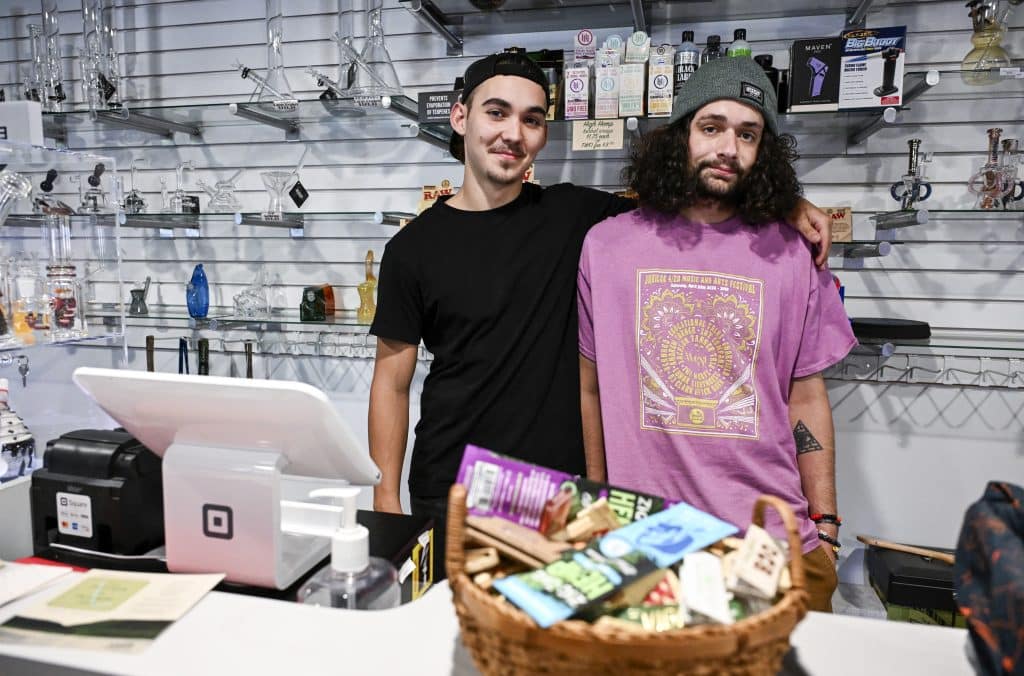
Matthew Vandehey used to buy hemp in bulk and package it into smaller quantities, but continuing to do that now would require him to get a $25,000 processing license. Instead he would have to purchase hemp in pre-portioned amounts, which is costlier.
The West Collective, a holistic wellness store off Vineville Avenue, also discontinued selling its THC-A products at the beginning of the month, which accounted for about 60% of the store’s revenue, according to Vandehey, the store’s owner.
He said the store kept certificates of analysis and testing documents on hand, and he does his best to ensure consumers get a clean product.
While he agrees with the regulations requiring testing and limiting products marketed toward children, he said the ban on THC-A products will make it difficult for people to medicate since the state’s offerings for hemp and marijuana products are “kind of a joke.”
“It only really affects small people, people like us,” he said.
For now, Vandehey continues to sell allowed THC vapes and will look for other plant-based medicines to fit into their holistic wellness scheme.
The Department of Agriculture lists a FAQ on its website.
Before you go...
Thanks for reading The Macon Melody. We hope this article added to your day.
We are a nonprofit, local newsroom that connects you to the whole story of Macon-Bibb County. We live, work and play here. Our reporting illuminates and celebrates the people and events that make Middle Georgia unique.
If you appreciate what we do, please join the readers like you who help make our solution-focused journalism possible. Thank you
Author

Related Articles
Bibb school board adopts budget with $14.9M gap, directs staff to study school closures
After three hours of discussion, the Bibb County Board of Education voted 6-2 in favor of a budget that cut step increases but did not include furloughs.
County seeks public comment on hazard mitigation plan
The Macon-Bibb County Emergency Management Agency is asking for public comment on the final draft of the county’s pre-disaster hazard mitigation plan.
The Riff News Quiz – Week of May 25-29
Test your knowledge of The Melody’s newsletter with a five-question quiz on articles from this week.