
Old City Cemetery endures Macon’s sprawling city growth
Bounded by Cherry, Sixth, Poplar and Seventh streets, The Old City Cemetery has been around since 1824.
A new chapter for The Melody
Our team and coverage are moving to The Telegraph. Make sure you look for The Melody's community-first journalism as a section highlighting the people, places and moments that are the rhythm of Macon.

When the city of Macon was formed in 1823, provisions were made for a new cemetery as part of the master plan. Four acres, known as Old City Block 35, were set aside for this purpose. Bounded by Cherry, Sixth, Poplar and Seventh streets, the first burial in the new Cherry Street Cemetery was for a painter, John Clark, in 1824.
Unlike Fort Hill Cemetery across the river in unincorporated East Macon, a superintendent oversaw the new cemetery. City council passed ordinances regulating the minimum depth of graves to be “not less than five or six feet” and that this digging was to be done by city-employed grave diggers. No interments were to take place after dark, and the superintendent was tasked with reporting to the mayor anyone who tried to skirt these requirements. Those found guilty in a court of law of breaking this rule would be fined a maximum of $20.
As Macon’s population increased, a larger burial ground was needed. The new Rose Hill Cemetery opened in 1840. At almost 64 acres, it was much larger, but the Old City Cemetery, as it was now known, continued to receive burials.
The Civil War brought many injured soldiers to Macon to recover from their wounds. During the war, Macon was second only to Richmond, Virginia in the number of hospitals for injured Confederate soldiers. There were 12 hospitals in Macon, and those who died were initially buried next to the hospitals, but after the Civil War ended in 1865 they were moved to the old cemetery. The Ladies Memorial Association decorated 284 graves of the Confederate dead with flowers, according to an 1867 story in The Georgia Journal & Messenger. A few years later, these graves would be moved to Soldier’s Square in Rose Hill Cemetery.
Not just soldiers, but many others who were buried in the Old City Cemetery were moved to Rose Hill. Edward Dorr Tracy, a mayor of Macon in 1826, was buried in the old cemetery in 1849 next to his first wife, Susan, who had died in 1834. In 1890, The Macon Telegraph reported that Edward, his wife and three children were being moved to Rose Hill. The article also stated that removal would provide a fitting place for the former mayor and judge of the Macon judicial circuit as the cemetery has been “allowed to grow up in bushes and trees.”
Sadly, the original record of interments between 1824-1839 has been lost. Fortunately, an interment book listing burials between 1840-1871 still exists. In 1870, the city passed an ordinance prohibiting further interments in The Old City Cemetery, but the parish records of Christ Episcopal Church record burials in the cemetery as late as 1879.
A newspaper article from 1885 describes the cemetery as being shaded by tall oaks, hickories and elm trees, as well as jasmine, honeysuckle, roses, creeping ivy and many other plants. The 1885 city map of Macon depicts the cemetery as a thickly wooded grove of trees rather than a cemetery.
Besides benign neglect during that time, several businesses were allowed to encroach upon the cemetery grounds. In October 1927, descendents of those buried in the Old City Cemetery objected when the city proposed leasing an 80’x80’ section of the cemetery to an ice cream factory which planned to convert the space into a stable for mules.
An article in The Macon Telegraph stated “there are numerous structures upon it (Old City Block 35) at this time, including the tracks of the Southern Railway, the Builders Lumber Company, the Washburn warehouse, Pan-American Oil Company, the DuBose junkyard, according to city records.”
The descendents sought an injunction to prevent the construction of the new stable but the businesses were permitted to stay as it was determined that the title to the cemetery rested with the State after the city abandoned the cemetery.

The title is now held by Macon-Bibb County and the cemetery is half its original four-acre size. The tall trees, bushes and flowering vines are gone, except for a lovely garden of native plants added by the Fringed Campion Society of Middle Georgia near the gate on Cherry Street.
Today, the grass is kept tidy by Macon Parks and Beautification and a sprinkling of about 40 gravestones can be seen. Among the markers is a tablet grave for Nicholas Scott, a laborer working on the Monroe Railroad. He died in 1857 by a kick from a mule. Also buried there is Thomas Ellis, murdered by Henry C. Byrom in 1832. Byrom was upset over the failure of The Macon Bank and blamed Ellis. Although Ellis was a director of the bank, many professed that he was not responsible for the bank’s failure. However, Byrom was found not guilty at trial as eyewitness testimony was contradictory. When news of Ellis’ death was reported, the announcement said “He was a respected member of the Baptist Church; a Vice President of the Georgia Agricultural Society; and a member of several other religious and charitable associations. He has left a bereaved widow, two helpless orphans, and a long train of relations and friends to mourn his untimely exit.”
In 2025, Liz Riley and Kathleen O’Neal began a visual inventory of every monument in Rose Hill Cemetery. The goal of this project is to provide a free, complete and accurate database of those interred, as well as maps for locating them. This column shares the fascinating stories discovered during this project.
Related Articles

New podcast to offer locals a taste of Macon
The Melody’s food columnist Billy Hennessey will be launching a brand-new podcast in partnership with Visit Macon and 100.9 The Creek.

Five things we must never forget
In the midst of our forgetfulness, what should we strive to remember?
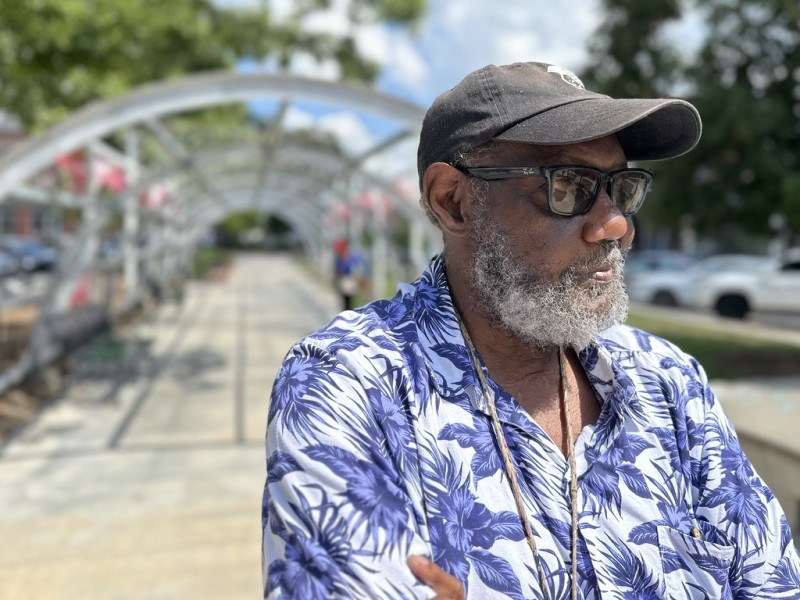
Newt Collier reflects on 81st birthday, the late Alan Walden, why Macon needs a music district and more
Today, Newton Collier is an ambassador for Macon, an active community volunteer, a beloved grandfather figure in music and an electronic trumpet player.