
Mistletoe: The romantic parasite of the Yuletide season
The collective term, “mistletoe”, refers to any of the more than 200 species of semi-parasitic shrubs found worldwide.
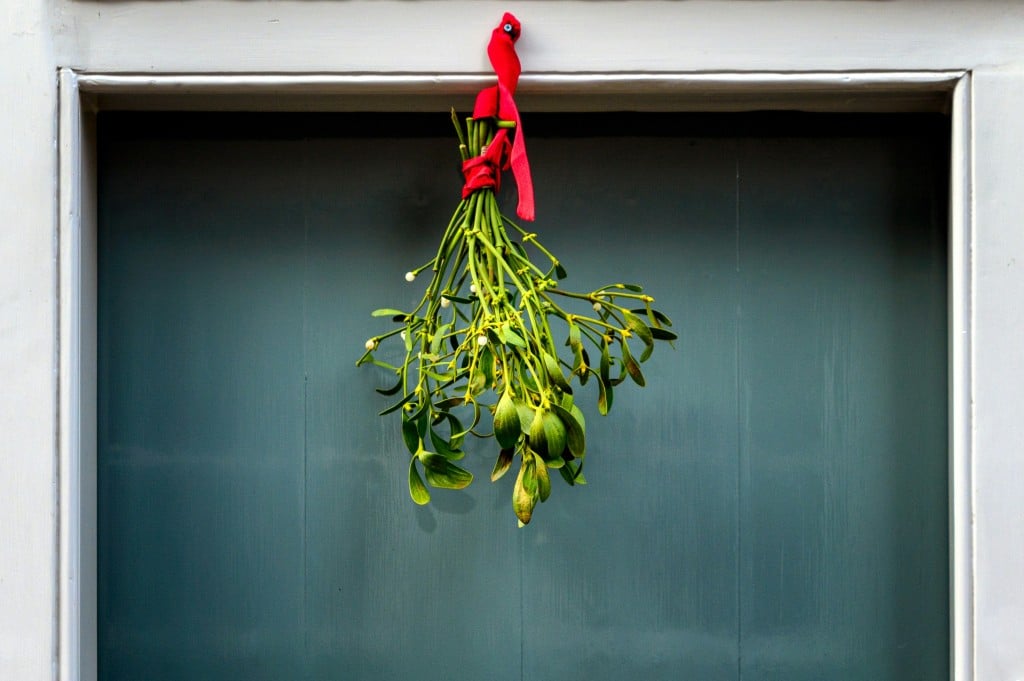
Mistletoe is synonymous with the holiday season and smooching sweethearts. This flowering plant has been associated with the Yuletide season for centuries.
Some say the folklore traces back to the ancient Druids. A mysterious, oak-worshiping sect that inhabited the British Isles centuries ago, the Druids considered mistletoe a plant of honor and power.
According to legend, when the parasitic plant was found growing in an oak tree, the Druids performed sacrificial ceremonies at the tree on the sixth day after a full moon.
They reportedly used a golden sickle when harvesting mistletoe from a sacred oak. Years later, during the 1500’s, the tradition of kissing under mistletoe developed as William Irving wrote that a young man should pluck a berry each time he kisses a girl beneath the mistletoe.
The collective term, “mistletoe”, refers to any of the more than 200 species of semi-parasitic shrubs found worldwide. It lives throughout the southern United States, from the Atlantic Coast to California, and on every continent except Antarctica.
The leathery green leaves contain chlorophyll which allows them to make their own food. However, the root-like anchors suck water and nutrients from living trees. This is particularly problematic on weakened or stressed trees or during years of drought.
Mistletoe grows high in the branches on a number of different tree species, including cottonwood, maple, oak and other deciduous hardwoods. American mistletoe has big leaves about the size of your thumb and small white berries.
The berries have a sticky, glue-like substance inside with little strings attached to their indigestible seeds. Although eating mistletoe berries may be potentially lethal for humans, birds seem to be immune to their toxic effects. This immunity allows for mistletoe’s dispersal and propagation.
Mistletoe grows slowly at first, sometimes taking years for seeds to be produced. Healthy trees can tolerate small mistletoe infestations, but individual branches may be compromised and susceptible to wind or cold injuries. Heavy infestations may reduce the overall plant health or even kill a weakened tree.
Although the centuries of folklore make mistletoe an alluring plant, it is best for your trees to remove it. There are no herbicides labeled in Georgia for its control. The best way to control the growth and spread of mistletoe is to prune it out of trees.
Cut out infected limbs 1-2 feet below the infection point. If you don’t remove the “roots” of the mistletoe, regrowth will likely occur.
If the mistletoe is located on a main limb or trunk, removing the top of the mistletoe and wrapping the cut with an opaque plastic to prevent sunlight may be beneficial.
So, do yourself and your tree a favor — cut down some mistletoe to kiss your sweetie under.
Before you go...
Thanks for reading The Macon Melody. We hope this article added to your day.
We are a nonprofit, local newsroom that connects you to the whole story of Macon-Bibb County. We live, work and play here. Our reporting illuminates and celebrates the people and events that make Middle Georgia unique.
If you appreciate what we do, please join the readers like you who help make our solution-focused journalism possible. Thank you
Related Articles
A Smart Start to Spring Gardening
There are several simple steps you can take to prepare for a healthy and thriving garden this spring.
Billy’s Let’s Eat Review: Brasserie Circa
Read Billy Hennessey’s latest local food review as he takes a bite out of another Macon restaurant.

Lit Fest to bring Middle Ga. book lovers, authors together
Avid readers, local authors and more will gather for the Middle Georgia Lit Fest Feb. 7.