
Mole patrol: What happens beneath our feet?
In Macon-Bibb County, local soil plays a significant role in mole activity.
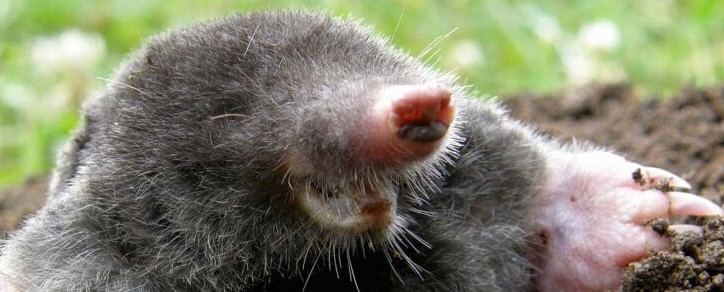
If your lawn suddenly feels soft and uneven underfoot, or you notice winding ridges weaving across the yard like hidden pathways just beneath the surface, moles may be at work. These changes often seem to appear overnight, especially after soaking rain, leaving homeowners puzzled about what could have moved in so quickly.
Moles are insectivores, not rodents, and they spend nearly their entire lives underground. Most homeowners will never actually see a mole.
In Macon-Bibb County, our local soil plays a significant role in mole activity. Much of our area lies within the Upper Coastal Plain and along the Fall Line, where sandy loam and clay-loam soils are common. These soils retain moisture after rainfall while remaining loose enough for tunneling. When those damp conditions combine with abundant earthworms, white grubs and other invertebrates, they create highly favorable conditions for moles. In many ways, a lawn with moles is a lawn with active soil life.
One of the most common misconceptions is that moles eat grass roots. They do not. Moles feed on earthworms, insect larvae, white grubs and other soil-dwelling invertebrates. Lawn damage occurs indirectly. As moles tunnel, they can separate turf roots from surrounding soil. During dry conditions, those disconnected roots may dry out more quickly, leading to thinning or browning.
It is also important to note that the number of tunnels does not equal the number of moles. A single mole can construct an extensive network of runways, using only some of them regularly.
Mole activity often increases during the spring when rainfall softens soil, and invertebrates move closer to the surface. Warmer soil temperatures and renewed lawn growth also make tunnels more noticeable. Activity may spike at other times of the year when favorite food sources, such as white grubs, are active.
Moles or voles? Spot the culprit
Homeowners often confuse moles with voles, but their damage differs significantly. Moles create continuously raised ridges and do not chew plants. Voles are small rodents that feed on roots, stems and bulbs. They often leave golf-ball-sized openings and may use abandoned mole tunnels. If plants appear healthy one day and suddenly collapse from chewed roots, voles are more likely responsible.
Raised ridges and lifted turf? Think mole.
Chewed roots, missing bulbs or gnawed stems? Think vole.
Practical solutions
Research shows that many widely shared home remedies are either ineffective or unlawful, including the use of mothballs, ultrasonic devices, castor oil repellents and other folklore-based solutions.
Effective management begins with identifying active tunnels. Flatten a short section of runway and check it 24 hours later. If it is raised again, that tunnel is active. Trapping remains the most effective and practical control method. Traps should be placed in straight, active runways with minimal disturbance.
Reducing excessive irrigation and managing heavy grub populations may also help as part of a broader plan, though these approaches alone will not eliminate moles.
While raised ridges can be frustrating, moles are simply insect hunters responding to favorable soil conditions. If you are unsure whether you are dealing with moles or voles, contact your local UGA Extension office for assistance tailored to Macon-Bibb County conditions.
Morgan Durden works for the University of Georgia Cooperative Extension Service in Bibb County. The county office provides resources for gardeners as well as educational services and community support. Visit their office at 715 Oglethorpe Street, call them at 748-310-5350 or email their staff at bibb.extension@uga.edu.
Before you go...
Thanks for reading The Macon Melody. We hope this article added to your day.
We are a nonprofit, local newsroom that connects you to the whole story of Macon-Bibb County. We live, work and play here. Our reporting illuminates and celebrates the people and events that make Middle Georgia unique.
If you appreciate what we do, please join the readers like you who help make our solution-focused journalism possible. Thank you
Related Articles

The hardest step is starting: Macon trainer offers simple fitness advice
Movement is one of the most powerful tools we have to support long-term health, according to Melody health columnist Joy L. King.

When the dish doesn’t meet the hype: hot takes from a foodie
Being honest about meals means acknowledging when something doesn’t meet expectations, writes Melody food reviewer Billy Hennessey. Read about both the good and the bad in Macon’s dining scene.

Douglass Theatre to present women of impact awards, Fannie Lou Hamer play
The Douglass Theatre is celebrating Women’s History Month with a one-woman production of “the Fannie Lou Hamer Story” and the annual Central Georgia women of Impact Awards.