
The intriguing history of Washington Memorial Library
Ellen Washington Bellamy was hell-bent on gifting the Washington Memorial Library to Macon before her death a century ago.
A new chapter for The Melody
Our team and coverage are moving to The Telegraph. Make sure you look for The Melody's community-first journalism as a section highlighting the people, places and moments that are the rhythm of Macon.
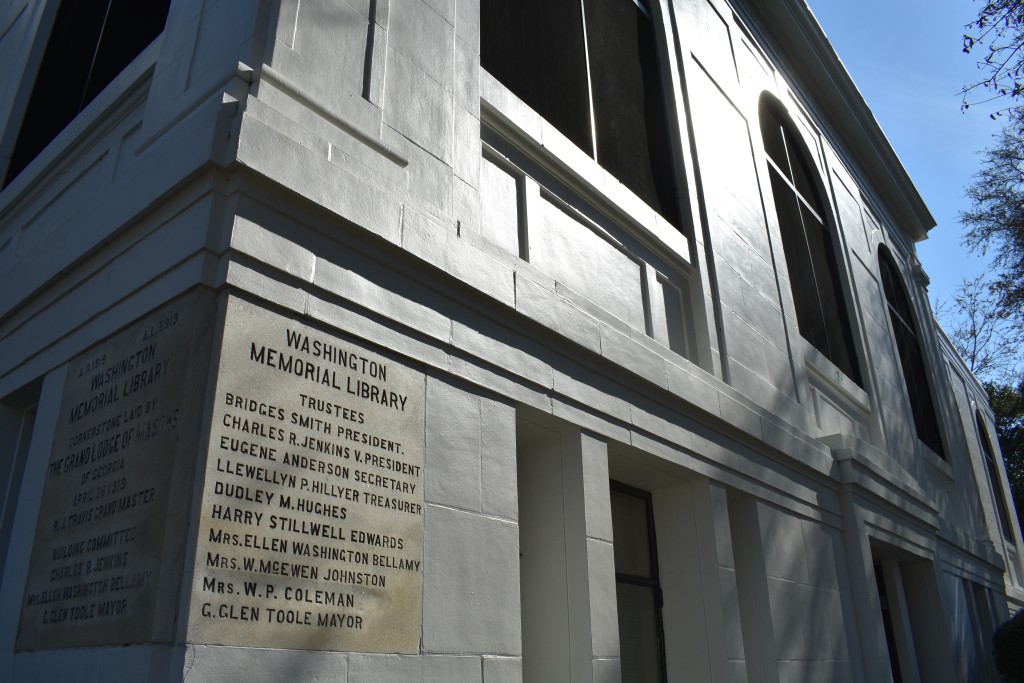
Ellen Washington Bellamy was hell-bent on leaving an everlasting monument in Macon bearing her family’s name.
Had she been a genteel, polite or eager to please, in accordance with societal expectations of women a century ago, the city might never have built the Washington Memorial Library.
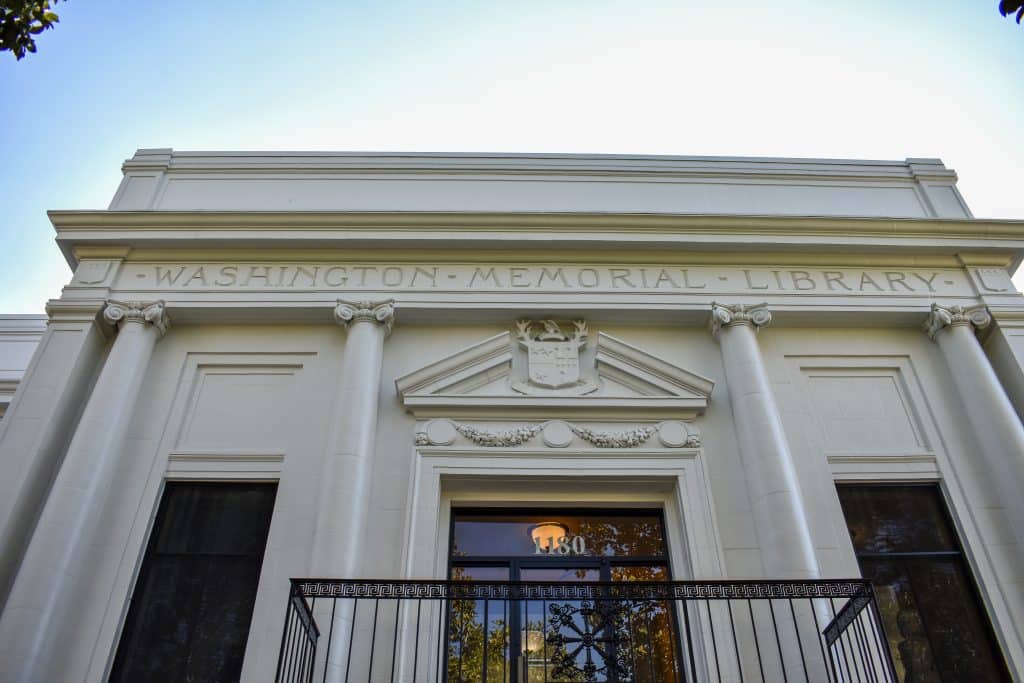
The magnificent Georgia marble building towers behind aging magnolia trees at the corner of College Street and Washington Avenue. Bellamy’s name is on the building’s cornerstone laid in 1919.
“She was strong and independent and didn’t mind stepping on people’s toes,” former Bibb County history teacher Jim Barfield said. “She was respected and people recognized her generosity, but … people don’t generally take the autocrats very well.”
The mysterious benefactress, who claimed ancestral ties to George Washington but occasionally warped the truth, spent the final years of her life – and nearly all of what remained of the family’s fortune – building the library and paying attorneys to fend off nieces and nephews who contested the will that gave her control of the family estate.
At the heart of the dispute was a fortune that totaled $200,000 to a quarter million. That equates to about $6 or $7 million today when adjusted for inflation.
Nieces and nephews alleged Hugh Vernon Washington – who inherited the family’s fortune before his death in 1911 – was not of sound mind and had been unduly influenced by Bellamy when he named her executrix of his will.
Bellamy, in her obstinance, refused to settle over the 14 yearslong court battle that is said to be one of the lengthiest and most intricate cases in Bibb County Superior Court’s history. It was tried a dozen times locally and at least thrice in the Georgia Supreme Court.
In 1916, four years into the lawsuit, Bellamy proposed dedicating a library to Hugh Vernon Washington, who she claimed was her late brother but whom many believe was actually her illegitimate son.
By the time the case ended, months after Bellamy’s death in 1925, nearly the entire corpus of the family estate had been consumed by library construction costs and attorney’s fees, according to The Telegraph’s archives.
Though the library bears the name of Hugh Vernon Washington, it was his probable mother, Bellamy, who was the driving force behind its existence.
The story of this eccentric, strong-willed, intelligent and sometimes ill-tempered woman has never truly been told.
A Complex Character
Bellamy was every bit as mysterious and assertive as she was generous and progressive.
She is buried in Rose Hill under the name Ellen Clayton Washington. Her tombstone misstates her death date, which is Jan. 12, 1925.
The complexity of her life and character is understood by those who have read between the lines of local history and followed the breadcrumbs of truth sprinkled throughout the library she willed into existence.
Bellamy was both selfish and selfless. Truthful and deceptive. Proud of herself and her family’s fame and fortune, but ashamed and omissive of its secrets.
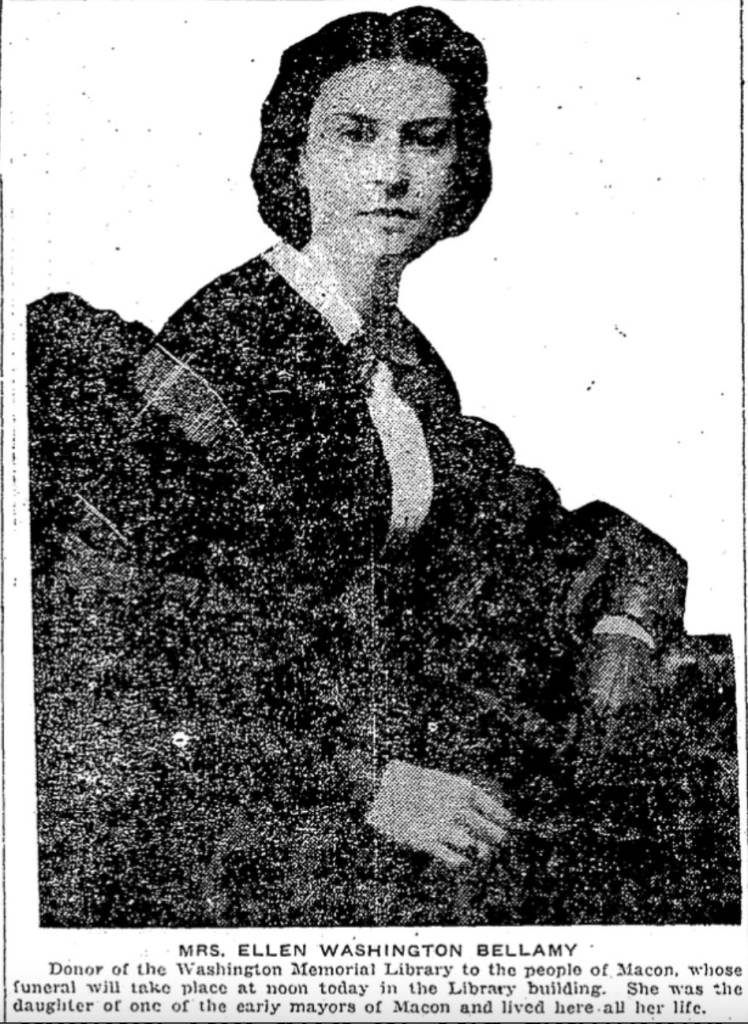
In the few remaining photos of Bellamy in the library’s newspaper archives, her hair is perfectly coiffed in dark braids that frame her pale and austere face. Her spindly neck exudes the character of someone who might peer over your shoulder to correct you – and maybe even go so far as to tell you that you’re doing it wrong. Her taunting almond eyes almost dare you to challenge her, but reports from The Telegraph archives said they “kindled and glowed with enthusiasm when she spoke of trees.”
Bellamy’s tombstone lies in the family plot with her parents, Mary Ann Hammond Washington and James Henry Russell Washington, who were among Macon’s most prominent residents at the time. Mary Hammond and James Washington were first cousins, according to ancestral records. They had eight children including Bellamy and counting Hugh Vernon Washington.
Mary Ann Hammond was a descendent of a distinguished revolutionary war patriot and founded Georgia’s Daughters of the American Revolution chapter. This history is engraved on a stone marker in front of a long-dry fountain on Martin Luther King Jr. Boulevard not far from the Douglass Theatre.
Bellamy’s father, James H.R. Washington, was a banker, planter and legislator. He was editor of the Georgia Journal in Milledgeville in 1836, Mayor of Milledgeville in 1844 and Mayor of Macon in 1851.
When the family moved from Milledgeville to Macon in 1826, it settled in a colonial mansion where the Stanislaus neighborhood is located today. Sometime before Bellamy was born in 1842, the family moved downtown to College Street across the street from where Wesleyan College was at the time. Bellamy attended the women’s school and studied art, music and literature. She traveled the world and did not work.
In recounting her life to a reporter during the city’s centennial year, Bellamy said she moved to Florida and married planter and legislator Burton William Bellamy in 1861.

“In one year, I returned to my family home, widowed, and I have resided here continually since,” she said, according to the article. Wistfully, she asked the reporter, “Isn’t that enough to tell about oneself?”
Records show Burton Bellamy was in fact still alive in Jefferson County, Florida. The 1865 divorce is documented in Bibb County Superior Court.
Speculations that Hugh Vernon Washington might be Bellamy’s son began circling upon her return to Macon from Florida nearly 160 years ago. Mary Hammond would have given birth to Hugh Vernon Washington at age 45, a possibility but an unlikely one. Bellamy would have been about 19 when he was born.
“She would have been a divorcee with a child,” Washington Memorial Library’s genealogy department director Muriel Jackson said of Bellamy, adding that she “tried to rewrite history” by placing a stone marker outside the family home stating it was the birthplace of Hugh Vernon Washington, son of her parents.
Barfield shares Jackson’s skepticism about the so-called sibling’s relationship.
“I mean, they came back from Florida and here was this baby, and people thought, ‘Well, Mary is pretty old to be having a son, right?’” Barfield said.
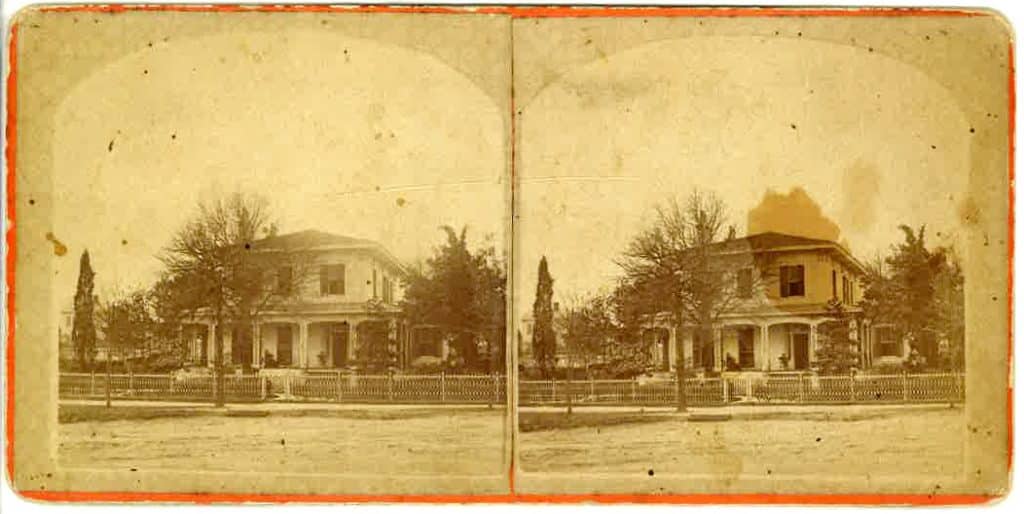
A photograph not long after Bellamy’s return to Macon shows the family home on College Street and a woman, cloaked in a black dress, sitting on the porch, with a small child standing close by. The date was Oct. 11, 1876.
Jackson suspects it is Bellamy and her son, Hugh Vernon Washington, in the yellowed-with-age stereograph that is eerily reminiscent of the famed American painting “Whistler’s Mother.”
Barfield said it was scandalous to get a divorce or have a child out of wedlock 100 years ago.
“Young people these days don’t realize how traumatic that would be, to have an illegitimate child,” Barfield said. “It is an interesting story, the whole family story, and Ellen was the last really significant one of that direct line.”
James Vernon Washington studied law at the University of Georgia and returned to Macon where he was an attorney. Library archives say he represented Georgia as a special commissioner at both the Louisiana Purchase and Jamestown Expositions. He died in 1911 at age 50.
Bellamy was 69.
A Lasting Legacy
The idea to build public libraries was becoming a fashionable cause for America’s wealthiest families in the early 20th century, a time when most book collections were private.
The first such proposal for one in Macon was by steel tycoon Andrew Carnegie, whose New York company offered the city $50,000 for a public library in 1916.
A month after the Carnegie Corp.’s proposal, Bellamy – then embattled in the fourth year of the famous Washington will case – made a counter-offer the city could not refuse: $50,000 to build the Washington Memorial Library plus a corner-lot for it beside her family’s home on College Street.
The city accepted.
“She made a great impact. She did a great thing,” Barfield said. “Establishing that library may have been for her own family’s glorification or her son/brothers’ glorification, but her personal motive is not the point. She did something worthwhile.”
The cornerstone for the building was laid in 1919. Entombed within the stone is a treasure box containing the family bible where records of births and deaths of the Washington family were recorded from 1602 to 1811.
A couple of months before the library’s grand opening, a stone cutter was spotted chiseling away at the names. The Telegraph was tipped off about the apparent defacing. When a reporter contacted Bellamy, she said the stone cutter was working at her behest.
“When the library was built I ordered a perfect piece of white marble put in as a cornerstone. An imperfect piece was put in,” Bellamy said, according to a Telegraph article about the event. “I wanted the white stone taken out and a new one put in and found out that could not be done. A stone cutter told me that he could remove the names and insert another stone over this. He was at work removing the names when someone stopped him. I am trying to find out who assumed the authority to stop the stone cutter.”
The same names were added to the new slab, which Bellamy paid for herself.
Washington Memorial Library opened to the public Nov. 28, 1923. Its centennial celebration began Nov. 9, 2023 and continued through October.
The library today houses one of the most robust collections of genealogical records in the southeast. Jackson said it has helped hundreds of thousands of people learn facts about their ancestors they may not have learned otherwise.
Without Bellamy’s gift of such a repository, Macon might never know the untold story of this grand resource and how it may stem from motherly love.

Ellen Washington Bellamy is buried under the name Ellen Clayton Washington in her family plot in Rose Hill Cemetery. (Laura Corley |
The Macon Melody)
Author

Related Articles

New podcast to offer locals a taste of Macon
The Melody’s food columnist Billy Hennessey will be launching a brand-new podcast in partnership with Visit Macon and 100.9 The Creek.

Five things we must never forget
In the midst of our forgetfulness, what should we strive to remember?
Newt Collier reflects on 81st birthday, the late Alan Walden, why Macon needs a music district and more
Today, Newton Collier is an ambassador for Macon, an active community volunteer, a beloved grandfather figure in music and an electronic trumpet player.