
The work of building trust
More Americans are understanding that local news is indeed a business that requires healthy finances to not just survive but thrive.
Local news is a business.
You may be thinking, “Well, duh,” but I often find myself wondering if people realize that it does indeed cost money to produce credible, responsible journalism.
We have the typical operating expenses, like payroll and insurance, and the ever-expanding costs associated with a print newspaper. Newsprint costs have surged in recent years, and the latest warnings from industry experts forecast an additional 15% increase in the coming months. That’s due to energy costs, tariffs and a host of other factors.
Of course, prices are rising across the board, and the news business isn’t at all insulated from the effects of that. However, we’re also dealing with a staggering decline in the number of Americans who say they pay attention to local news. According to a new Local News Fact Sheet from the Pew Research Center, only 21% of Americans say they follow local news very closely — down from 37% in 2016.
The report, released Tuesday, also suggests something interesting — that more Americans are understanding that local news is indeed a business that requires healthy finances to not just survive but thrive. In 2018, 24% of surveyed Americans said their local news outlets weren’t doing well. Now, 39% of Americans say that.
Sadly, the report doesn’t note that more Americans made that realization and then started offering more financial support to their local outlets.
In 2018, 14% of U.S. adults said they’d paid for local news in the past year. That number grew to 15% in 2024 but dropped to 12% in 2025. The report tells us why: 50% of U.S. adults said they don’t pay because they “can find plenty of free local news,” and 29% said they’re (eek!) not interested enough in local news to pay for it. Only 10% said local news was “too expensive,” and the other 9% said the “news provided is not good enough to pay for.”
We can dissect these findings for days and months, but I contend that media outlets aren’t typically good marketers for their own hard work. We need to make the case that, without us, civic engagement suffers, polarization increases and governments perform worse. We need to play up that we’re uniquely qualified to do this work because we’re trained to do it and have ethical obligations to do it well.
We also need to be realistic and smart about our entire industry’s entire design. I’m a huge advocate for the nonprofit model — well-designed operations that treat journalism as a public service and not as a profit center. These models, which have sprouted up around the U.S. in record numbers as the industry has fractured, treat readers as stakeholders. They have diversified revenue sources, often pulling in financial support from philanthropic sources, audience members and advertising.
Our owner, the National Trust for Local News, is one of the nonprofits building out this model across the country. In Macon, as the first startup newsroom of the nation’s largest nonprofit newspaper company, we’re testing our theory that our neighbors are the most reliable foundation a local newsroom can have.
We’re still young, and we still have a lot of work to do. Building trust takes time. Making this newsroom feel like it truly belongs to this community — because in the most meaningful sense, it does — is the work of years, not months. We’re committed to doing that work.
The Pew report tells us more Americans recognize that local news is struggling. That’s a start. What comes next is the harder ask — turning that awareness into investment. We’ll keep working hard, and we’ll keep growing, learning and earning your trust. In return, we hope you’ll consider financially supporting us.
If you’re reading this column, you probably already know us and support us. Thank you. If you’re totally new to The Melody, I hope you’ll stick around and read us for a while. I hope you’ll send us your suggestions. And I hope you’ll find a place in our community of local news supporters — people who believe, like we do, that Macon deserves a local newsroom.
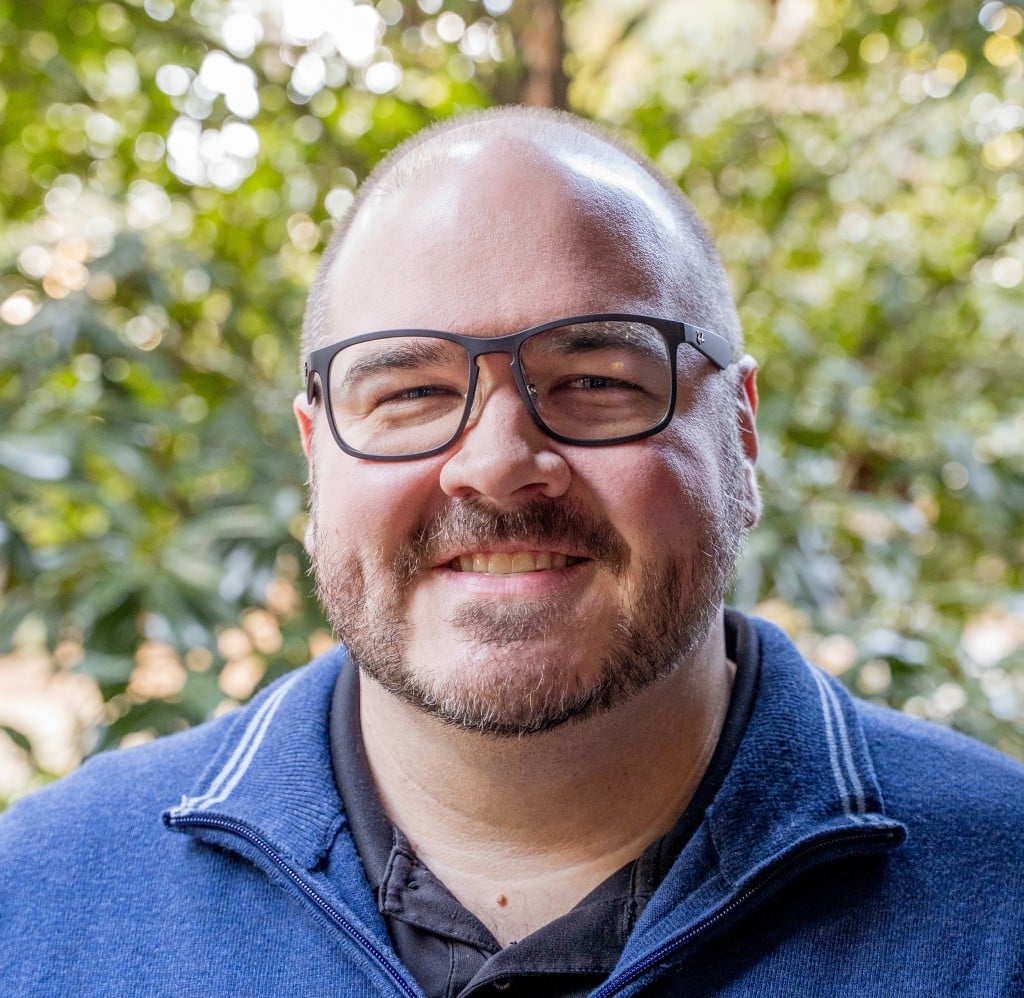
Joshua Wilson is the executive editor of The Macon Melody, which turns 2 in June. To celebrate the occasion, the newsroom has launched “Keep The Melody Playing,” a campaign designed to sustain and grow its continued operations. Learn about ways to support — from subscribing, donating or advertising — at maconmelody.com/support.
Editor’s note: The Pew Research Center report cited in this column is part of the Pew-Knight Initiative, a research program funded jointly by The Pew Charitable Trusts and the John S. and James L. Knight Foundation. Knight Foundation is also a primary funder of The Macon Melody. The Melody received no compensation for citing this report, and Knight Foundation had no editorial involvement in this column.
Before you go...
Thanks for reading The Macon Melody. We hope this article added to your day.
We are a nonprofit, local newsroom that connects you to the whole story of Macon-Bibb County. We live, work and play here. Our reporting illuminates and celebrates the people and events that make Middle Georgia unique.
If you appreciate what we do, please join the readers like you who help make our solution-focused journalism possible. Thank you
Author

Related Articles
The World Was Meant to Meet
It is all over now, and I already feel a certain emptiness, Christopher Blake writes in his final column about the 2026 FIFA World Cup.
One foot in the grave: When it’s your turn to go, you got to go
In his latest column, Kyle Dominy uses a humorous lens to examine a problem we all think about.

Trump puts DOGE out of its misery
The once-vaunted Department of Government Efficiency (DOGE) is officially no more. As of July 4, 2026, President Donald Trump allowed the agency to sunset.