
‘Layers of Becoming’ exhibit reimagines the Black experience
Macon-based artist and local boutique owner Cedric Smith will be featured in a new exhibit at Wesleyan College Leadership Lab’s gallery.
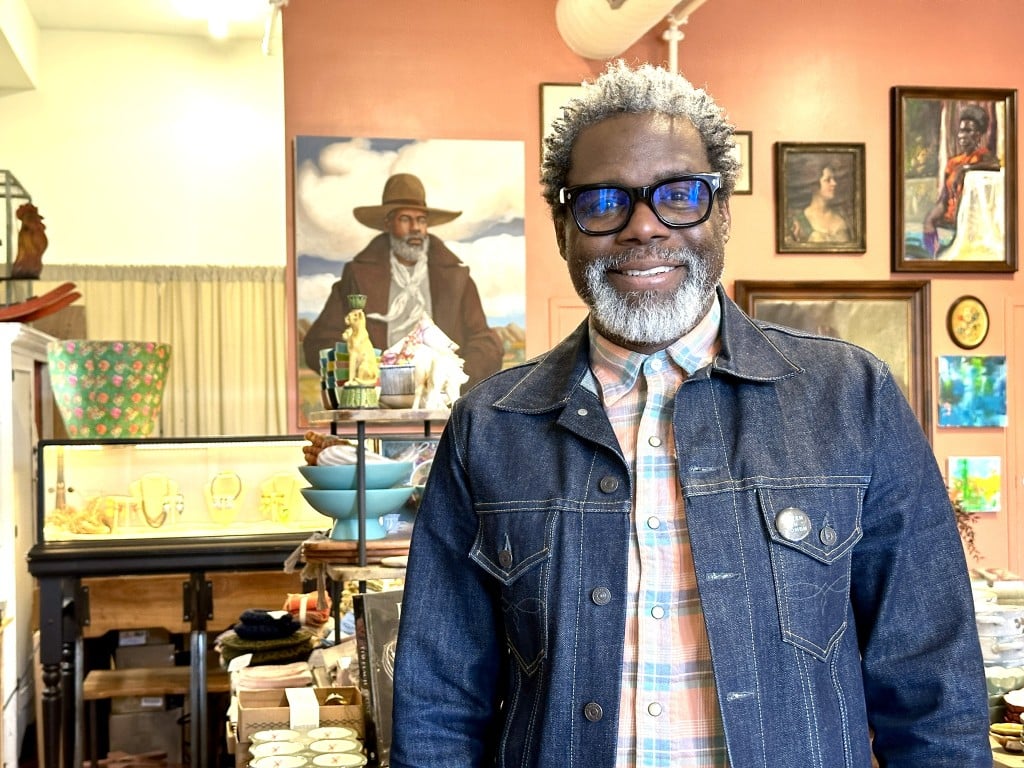
Internationally acclaimed painter and photographer Cedric Smith’s exhibit, “Layers of Becoming,” opens Friday and runs through March at the Wesleyan College Leadership Lab gallery, 522 Cherry St.
A self-taught, multidisciplinary, mixed-media artist, Smith works in acrylics, oils, gouache and other media. His reframing of the Black experience — placing Black subjects at the center of historically white-only advertisements, product labels and magazine covers, as well as depicting Black individuals as cowboys, jockeys and in other traditional settings — has gained him recognition as a significant and sought-after Southern artistic voice.
In many pieces, Smith incorporates photographic collage using both his own photography and historical images he has spent years collecting. The goal, he said, is to create representation and “make normal people appear famous.”
“Layers of Becoming” will also feature a selection of Smith’s purely photographic work. The free, public opening is part of First Friday events, with hours from 5-8 p.m. and an artist talk scheduled for 6 p.m.
Smith’s family is from Thomaston, but he was born in Philadelphia, where his immediate family lived briefly before moving to Atlanta. He grew up there and lived in the city until moving to Savannah, then relocating to Macon six years ago with his partner, Autumn VanGunten.
In addition to his studio work, Smith and VanGunten opened The Rabbit Hole in Macon, described as a creative lifestyle boutique blending art, home goods, plants and unique products with an eye toward being an inclusive community space.
As an artist, Smith sees himself as a creative adventurer who resists being bound or stereotyped. Along the way, he has shown both thoughtfulness and purpose.
Early days
Smith said he drew and painted as a child, even being asked to create mural-style backdrops for elementary school dramas. Still, he never saw art as a career path.
“I did an apprenticeship in a barbershop in Atlanta and was cutting hair,” Smith said. “I got tired of seeing the blank walls, so I put up some paintings.
“I didn’t know who he was at the time, but one of the people who came to the shop was well-known Atlanta artist William Toliver. I overheard him talking about his studio. I asked what kind of music he did, and he said he didn’t do music, he was a painter, an artist.”
One thing led to another, and Toliver invited Smith to visit his studio, which turned out to be a three-story facility housing creative endeavors, from painting and printing to photography.
“It blew my mind that he, a Black man, could be a professional artist — and a successful one. Also, he was self-taught. We spent time together. He didn’t teach me anything technical but we talked about being an artist, and I was taking in everything I saw. It was then I decided that’s what I wanted to do. I gave two weeks’ notice at the barbershop and started painting.”
Smith found success in showing his work. His résumé grew with exhibits in Atlanta, then throughout the Southeast and internationally, including in Paris. His work was also selected for display in U.S. embassies worldwide.
Just as Smith had never considered becoming an artist because he had never seen anyone like himself in that role, the idea of Black representation — or lack thereof — began to take hold and would become central to much of his work.
Smith was 22 when he met Toliver. He’s now 55.
Redressing the absence of Black representation
“A lot of my work stemmed from summers spent in Thomaston at my grandmother’s, where her sister had a store,” Smith said. “I love labels, I love signs and I used to see all this stuff around. I’d see these old RC Cola signs and things, but didn’t see Blacks in them.
“It didn’t dawn on me at the time, but it affected me and would affect my art, creating a thread of redressing that lack of representation in culture. I’m showing the contributions of Blacks in America.”
His first series along these lines placed Black people on giant postage stamps. Then came U.S. currency, magazine covers and other formats — all intended, he said, “to stir up a conversation.”
More series followed, including Black people being represented in historic product labels and portrayed as jockeys and cowboys. Smith said he loves horses and cowboys and recalled a child seeing one of his paintings and remarking that he didn’t know Black men rode horses.
“At first I was like, what do you mean?” he said. “Then I thought about it and was like, ‘how would he know?’ There’s not enough being taught about it, and it wasn’t in the movies.”
On being an artist, the exhibit and the future
While this thread runs through Smith’s work, he said it can be subtle and, at times, even an impediment to him as a creative.
“I’m a little different than a lot of artists because I don’t believe artists should have just one style,” he said. “People get to know it, and you get pigeonholed.”
Smith said he believes artists should welcome growth and change by being true to their art and doing what inspires them, instead of sticking to one style and creating what sells.
“This exhibition shows what I’ve done and the thread that puts it all together,” he said.
It includes older works alongside his most recent pieces — and possibly hints at where he wants to go next.
“It’s called ‘Layers of Becoming’ because it’s showing the multi-layers of me,” he said. “At the beginning of my work, it was about things I didn’t see; now I’m moving into things I do see, especially in the current conditions we’re in.”
Smith said he is concerned that being pigeonholed in any way sets boundaries he doesn’t want, even when the pigeonhole is a good one.
“Galleries would often not want my new work because it wasn’t exactly like what was already selling,” he said. “But they’d take a couple, sell them, then they’d want more. As an artist, I won’t be tied to that. Sometimes I may want to just paint a flower without it being like, ‘Oh, is it a Black flower?’ I feel (non-Black) artists have a luxury that they can just paint something for the beauty of it. I think Black artists have this weight that everything has to be deep. But I’m like, everything doesn’t have to be deep.”
Without ever forgetting his “Blackness,” Smith said he wants to evolve toward a human universal.
“Like food,” he said. “Everybody can relate to food, right?”
For more on Smith, follow him on Instagram @cedricsmithstudio or visit The Rabbit Hole, 811 Forsyth St.
Contact writer Michael W. Pannell at mwpannell@gmail.com. Find him on Instagram @michael_w_pannell.
Before you go...
Thanks for reading The Macon Melody. We hope this article added to your day.
We are a nonprofit, local newsroom that connects you to the whole story of Macon-Bibb County. We live, work and play here. Our reporting illuminates and celebrates the people and events that make Middle Georgia unique.
If you appreciate what we do, please join the readers like you who help make our solution-focused journalism possible. Thank you
Author

Related Articles
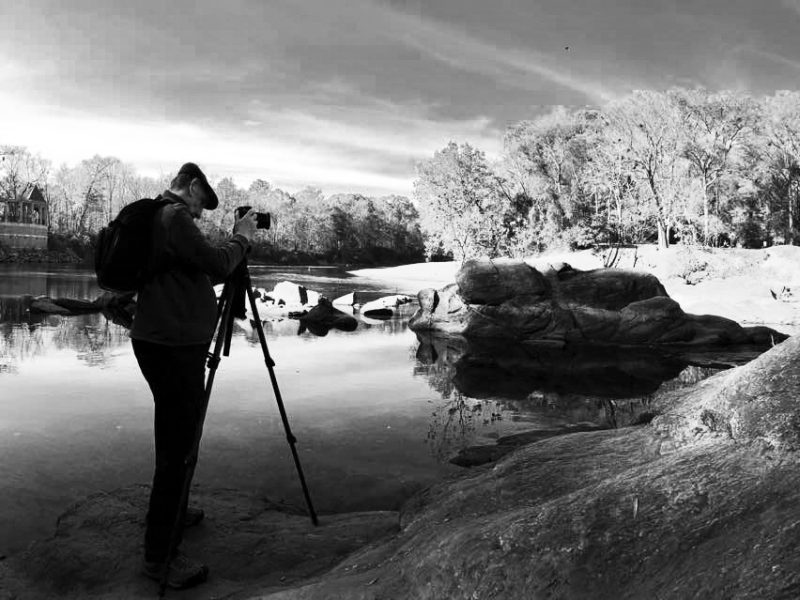
Wesleyan project brings photographer’s archive to light
Thousands of Fernando La Rosa’s film negatives are being seen as positive images for the first time, bringing new life to the archive of the Peruvian photographer and longtime Wesleyan College professor.
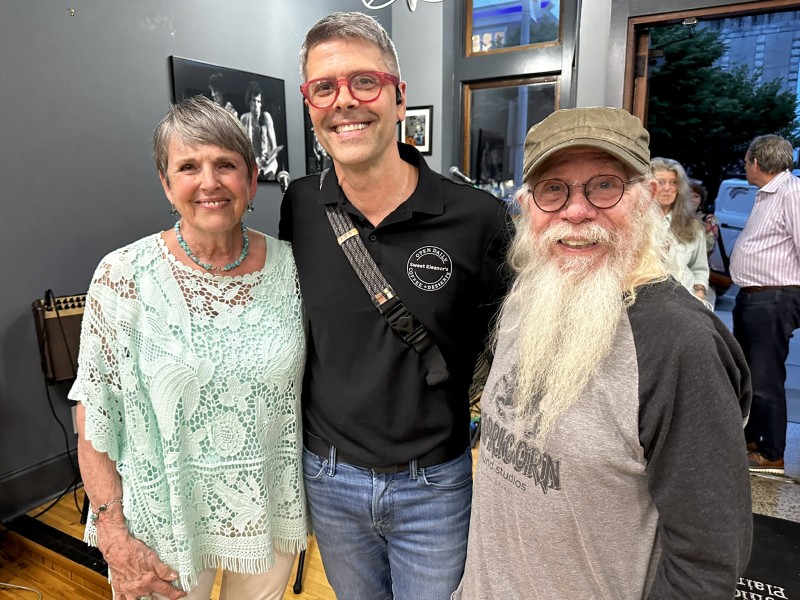
Gallery West saved from closure, local business owner to continue its legacy
Macon’s beloved Gallery West has been saved from closure by local business owner Scott Mitchell. Mitchell also owns Sweet Eleanor’s Divine Desserts and The Bohemian Den.
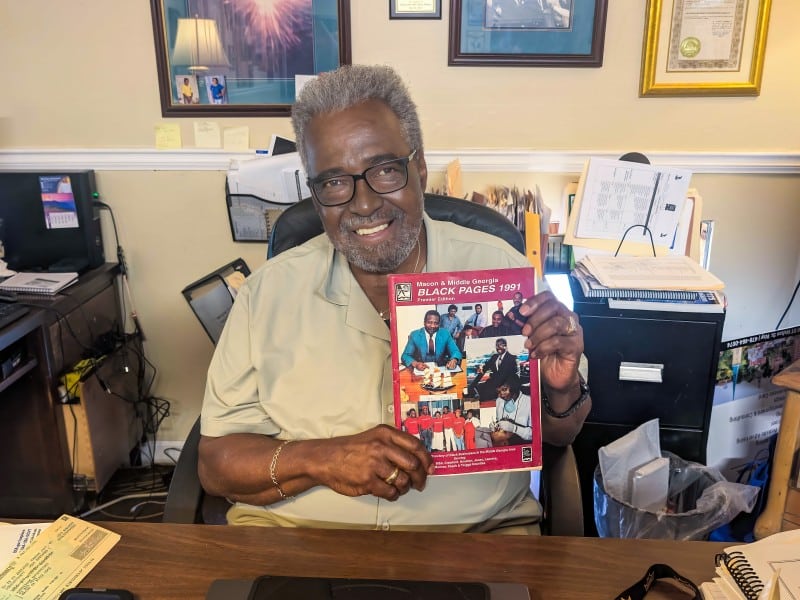
Black Pages turns 35, trades ink for the internet
Alex Habersham launched the Black Pages in 1991. The longtime publication marks 35 years in 2026.