
Rural Georgia can’t afford to ignore the rise of authoritarianism
My thumbnail description is straightforward: authoritarianism attacks personal freedoms, expands concentrated power among the chosen few and avoids accountability for the consequences of its actions.
Authoritarianism is a word invoked frequently these days.
Politicians, academics, podcasters and yours truly have leveled it as an explanation, a warning or a call to action. Like its opponent — democracy — there seems to be a common sentiment: you’ll know it when you see it.
But when the risks are high and the harms are real, actual understanding matters. My thumbnail description is straightforward: authoritarianism attacks personal freedoms, expands concentrated power among the chosen few and avoids accountability for the consequences of its actions. Rather than the History Channel tanks we expect to see, 21st century, American-style authoritarianism is more clever and less dramatic, but no less real in its effects, especially in rural communities.
The harms are more subtle, more insidious, but they are happening. If we can be clear about what authoritarianism looks like in our towns and find ways to work together, we can build a better future that works for everyone, especially rural Georgia.
The images out of Minneapolis showed the most direct version of this scourge — a man gunned down for using his First Amendment right to film a public officer, a woman murdered for reasons that have yet to be explained, immigrants chased through streets by masked, armed gunmen carrying badges and no accountability. Yet, away from dense city centers and television cameras, authoritarianism creeps over our lives like ivy, quietly pulling down our structures. It disrupts and dismantles, while claiming to solve and protect.
Last year, as DOGE was identifying areas of government waste, the current regime honed in on five Georgia Social Security Administration offices for closure, more than in any other state. For elderly Georgians who have irregular access to the internet or who have limited transportation, this decision meant not only losing services but also losing jobs. Currently, the White House is slashing funding for rural development and the farmers who grow our food. Without a congressional vote, America is embroiled in a Middle East war that is spiking the price of gas, diesel and fertilizer, just as spring planting season is underway.
Republicans with authoritarian aspirations are also pushing new voting rules that would mandate in-person registration — no more church drives or online signups — which are bipartisan activities that have worked in our state for decades. Instead, the state legislature would require some folks to drive hours to reach the right government office — assuming it was open.
In the first rule of authoritarianism, curtailing your liberties is the goal. Translation: If our county governments can’t pick up the slack, access to services from your retirement check to affordable food to the right to vote is made even harder. The right to life, liberty and the pursuit of happiness runs into the buzzsaw of their pursuit of power. This isn’t politics as usual — it is the attack on democracy through political means.
In small towns and rural areas, authoritarianism looks more like broken promises than frontal assault. By leaving farmers behind, treating access to your taxpayer-funded agencies as an unreasonable waste of money and making it harder for you to vote, they’re breaking the contract the government has with its citizens. An autocrat knows they can get you to give up, turn away and tune out once you’ve become disillusioned by how hard everything has become. They think once you see the government as beyond repair, you won’t see democracy as worth fighting for any longer.
Democracy is definitely flawed, but it works when we let it — because democracy’s objectives are the opposite of authoritarianism: to protect and expand civil liberty, to share decision-making across communities and to hold power accountable and punish corruption. Far away from the action, rural communities often pay the price for the difference.
In Hungary, the power-mad prime minister, Viktor Orban, lost his bid for reelection after 16 years in office. He was an authoritarian of the new order — duly elected, he proceeded to weaken the courts, overwhelm the legislature, dismantle the free press and attack universities. For 16 years, Hungarians who had survived communism were crushed beneath his misuse of democratic elections.
Attention focused heavily on the cities, on the urban areas where the graft, corruption and immorality were constantly on display. But it was in the forgotten rural areas where resistance truly took hold. They organized themselves around how Orban’s regime had lied to them, gutted their resources and pretended to respect their contributions. It worked.
Whether in Hungary or the U.S., too many people in power disregard rural communities. The broadband gap is real, and less dependable internet access means information is slower to reach beyond the cities. This disparity can make disinformation harder to combat. Lower population density means protestors don’t readily fill the streets and our frustration level isn’t acutely felt by those that represent us.
But if we want to stem the tide of authoritarianism and demand the government keep its promises, we don’t have to look very far into the past to find the roadmap to success. Last November, voters in Georgia’s Public Service Commission race spoke loud and clear: they are tired of struggling with soaring energy costs and tired of officials more aligned with energy companies than communities. Rural voters, animated by rising prices and the indignity of being ignored, showed up and forced change. Rural communities can shape the future in Georgia and beyond.
To defend and demand the democracy we deserve, our job is to leave no patriot behind. Below the Gnat Line, Georgia has no shortage of organizers who can invite their neighbors to find agreement on the issues that matter most. By coming together in spaces like community centers, churches and parks, we can take some of the key steps to fight authoritarianism: sharing, organizing and mobilizing.
Taking back our power begins when we ask each other, “What do you need?” and then pitch in to help one another. What we need in this moment is our freedom. We need to protect the right to vote and be heard. We need accountability for what has already been stolen.
Hungary saw authoritarianism take hold in every community, large and small. Here in Georgia, we can’t pretend that we don’t see what is happening. And in rural Georgia, the obligation is to call it what it is. But what comes next is the decision to do something about it.
Georgians — like our fellow Americans — have the power to stop the destruction of our country from the inside out, the right to choose something different. We must remember we deserve more than broken promises and gutted government. Instead, when we work together to fight for what’s right — to fight for each other — we can win.
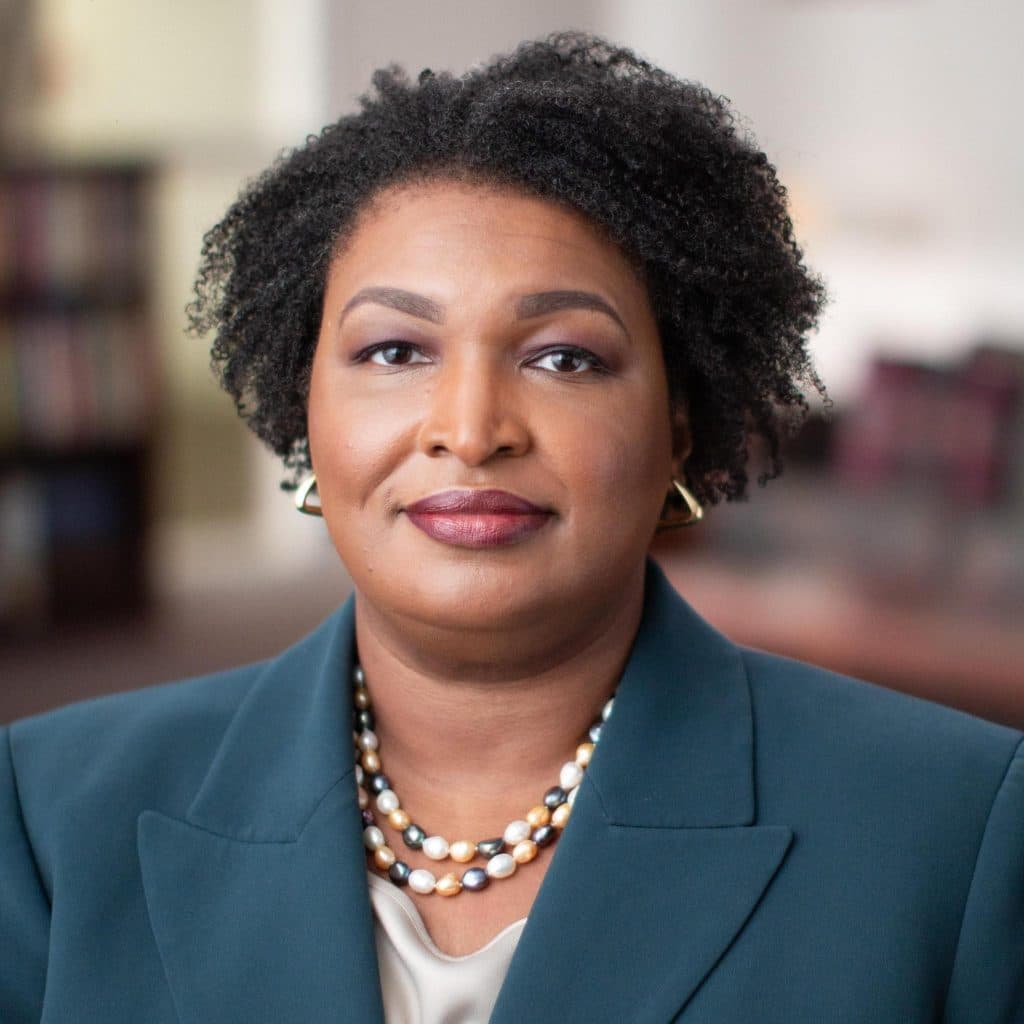
Stacey Abrams is a bestselling author, entrepreneur and host of the podcast “Assembly Required.” She previously served as the minority leader of the Georgia House of Representatives.
Before you go...
Thanks for reading The Macon Melody. We hope this article added to your day.
We are a nonprofit, local newsroom that connects you to the whole story of Macon-Bibb County. We live, work and play here. Our reporting illuminates and celebrates the people and events that make Middle Georgia unique.
If you appreciate what we do, please join the readers like you who help make our solution-focused journalism possible. Thank you
Related Articles

The Odyssey embarrasses anti-woke crusaders
While I am no movie critic, I applaud Nolan for his recreation of the epic, but perhaps one of his greatest accomplishments was embarrassing anti-woke crusaders.
Don’t blame data centers for failed public policy
Data centers have become a kind of boogeyman among voters lately. Recent polling even suggests that new data center construction is less popular than the IRS.
The World Was Meant to Meet
It is all over now, and I already feel a certain emptiness, Christopher Blake writes in his final column about the 2026 FIFA World Cup.