
Reflections of a Middle Georgia hippie
The upcoming premiere of the new documentary “Gregg Allman: The Music of My Soul” has Melody columnist Michael W. Pannell feeling nostalgic.
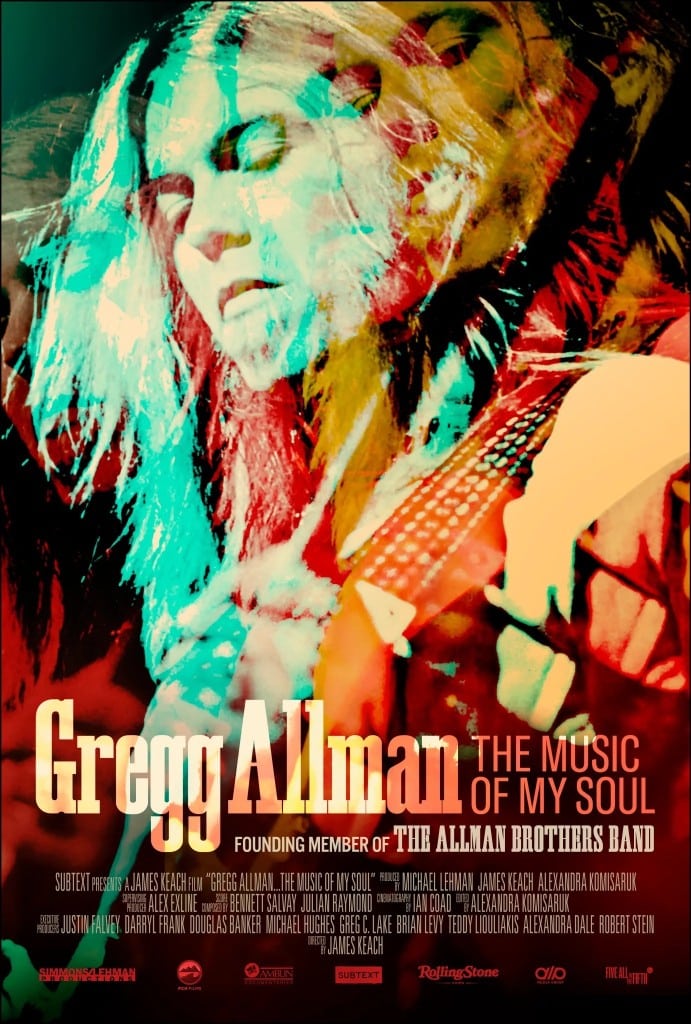
The new documentary “Gregg Allman: The Music of My Soul” premieres in just two places next week — the Gramercy Theatre in New York June 9 and at Macon’s Piedmont Grand Opera House June 11.
Tickets for both premieres sold out immediately, proof that love for the iconic performer and his music still runs strong.
And for many, it’s because of the nostalgic memories that Gregg Allman and the original Allman Brothers Band represent — those early 1970s days in Macon during the Capricorn era.
That’s what this column is really about: a few personal recollections of a teenage Middle Georgia hippie — me — who enjoyed those times and the music that shaped it.
But first, more on the film and Macon showings.
Luckily, there are more chances to see “Gregg Allman: The Music of My Soul” for those of us who missed tickets for Thursday’s premiere. Following the premieres sellout, Julia Morrison at The Grand announced an additional Grand screening June 17 at 7:30 p.m., and four more screenings at Mercer Music at Capricorn, where the Allman Brothers Band recorded.
Grammy and Golden Globe–winning filmmaker James Keach directed the documentary. He’s proven with films like Walk the Line and Glen Campbell: I’ll Be Me that he’s going to tell Gregg Allman’s story well, in full and with heart.
But telling Gregg Allman’s story is not my job when it’s laid out so well by Keach and company. Instead, I’ll get personal with a “nostalgia-fueled music memory” and slices of my world from back in the day.
I first heard the Allman Brothers in concert at The Grand Opera House in late May 1970 before the tragic deaths of Duane Allman and Berry Oakley.
That concert was overwhelmingly good.
I had dinner last weekend with two high school friends who helped confirm a memory or two. My best friend at Warner Robins High School was Bruce Brookshire, and our friendship has been steady through the years. Also at dinner was our friend Rob Walker. Walker was a guitarist with Stillwater who signed with Capricorn, and later had a career with Air Force bands.
In high school, Brookshire was in a band called Virginity, which led to Free Soil, then Jacob. He was part of the more locally famous band, Roundhouse — later renamed Doc Holliday. Roundhouse figures into Capricorn-era history by being the original house band at the then-new Grant’s Lounge, where Gregg Allman and other ABB members frequented late nights and often jammed.
When I brought up the concert, which Brookshire and I were at together, his eyes lit up and he talked about how the whole ABB set built continuously to an unforgettable, staggering climax. Anyone not an Allman Brothers fan couldn’t have left The Grand without becoming one.
I remember thinking during one of those early ABB concerts at The Grand, “You mean they’re letting a bunch of rock ’n’ rollers in this place?” Only years later did I find out The Grand was at a low point in its upkeep at that time, but still, there was a dispute as to the appropriateness of using it for rock ’n’ roll and those so-called dirty hippies.
Nonetheless, my friends and I zipped around Macon and Warner Robins in those days in Zap the Wonder Comet, my 1960s Mercury Comet powered by 35-cents-a-gallon gas, doing mentionable and unmentionable hippie things — among them piling into Zap after school one very special day to head downtown because we heard Davidson’s had Levi’s bell-bottom jeans, the very first place in Macon to sell them.
Not long after that May ABB concert, over the 1970 Fourth of July weekend, the Allman Brothers played the Second Atlanta Pop Festival in a soybean field next to Byron’s racetrack.
Actually, they played twice.
The first story I ever wrote for publication — for my dinky high school newspaper — was about the festival coming the summer before I started my senior year. I had written, drawn and messed around with music for years and been an annual staff person from middle to high school, but that was the first thing I ever “published.”
As I write this, I realize it’s the same sort of thing I’m doing now: writing about the arts and artists while promoting cool things to do. Just the dinky-ness is gone and there are way more things to do.
It was amazing that my parents let me go to the Byron festival. The bands — so many bands — were amazing. And so was the heat.
Like thousands of others, Brookshire and I went out days early for the pre-festival goings-on across the highway in what became known as Love Valley, home of the Free Stage where lesser bands played before the big event. Free Soil played there.
Naively, Brookshire and I brought cans of beans, chili and other items to cook over a campfire. We quickly realized the insanity of a campfire and hot food in the 100-plus-degree heat and trashed the canned goods.
It was hot. Dreadfully hot, and dust filled the air. What kept us there were amazing people and, the big thing, the incredible music that filled the air thicker than the dust.
A personal highlight was leaning against a truck — probably a band van — listening to music one night at the Free Stage and realizing the person leaning next to me and sharing his goods was ABB’s Berry Oakley.
The Allman Brothers played for the estimated 150,000 to 600,000-person crowd in what many called their first big step onto the national stage after years of tireless touring and “hitting the note.”
For all who experienced it, their second appearance — that saw the sun come up on July 6 — was one of the most magical musical moments ever.
I also saw ABB shows at the Macon Auditorium in 1972 after Duane Allman’s death but before Berry Oakley’s, as I recall. And then there was the 1973 show at The Grand Opera House, taped for “Don Kirshner’s Rock Concert” series and now called Saturday Night in Macon.
It was Chuck Leavell’s first Macon performance as an ABB band member — technically, it may have been his first anywhere, according to some sources — and he brought down the house, particularly with his playing on “Jessica.”
People knew the band would be OK musically. I couldn’t help but reflect on that when Leavell played “Jessica” with Robert McDuffie and Mike Mills during a taping of “A Night of Georgia Music” a couple years ago.
Again, he brought the house down. He does that.
But here’s an important thing about the Allman Brothers back then: It was a time when downtown was in decline and very few major bands made their way to Macon. But the Allman Brothers were here. They played impromptu sets in Central City Park and did gigs at the city’s big venues. If not for them and Capricorn, we wouldn’t have seen as many of the great bands come through the city.
But they were here, and they were, in a sense, ours.
And they were hippies.
Lest we forget, hippies were not seen in a good light in those days. Certain people took delight in harassing hippies, sometimes in literally painful ways.
That was a factor in Grant’s philosophy when he started a place he said was for all people: whites, Blacks, hippies, whoever.
In a sense, Duane and Gregg Allman and all those guys in that big house on Vineville who played such good music validated us and what we were doing, what we stood for. Sure, we did some dumb stuff, but it was an inspiration that a band could be from here and do great things.
Still is.
The four additional screenings at Mercer Music at Capricorn are as follows: June 21 at 2 p.m., June 25 at 6:30 p.m., June 26 at 7:30 p.m. and June 27 at 6:30 p.m.
Contact writer Michael W. Pannell at mwpannell@gmail.com. Find him on Instagram at michael_w_pannell.
Before you go...
Thanks for reading The Macon Melody. We hope this article added to your day.
We are a nonprofit, local newsroom that connects you to the whole story of Macon-Bibb County. We live, work and play here. Our reporting illuminates and celebrates the people and events that make Middle Georgia unique.
If you appreciate what we do, please join the readers like you who help make our solution-focused journalism possible. Thank you
Author
Related Articles
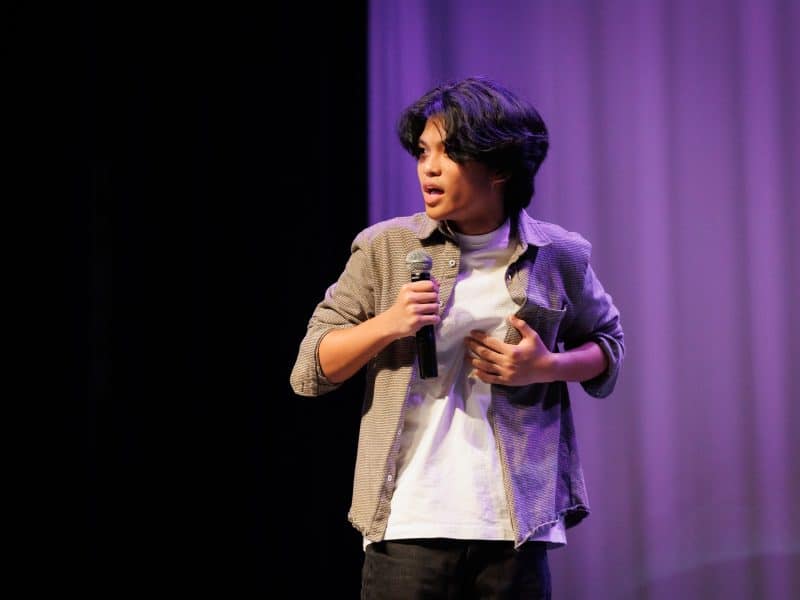
A Peach State migration: How a Macon teen’s journey inspired an award-winning poem
Jaiden Geolingo, a rising senior at Howard High School, won this year’s Georgia Poet Laureate’s Prize for his work titled “Peach State Migration.”

The strongest thing a man can do is take care of his health
While resilience can be a strength, it can also become a barrier when it prevents someone from seeking medical care when they need it.
Many of the most common health conditions affecting men can develop silently over time.
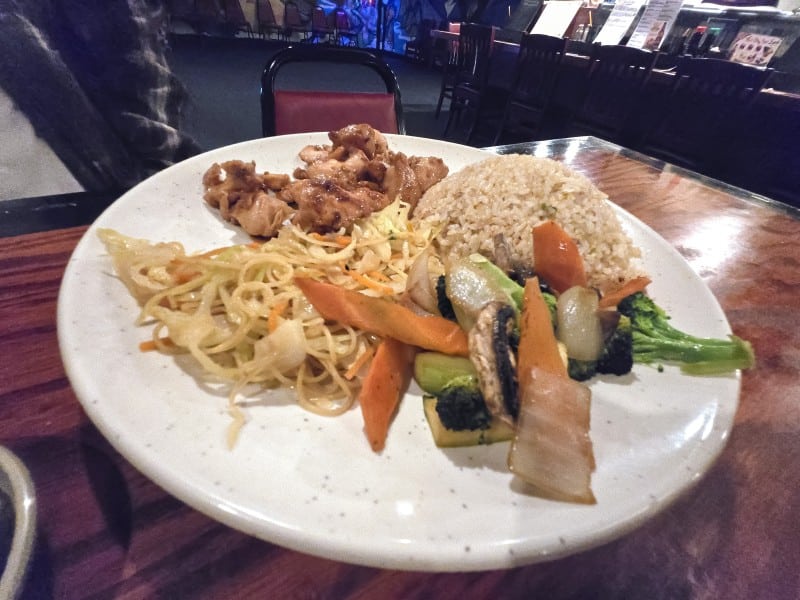
Macon’s go-to hibachi and sushi joint
Mikata, at 2972 Riverside Drive, has built a loyal following by offering two different dining experiences under one roof.