
Macon birdwatching organization creates haven for birders of all ages
Sometimes the most exciting birds are the ones in your own backyard.
A new chapter for The Melody
Our team and coverage are moving to The Telegraph. Make sure you look for The Melody's community-first journalism as a section highlighting the people, places and moments that are the rhythm of Macon.
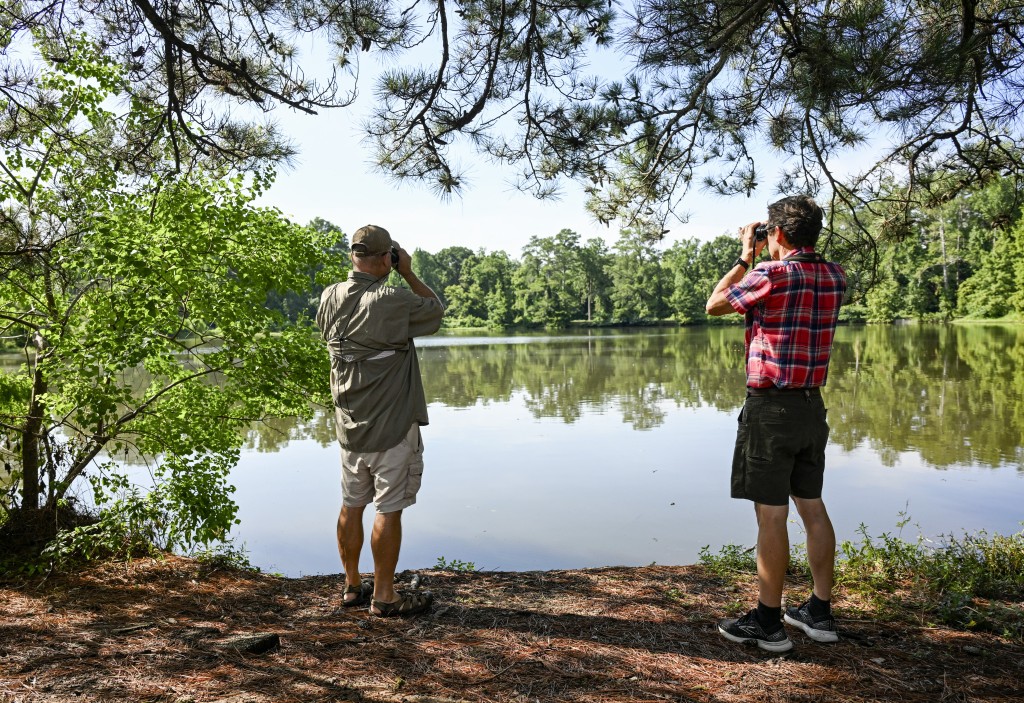
One dewy morning at the Wesleyan College Arboretum, the chatter of birds could be heard from all around, but there was one noise that stood out.
“I hear a good one, which is a red-headed woodpecker,” Wesleyan College biology professor Jim Ferrari said. “Oh, oh, it’s actually there on the light, the big, tall pole… he’s drumming on the light.”
Indeed, there was a small bird with a blood-red head and black and white body pecking away at the top of a metal light fixture. Ferrari and his fellow birder, Ben Thompson, were taken aback by its racket before a passerby clued them in on what was going on.
“It’s trying to get the bugs inside,” he said. “You know with worms, when you put a stake in the ground and make noise [with it], the worms come up. I think that’s what they’re doing.”
That small moment represents one of the reasons that the two men love “birding,” a practice of observing birds in their natural habitats as a hobby — they’re always learning something new.
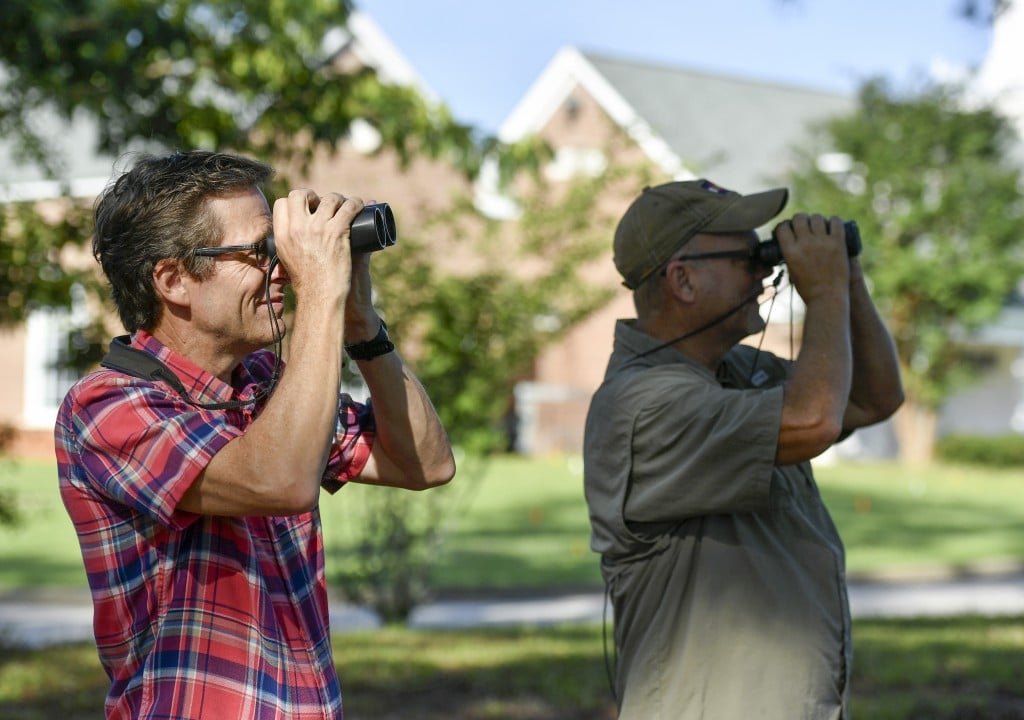
Ferrari and Thompson are both members of the Ocmulgee Audubon Society, which hosts monthly meetings and field trips for its members to go out and birdwatch together.

“The field trips, probably that’s the best way to actually hook somebody,” Ferrari said. “There is something to be said for when you see a bird, you have to struggle to figure out what it is either with a field guide or through an app or something. But you learn more and have more fun and meet like minded people when you’re on a field trip.”
Birdwatching is a hobby that allows its enjoyers to constantly learn about the world around them, they both attest. Ferrari has been birding for almost 40 years, but Thompson didn’t attend his first Ocmulgee Audubon meeting until 2015.
“It was like stepping through a portal,” Thompson said. “These guys can identify all of our southeastern birds by their calls and chip notes and stuff, and I just think it’s totally amazing. I’ve learned a lot.”
The South is an especially great place to observe birds; it’s not just the most biodiverse region of the U.S., but one of the most biodiverse in the world. But sometimes the best birds are the ones in your own backyard, even if they’re the most common visitors.
“The birds where you are the funnest ones to chase,” Thompson said.
Ferrari often takes his students on outings to birdwatch, and with the Wesleyan arboretum at their fingertips, they are well equipped to learn about Middle Georgia’s bird populations. One trip he remembers was when his class came upon a group of cowbirds at Amerson River Park.
“You never know what’s gonna get them excited,” he said. “It’s not a flashy bird. It’s not like that red-headed woodpecker. There were a couple of females and there was a male, and he was displaying — kind of puffing up — and his head was real glossy, and they were just so into it and just so enthralled.”
For many of his students, the outings may be an interesting experience that they look forward to in order to get out of the classroom, but some discover something new about themselves.
Tara Riegel was a student of Ferrari’s several years ago, and she remembers those outings fondly.
“Have you ever seen a duck or a goose walking, and it’s just got these chicks behind it following along?” Riegel said. “That was Dr. Ferrari with us students.”
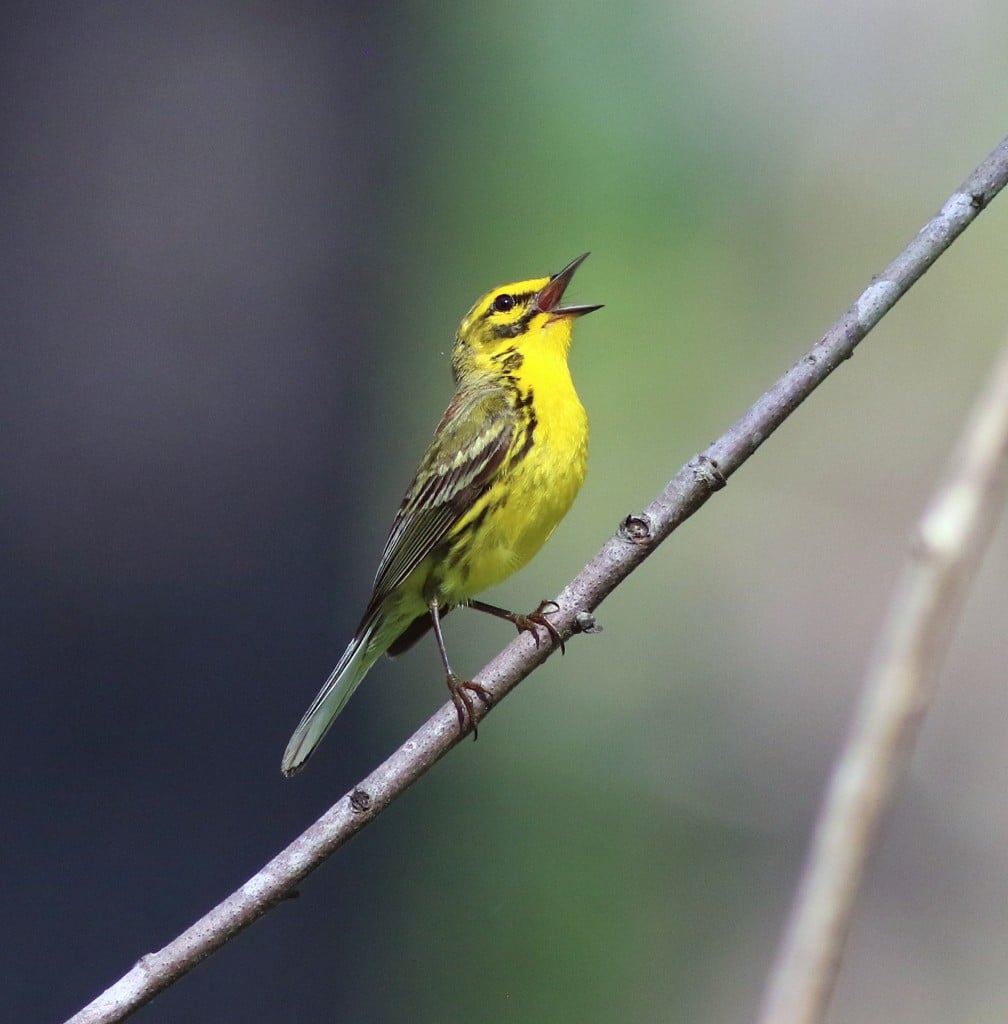
As a student who had always been interested in math and science, Riegel was captivated by Ferrari’s classes. Once she got started birding, she found it addictive to add new birds to her “life list,” a list of all the species that a birder has seen over their lifetime.
“It’s like Pokémon GO, but with real things, and it’s helping science,” she said.
When she graduated, she decided to keep up her new hobby and join the local Audubon chapter at Ferrari’s recommendation.
Birdwatching was one of the significant ways she bonded with her fiancé, Will Burnside, in the beginning of their relationship, and today, they bird together frequently. He said that when she brought it up on their first date as one of her hobbies, he had never heard of it. Riegel quickly remedied that, taking him to the arboretum for their second date.
“Through a lot of our date that day, we weren’t even really talking to each other that much, except to point out, like, ‘Hey, I just saw a bird over there,’ or something related to the activity, because we were so focused. It was just a lot of fun,” he said. “Ever since then, she’s been pretty amped about getting my life list up to speed.”
But Riegel and Burnside aren’t the only ones in Macon brought together by birding.
“I just got married,” Thompson said. “I met my wife at my first Ocmulgee Audubon meeting nine years ago, and for a long time, you know, we were just friends. She’s a musician by trade and all, but she’s an amazing birder. She’s got an amazing ear for birds.”
Every morning, Thompson and his wife go on a bird walk to start the day.
“I think it’s just a wonderful way to be around each other… by celebrating the wonder of what we have around us. It’s an amazing world,” he said.
The community aspect of birding is what keeps them all going to meetings and appreciating each and every time they spend time outdoors. It’s not just about the birds, they say, but the connections they’ve formed through shared interests and experiences.
That may be what is so enchanting about birding to folks around the country. According to a survey conducted by the U.S. Fish and Wildlife Service and released in 2024, over a third of people in the U.S. observed birds around their home and on trips in 2022 — about 96.3 million people. That’s more than double the reported figure in the last USFWS survey conducted in 2016.
The Cornell Lab of Ornithology said this makes sense, as the survey results were released “amid trending social media chatter and newspaper headlines that reflect a worldwide birding boom in the years since the Covid-19 outbreak in 2020.”
That doesn’t sound too far-fetched to Riegel, who runs the local chapter’s social media.
“They’re everywhere. They’re in your backyard. If you live in the city, you have birds on your balcony. I think that that’s part of it, is the fact that they’re always there,” she said. “Social media in general I feel like has made the ecology side of science more accessible to people.”
As they grow older, all of these birders have tried to instill in their children their love for birding and an appreciation of the world around them.
Riegel and Burnside’s kids, 12 and 5, will join them when they go to the park to go birding, and the 12-year-old, Gabriel, will sometimes attend Ocmulgee Audubon meetings.
“They pay special attention to him. Make sure he sees all the birds,” Riegel said. “We have somebody [in the local Audubon Society] who actually started at my son’s age, around 10, and he’s very good at birding, and so he has always paid special attention to Gabriel and helped him identify birds. It’s really nice.”
Thompson and Ferrari both have adult children, and while they have tried not to be pushy, it does make them happy when they get excited about birds.
“My youngest, he’s 23. He’d never seen a wood stork,” Thompson said. “He saw three within a week, and the third time, he called and was just so excited about seeing a wood stork. We hung up, and I nearly started crying. He was gonna be the tough one, you know? And I got him. He’s gonna be a birder too, maybe one day.”
Author

Related Articles

New podcast to offer locals a taste of Macon
The Melody’s food columnist Billy Hennessey will be launching a brand-new podcast in partnership with Visit Macon and 100.9 The Creek.

Five things we must never forget
In the midst of our forgetfulness, what should we strive to remember?
Newt Collier reflects on 81st birthday, the late Alan Walden, why Macon needs a music district and more
Today, Newton Collier is an ambassador for Macon, an active community volunteer, a beloved grandfather figure in music and an electronic trumpet player.