
Act now to stop lawn fungus before it spreads
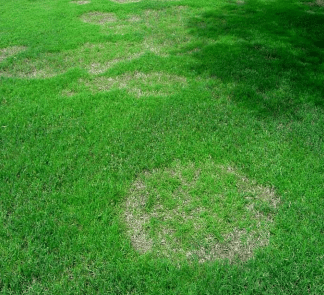
Large Patch disease creates areas of dead grass that form a circle on your lawn.
A new chapter for The Melody
Our team and coverage are moving to The Telegraph. Make sure you look for The Melody's community-first journalism as a section highlighting the people, places and moments that are the rhythm of Macon.
By Scott Nash
As temperatures drop and daylight decreases, warm-season turf grasses — including bermudagrass, St. Augustine grass, centipedegrass and zoysiagrass — become vulnerable to Large Patch disease.
In fact, Large Patch is the most common and problematic turf grass disease in Georgia. In our area, centipedegrass and zoysiagrass are especially susceptible.
Large Patch creates areas of dead grass that form a rough circle ranging from 2 to more than 20 feet in diameter. The outer rings of the patches may appear orange, yellow or sometimes gray, and the centers sunken or bare.
The culprit behind the damage is a fungus called Rhizoctonia solani. This fungus lives in the soil and thatch layer of the grass and attacks the grass in the fall, when its growth slows and the lawn moves toward winter dormancy, and again in the spring as the grass begins to green up.
It is especially active when ground temperatures range from 50-70 degrees and when the grass stays moist for at least 48 hours.
Large Patch thrives in thick thatch and overly-watered lawns. Poor drainage, soil compaction and too much shade also encourage its spread. Fertilizing too early in the spring (generally before May 1 in Middle Georgia) or too late in the fall (after Sept. 1) also contribute to Large Patch’s success.
Getting a soil test through your local University of Georgia extension office will help you learn what nutrients your grass needs.
There are several steps to prevent Large Patch. Since turf grass requires full sun, start by trimming trees and shrubs to reduce shaded areas of the lawn.
Mow your lawn to the recommended height with a sharpened mower blade, and never remove more than one-third of the grass blade at a time. These practices will improve air circulation and help the grass to ward off fungal infections.
It may also be necessary to correct poor drainage by installing drainage tiles or alleviating soil compaction to increase soil porosity.
Above all, avoid overwatering your lawn. Grass only needs an inch of water, including rain, per week.
You can find calendars for proper maintenance practices for your turf grass type online at turf.caes.uga.edu.
Finally, you can apply fungicides to combat Large Patch. If your lawn has a history of turf grass disease, October is the ideal month to treat it with a preventative fungicide.
Several different chemicals are effective in Large Patch control, including those with the active ingredients myclobutanil, propiconazole and azoxystrobin. Both liquid and granular products for home use can be purchased from local retailers.
Remember to check the fungicide label for specific instructions, restrictions, rates, recommendations and proper follow-up and handling. Carefully follow the directions.
The Rhizoctonia fungus is persistent, but if you treat it now, you can avoid more serious problems in the spring. However, should you see evidence of Large Patch as your lawn greens-up in the spring, a follow-up application may be necessary.
If you have any gardening or landscape questions, contact the UGA Extension’s Bibb County office at 478-310-5350 or email [email protected].
Scott Nash is with the Georgia Master Gardener Extension Volunteer Program. The program connects University of Georgia Cooperative Extension employees with plant enthusiasts and community members across the state.
Related Articles

New podcast to offer locals a taste of Macon
The Melody’s food columnist Billy Hennessey will be launching a brand-new podcast in partnership with Visit Macon and 100.9 The Creek.

Five things we must never forget
In the midst of our forgetfulness, what should we strive to remember?

Newt Collier reflects on 81st birthday, the late Alan Walden, why Macon needs a music district and more
Today, Newton Collier is an ambassador for Macon, an active community volunteer, a beloved grandfather figure in music and an electronic trumpet player.