
At Linwood Cemetery, a son searches for the father he never understood
Arcelious Emory Gross is one of 4,000 people buried at Linwood Cemetery. Some graves are marked. Some are not. The cemetery, the final resting place for several prominent Black Maconites, sprawls across land wedged between Grant Avenue and Interstate 75.
A new chapter for The Melody
Our team and coverage are moving to The Telegraph. Make sure you look for The Melody's community-first journalism as a section highlighting the people, places and moments that are the rhythm of Macon.

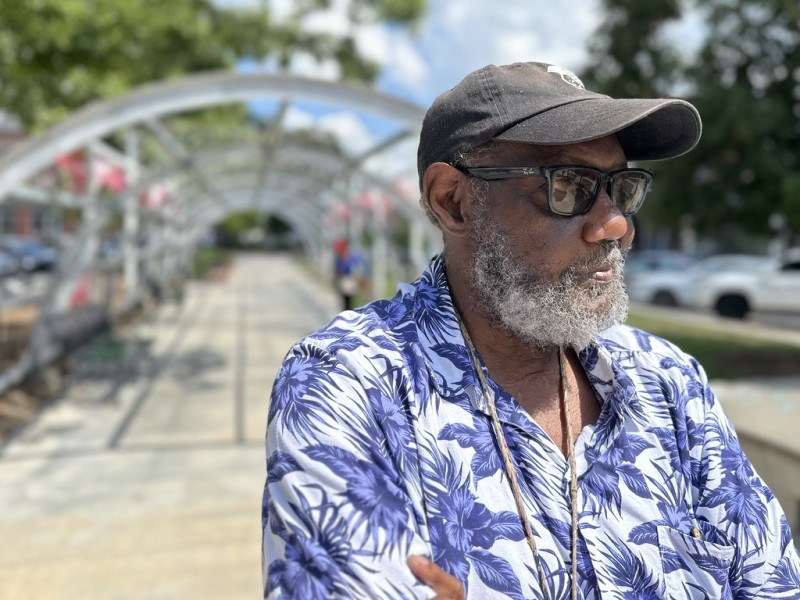
On a sunny afternoon, Emory Gross Sr. scans over a trail of dry weeds, sunken graves and faded headstones too worn to read.
More than 60 years ago, his father, Arcelious Emory Gross, was laid to rest in this place — Macon’s Linwood Cemetery, a historic burial ground left behind by the area’s growth.
But standing in the scorching heat, surveying a 14-acre sea of crumbling burial markers, the Macon native isn’t quite sure where his father — or any of his family — rests.
He finds a government-issued stone marker that shows its age. It’s now 62 years old. The inscription reads, “Arcelious Emory Gross. Georgia. S SGT US Army. World War II. Sept 16 1918-Sept 3 1964.”
The rectangular slab has been moved over the years, Gross said. Still, finding it is a relief — and a sign of determination. Gross wants to remember, and honor, a man’s complicated legacy.
His father is one of 4,000 people buried in the cemetery. Some graves are marked. Some are not. The cemetery, the final resting place for several prominent Black Maconites, sprawls across land wedged between Grant Avenue and Interstate 75. The 132-year-old cemetery in Pleasant Hill, listed on the National Register of Historic Places, could have been lost to time with the construction of the interstate.
But folks like Gross still care and still visit.

A father’s shadow
Gross grew up in Pleasant Hill and remembers biking through Linwood with his childhood friends. He was just a teen when his father, who fought in World War II and returned from the war’s combat zones a changed man, died.
“He drank himself to death,” Gross said.
His father rarely talked about his military service. Gross instead saw his parents fight and eventually divorce. Arcelious worked at Robins Air Force Base in Houston County, at the post office and as a brickmason.
Post-traumatic stress disorder wasn’t well understood then, Gross said, but he thinks now that his father suffered from it. PTSD, a mental condition triggered by shock, can cause angry outbursts, detachment from others, memory lapses and more. According to the federal Department of Veterans Affairs, seven out of every 100 veterans experience the condition.
As a kid, Gross thought his father was just an alcoholic. It wasn’t until he served in the U.S. Air Force that he was able to relate to what his father might have been feeling.
“You go to sleep at night — all that stuff comes back to you,” he said. “You don’t understand that as a civilian, but PTSD is something else.”
Sober, steady and searching
The son followed in the steps of the father. Gross, too, suffered with the mental strain of service and later with alcoholism. After being discharged from his railroad job for reeking of alcohol in 1985, he entered a 28-day treatment program and has since maintained his sobriety.
At 53, he earned a degree in psychology and started a new career mentoring children with behavioral challenges. It took Gross years to understand the potential causes of his father’s behavior.
Gross, who until recently rarely visited the cemetery, learned of Linwood’s deterioration six months ago and headed there. He didn’t find the marker on that visit, but — with the help of local cemetery preservationist Y-O Latimore — soon located it.
He hopes to one day commission a more prominent headstone for his father. First, though, he wants to find his father’s actual grave.
Until then — and especially this Memorial Day — Gross will spend time reflecting on his father, missed opportunities and what military service, and sacrifice, means.
“I got a flagpole at my house,” Gross said. “I fly it everyday — it’s for him.”
Author

Related Articles

New podcast to offer locals a taste of Macon
The Melody’s food columnist Billy Hennessey will be launching a brand-new podcast in partnership with Visit Macon and 100.9 The Creek.
Five things we must never forget
In the midst of our forgetfulness, what should we strive to remember?
Newt Collier reflects on 81st birthday, the late Alan Walden, why Macon needs a music district and more
Today, Newton Collier is an ambassador for Macon, an active community volunteer, a beloved grandfather figure in music and an electronic trumpet player.