
Explore Macon’s birthplace at 20th annual Fort Hawkins Archaeology Day
Saturday is Archaeology Day at Fort Hawkins. The 20th annual event gives the community an opportunity to learn about the birthplace of Macon.
A new chapter for The Melody
Our team and coverage are moving to The Telegraph. Make sure you look for The Melody's community-first journalism as a section highlighting the people, places and moments that are the rhythm of Macon.
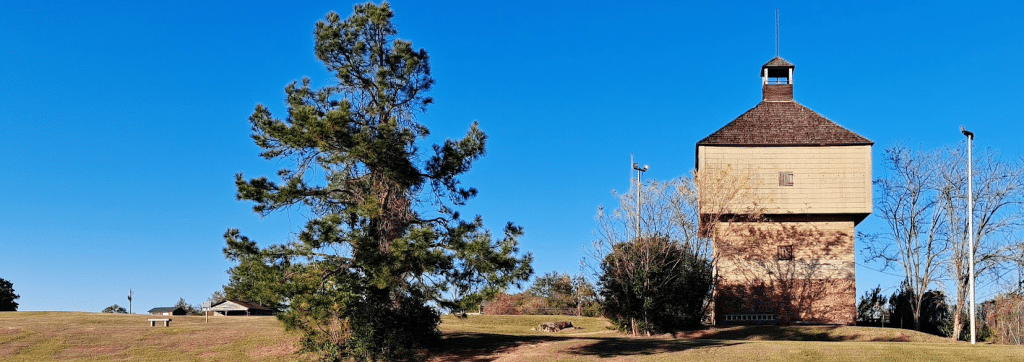
It’s a family-friendly afternoon of exploring history, pre-Macon frontier life and a chance to go up in the Fort Hawkins blockhouse to look around and then out at one of the best views of the city you’ll ever get.
It’s the 20th annual Fort Hawkins Archaeology Day at the often-taken-for-granted, iconic Macon site at the corner of Fort Hill Street and Emery Highway.
The afternoon is organized by the Ocmulgee Archeological Society and Fort Hawkins Foundation and is free to the public from noon – 4 p.m. There’s plenty of free parking onsite and hopefully clear skies.
“Yes, people will be able to tour the blockhouse, have a look around and go up what amounts to several stories to see out over Macon and the surrounding area,” said Ashley Quinn, president of the Ocmulgee Archeological Society, board chair of the Fort Hawkins Foundation and collections manager of the William P. Wall Museum of Natural History at Georgia College & State University.
“For a long time, we only featured artifact identification and pottery making during our Fort Hawkins Archaeology Days,” Quinn said. “Over the last few years, we’ve expanded exhibits and activities quite a lot with more education and interactive things to do related to primitive skills, living history highlighting different eras, historical reenactors and Georgia Native American lifeways with a member of the Muscogee (Creek) nation on hand. There’s a lot going on to fill the afternoon.”
Blacksmithing is another feature of the afternoon, as is something new: an archeology lab in the Fort Hawkins Museum/Visitor Center that will be in operation. Quinn said folks will be able to see the sort of lab work involved in archeology and that soon there will be possibilities for volunteers and anyone interested in preserving history to get involved with the lab and its work.
The center itself presents visitors with history from before Fort Hawkins was established and a look at Native Americans who lived here, through a school once at the site and beyond.
Quinn said this year there will also be information regarding a new initiative by the Fort Hawkins Foundation to assess and make needed repairs to the blockhouse.
The blockhouse at the site now is not one of the two original blockhouses at Fort Hawkins, but a replica built in the 1930s through the efforts of the Nathaniel Macon Chapter of the Daughters of the American Revolution.
Fort Hawkins was established in 1806 with construction completed in 1810 under the oversight of Benjamin Hawkins, its namesake. At the time, it was considered an outpost on the southwestern frontier with site selection on the highest available location amid lands owned by the Muscogee (Creek) Nation. It was an enviable location along the Ocmulgee River along the Fall Line overlooking what was known as the Creek Trading Path and the sacred Muscogee (Creek) earthwork mounds known then as the Ocmulgee Old Fields and now as the Ocmulgee Mounds National Historical Park.
Never considered a battle fort, Fort Hawkins served more as a trading settlement and overlooking what was to become Macon.
As for Hawkins, some facts of his life and work are in dispute, but it’s clear he was originally a well-to-do North Carolina planter and delegate to the Continental Congress. After serving on George Washington’s personal staff during the Revolutionary War and being involved with Native American affairs in the South, Washington appointed him a commissioner to the Creek Nation in 1796.
In 1801, Thomas Jefferson appointed him principal agent for Indian affairs south of the Ohio River, thus making him the principal U.S. Indian Agent to the Creek and bringing him to Georgia.
He spent time at Fort Hawkins but traveled the Southeast and made his home on a large farming-milling complex he created near Roberta, bringing enslaved African laborers from North Carolina to build it.
Hawkins suffered ill health much of his life and died in 1816 at his home along the Flint River. A monument to Hawkins was erected in Roberta’s downtown in 1931, commemorating his life and service.
Hawkins learned the Muscogee language and two of his seven children were named after Native peoples, Muscogee and Cherokee. His work as an Indian Agent reportedly led to his being called the “Beloved Man of the Four Nations” and gained him respect for his overall consideration of Native Americans, including women and children.
Hawkins’ time of service was one of peace, but that co-existence unfortunately ended when President Andrew Jackson tragically led the way toward the illegal displacement of Native nations from their homelands, property and way of life in Georgia, Tennessee and Alabama to Oklahoma, one of many Trails of Tears forced in the Southeast.
An entertaining and independent perspective on Hawkins and much of Fort Hawkins’ history is available on a multipart series podcast at middlegapodcasts.podbean.com. The first episode presents a unique question-and-answer session with Hawkins as portrayed by Marty Willett. Willett has been an active participant in the goings-on at the modern Fort Hawkins and portrayed Hawkins during the fort’s 2006 bicentennial celebrations.
As Quinn has said, Fort Hawkins and days such as the annual Fort Hawkins Archaeology Day offer an important perspective worth learning and understanding regarding Macon and Middle Georgia’s roots, why and how it developed as it did and what the future might hold.
Want more information on Fort Hawkins and current efforts toward its preservation and what it offers? Quinn said the best contact for information is via [email protected] but there’s also ocmulgeearchaeology.wixsite.com and forthawkins.org. The organizations are also active on social media.
Author

Related Articles

New podcast to offer locals a taste of Macon
The Melody’s food columnist Billy Hennessey will be launching a brand-new podcast in partnership with Visit Macon and 100.9 The Creek.

Five things we must never forget
In the midst of our forgetfulness, what should we strive to remember?
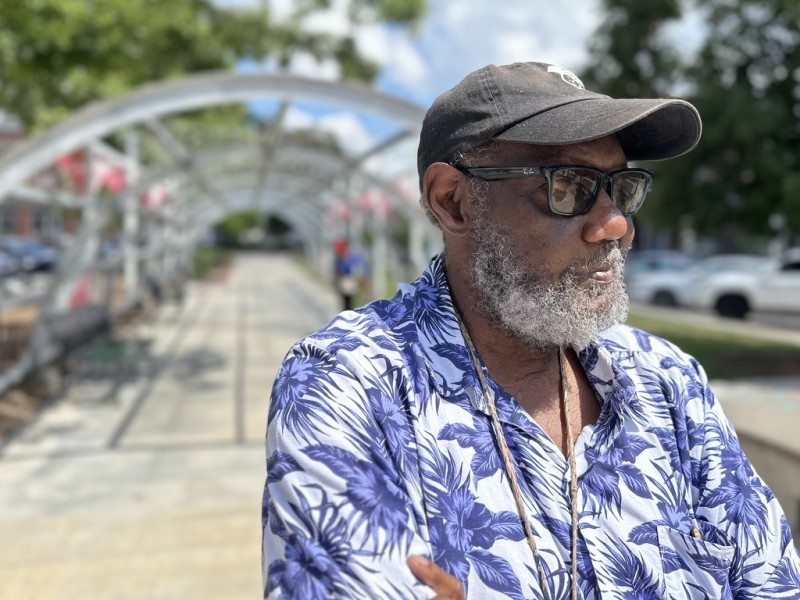
Newt Collier reflects on 81st birthday, the late Alan Walden, why Macon needs a music district and more
Today, Newton Collier is an ambassador for Macon, an active community volunteer, a beloved grandfather figure in music and an electronic trumpet player.