
How the county, nonprofits support low-income homeowners
The Macon-Bibb County Economic and Community Development Department, along with several local nonprofits, offers support to homeowners struggling to keep up with maintenance and repairs.
A new chapter for The Melody
Our team and coverage are moving to The Telegraph. Make sure you look for The Melody's community-first journalism as a section highlighting the people, places and moments that are the rhythm of Macon.
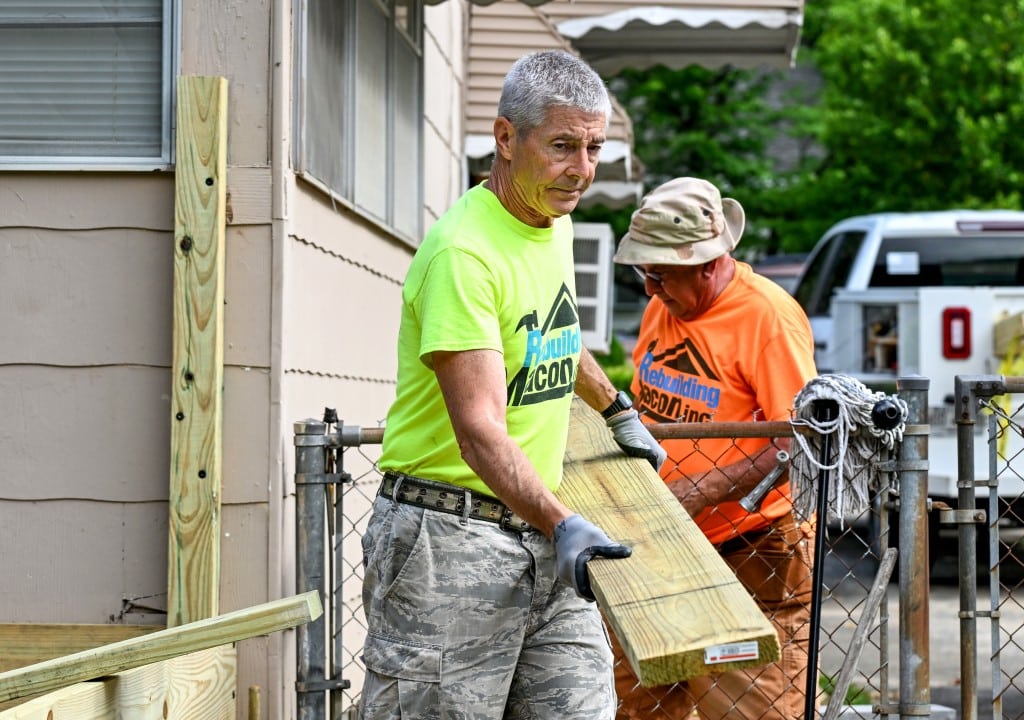
Many homeowners would tell you that owning a house is a constant work in progress, from making monthly mortgage payments to maintaining the property.
The Macon-Bibb County Economic and Community Development Department (ECD) offers assistance programs and helps fund other organizations’ efforts to support low-income homeowners.
Funded by the U. S. Department of Housing and Urban Development, the ECD Department receives federal Community Development Block Grants meant to enhance community vibrancy, ECD manager Wanzina Jackson said.
Programs like “Roof Your House” provide roof repair assistance, facilitated by Jackson’s department.
Residents qualify for the program based on their household income. A family of four cannot have an annual income of more than $61,750 to receive support.
The ECD also provides funding to partner agencies, including HomeFirst Housing Resource Services, Inc., which educates homebuyers and offers services such as foreclosure counseling and financial literacy courses.
The ECD — similar to the Macon-Bibb County Affordable Housing Fund, a nonprofit launched by the county with federal COVID relief money — collaborates with developers like the Macon Housing Authority and the Land Bank Authority to create, repair or maintain affordable housing.
The ECD can only offer affordable housing assistance to individuals making $56,550 which is 80% or less of the area median income. The creation of the affordable housing fund expands assistance reach to 120% of the area median income.
The land bank can act as the real estate agent, explained Jackson, and her department provides funding to help the project succeed.

“The main thing is really being able to see that a developer can take the project from the very beginning all the way to the end,” Jackson said, noting that units need to stay affordable for a set period of time to individuals making 80% or less of the area median income.
One recent project, Serenity Courtyard of Macon, is a multi-unit senior living community located along Bloomfield Road that came about as a result of a collaboration between the ECD, River Edge Behavioral Health and its River Edge Foundation.
Other partner agencies funded by Jackson’s department include Family Advancements Ministries, Crisis Line & Safe House of Central Georgia, Inc. and Family Counseling Center of Central Georgia.
Rebuilding Macon, one house at a time
Rebuilding Macon is another nonprofit committed to supporting low-income, elderly and disabled homeowners that is funded by the ECD’s block grants. The organization receives funding from the department for repairs, supplies and salaries.
Rebuilding Macon saw a change in leadership recently when longtime executive director Debra Rollins retired from the position she’d held since 1998.
Derek Thomas replaced Rollins in January. “Everybody wears a lot of hats” at such a small nonprofit, he said of his three-person team.
With experience as an architectural draftsman, Thomas served as Rebuilding Macon’s inspector for nearly a decade. His job was to assess the type of work needed and determine if it was something that could be done by the organization’s volunteers or “good Samaritans,” as Thomas put it.
The organization performs a range of small repairs including painting, building wheelchair ramps and installing light bulbs, grab bars in bathrooms, smoke detectors, light fixtures and donated appliances — free of charge for homeowners in need.
In addition to federal grant money, the nonprofit relies on donated supplies and materials and community fundraising, like its annual Macon’s Cooking event and a partnership with Big Peach Car Wash.
Folks mostly hear about Rebuilding Macon’s services by word of mouth, and Thomas said their recognizable work vehicles attract other residents’ attention while on the job. His team has helped repair the same home through multiple generations of owners (mom, daughter and granddaughter.)

The “Good Samaritan” volunteers are all retired and from various backgrounds.
“These guys could be at their kids’ baseball game or at dinner with their wives or whatever else they could be doing that day — they chose to come and volunteer with us,” Thomas said.
There are three volunteer days a week and participants don’t need construction experience, he said.
“We have some people that don’t know which end of the hammer to hold,” Thomas said. “We can put them to work.”
People fulfilling court-ordered community service and many high schoolers with service requirements contribute a helping hand.
In addition, the home repair nonprofit has hosted alternative spring breaks for colleges like Boston University and the University of Illinois to send student participants. Thomas hopes to host the program again and return to pre-COVID participation numbers.
In fact, he wants to see the younger generations take a genuine interest in Rebuilding Macon’s mission.
“Ideally I would like to work myself out of a job,” Thomas said about working to ensure no elderly, low-income or disabled person struggles with home repairs.
He recalled one woman on Anthony Road who received assistance from Rebuilding Macon. Mobility issues made it impossible for her to leave her house for the last seven years, but she “grinned ear to ear” the day she was able to spin around in circles on her newly constructed wheelchair ramp.
Thomas has big shoes to fill as the new executive director, but he intends to carry forward Rollins’ legacy of compassion and caring.
Rollins may not have known the physical house, Thomas said, but she knew each homeowner’s story.
Author

Related Articles

New podcast to offer locals a taste of Macon
The Melody’s food columnist Billy Hennessey will be launching a brand-new podcast in partnership with Visit Macon and 100.9 The Creek.
Five things we must never forget
In the midst of our forgetfulness, what should we strive to remember?
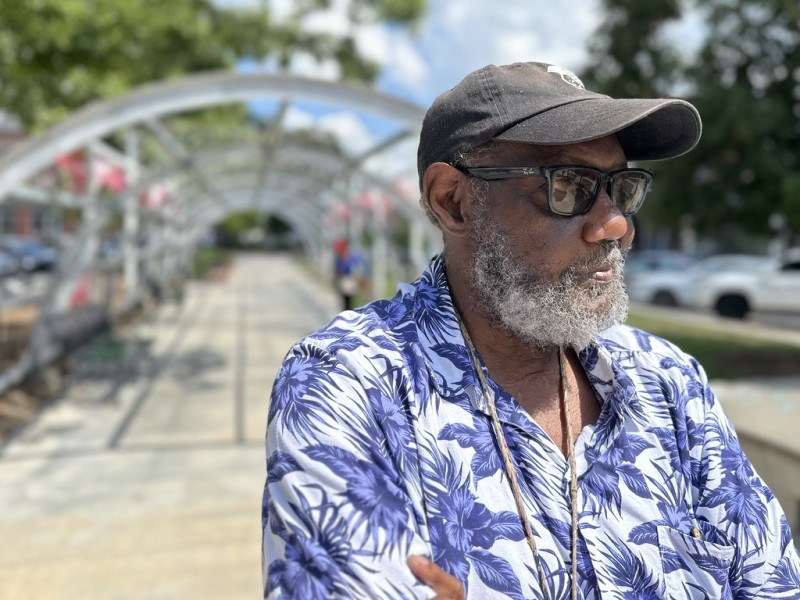
Newt Collier reflects on 81st birthday, the late Alan Walden, why Macon needs a music district and more
Today, Newton Collier is an ambassador for Macon, an active community volunteer, a beloved grandfather figure in music and an electronic trumpet player.