
Poinsettias bring color to the holiday season
Find out how to make sure your holiday poinsettias look their best.
A new chapter for The Melody
Our team and coverage are moving to The Telegraph. Make sure you look for The Melody's community-first journalism as a section highlighting the people, places and moments that are the rhythm of Macon.
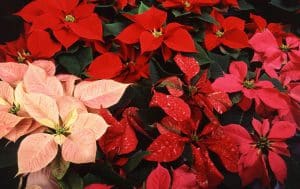
After Christmas trees, poinsettias are probably the most purchased plant during the holiday season.
In fact, their popularity makes them the best-selling potted houseplants in the United States. A quick way to provide stunning, long-lasting holiday color and easy decorating is to purchase poinsettias. They look great, whether used as a stunning single specimen or massed as a group.
Poinsettias are native to Mexico, where the Aztecs used them for fabric dye and the sap as a remedy for fevers.
What we think to be the “flowers” are modified leaves, called bracts. The actual flowers are the tiny yellow bits in the center.
Classified as “short-day” plants, poinsettias require long, dark nights for the green leaves to change color. They have been selectively bred to produce a wide range of colors — from the traditional red to pink, salmon, white, speckled and even light orange!
Whether you purchase these colorful plants to brighten your home for the holidays or to give as a gift, here are a few tips to make sure your poinsettia remains healthy and attractive throughout the holiday season.
- Pick a winner: Make sure the plant is well shaped and balanced all around. The bracts should be thoroughly colored and there should be dark green, healthy leaves all the way down strong stems. Look for the yellow flowers in the middle barely opened. Avoid plants with broken stems and wilting leaves.
- Choose a bright location: Poinsettias prefer six hours of bright, indirect light a day.
- Keep away from heat sources: Indoor heating vents, fireplaces or small heaters create low humidity which can cause plants to dry out more quickly. Excess heat or drafts can cause the leaves to wilt and drop.
- Provide water needs: Water when the soil is almost dry to the touch. Don’t allow your plant to completely dry out.
- Allow for drainage: If the plant is gift-wrapped in foil, remove the wrapping and place the pot on a saucer to protect furniture. If you want to use the foil wrap for décor, remove it when watering so the plant doesn’t sit in excess water.
While poinsettias are not poisonous, the sap is an irritant that causes stomach upset if ingested.
The leaves and stems also produce a white, milky sap that can cause skin irritation. Gloves should be worn when working with them and tools should be cleaned to prevent leaving a sticky sap residue. If it gets on your skin, wash with soap and water.
Poinsettias can be kept to re-flower next year, but the process can be demanding so they are often used as annuals.
The colorful bracts can stay bright for months if they can receive bright, indirect light and frequent watering. By following these tips, you can enjoy your poinsettias well into the new year!
Grace Krauss is a Master Gardener Extension Volunteer for Bibb County Extension.
For more information from the University of Georgia about poinsettias:
Related Articles

New podcast to offer locals a taste of Macon
The Melody’s food columnist Billy Hennessey will be launching a brand-new podcast in partnership with Visit Macon and 100.9 The Creek.

Five things we must never forget
In the midst of our forgetfulness, what should we strive to remember?

Newt Collier reflects on 81st birthday, the late Alan Walden, why Macon needs a music district and more
Today, Newton Collier is an ambassador for Macon, an active community volunteer, a beloved grandfather figure in music and an electronic trumpet player.