
The unsung heroes of food service
You can go to the restaurant that makes the best food or the bar that makes the best cocktails but without the amazing service, the entire experience changes.
A new chapter for The Melody
Our team and coverage are moving to The Telegraph. Make sure you look for The Melody's community-first journalism as a section highlighting the people, places and moments that are the rhythm of Macon.

I love going out to eat. Not just for the food, but for the service. As a flight attendant who often serves passengers all day and night, when I come home, I am all too grateful for the men and women in the food and beverage service industry. My closest connections that I’ve made since moving to Macon are with servers and bartenders. Some of those have actually turned into friends!
You can go to the restaurant that makes the best food or the bar that makes the best cocktails but without the amazing service, the entire experience shifts into something, well, let’s just say, less than desired. At the end of the day, servers just want to ensure that we get the best possible experience imaginable. When something goes wrong, a polite “excuse me, but…” goes a very long way. They’re delighted to make it right. That’s what they’re there for. It’s important that we, as patrons, remember that.
Across Middle Georgia and small cities throughout the South, being a server is not just a job. It is a balancing act. It means long hours on your feet, unpredictable income and a paycheck that, on paper, barely exists. The federal tipped minimum wage still sits around $2.13 an hour in many places, which means the real income comes from tips. Those tips change depending on the day, the crowd, the economy, and honestly, the mood of the guest. In smaller markets like Macon, where the dining scene is built on community and familiar faces, servers depend heavily on repeat customers and steady traffic. It is honest work, but it is not easy work.
In the South, there is another layer to it. Hospitality is expected to feel warm, personal and genuine. Guests are not just looking for a meal. They are looking for connection. But that expectation comes with a cost. Servers are not only delivering food. They are managing emotions, reading the room and absorbing energy from every table they serve. It is emotional labor, and most people never see it.
In Macon, that reality becomes personal. I spoke with two servers whose paths into this industry look very different, but whose experiences share a common thread. One has been in the industry for nearly a decade and is now pursuing a law degree, working toward a future beyond the restaurant floor. The other has spent years building stability in a role that offers reliability, even if it comes with limitations. Both spoke candidly about what the job takes out of you, not physically, but mentally. The constant stream of questions, some reasonable and some that make you pause, requires a level of patience that most people underestimate.
One server said something that stuck with me. It is just food. It is not that serious. And yet, every day, servers encounter guests who treat it like it is. Bad attitudes, unnecessary frustration and moments where a simple meal turns into something far more difficult than it needs to be. Through it all, servers are expected to stay composed, keep smiling and move forward. They are not just serving food. They are managing the entire experience.
The second server shared a perspective rooted in consistency. In a place where many of the same customers return again and again, the work becomes familiar, but not easier. She spoke about how difficult it can be when guests arrive already frustrated, and how that energy can impact an entire shift. A single negative interaction does not stay at one table. It follows you, and it lingers.
In reality, when something goes wrong, we seem to forget that our servers are people with real world issues. I have personally had food delivered that was wrong and I simply talked to my server as a friend. Immediately they took care of it. But, I have seen people being downright mean to servers without any reason. Proudly I can say, I have never seen this happen in Macon, but, in other cities, it’s not completely uncommon.
Both women spoke openly about tipping, and this is where the conversation becomes important. The expectation is typically between 18-20%, with about 60% of guests meeting that standard. The rest fall below it, and very few go above. What many people do not realize is that tips are not extra income. They are the income. When you are earning just a few dollars an hour, that tip determines whether bills get paid.
There is also a misconception about where that money goes. Servers often share a portion of their tips with bartenders, hosts and other staff. In some restaurants, all tips are pooled together and distributed based on hours worked. This system can help balance out a slow shift, but it also means that exceptional service does not always result in exceptional pay.
The income itself can be wildly unpredictable.
One server described a week where she earned as little as ten dollars, and another where she made several hundred. The other shared that a slow day might bring in eighty dollars, while a strong one could reach two hundred and fifty. On average, she brings home around fifteen hundred dollars a month. There is no guaranteed paycheck, no benefits and no safety net. When asked what would happen if she could not work due to an injury, her answer was simple: She would struggle.
And still, they show up. Because there is something about this work that stays with you — the connection with people, the ability to make someone smile and the satisfaction of getting through a busy shift. This is not work that people do because they have no other option. Many choose it, even with its challenges, because it gives them something meaningful.
There is a stigma that people in food service are uneducated or lack ambition. That is simply not true. These are individuals with goals, families and responsibilities. They are not servants. They are professionals doing demanding and often overlooked work.
So here is the takeaway: If you can afford to go out to eat, you can afford to tip, and tip well.
A few extra dollars may not seem like much for you, but for a server, it can mean everything. It can cover groceries, gas or a bill that is due. Beyond the money, it is about respect. Be kind. Be patient. Pay attention to what is happening around you. Ask for what you need, but do not make someone’s job harder than it already is.
If the people who are taking care of us cannot make a living wage, then we have to ask ourselves what that says about our community. A place cannot truly thrive if the people working the hardest to support it are barely getting by. I have always considered myself a good tipper. Perhaps this is the reason why I have been able to make those connections with Macon’s unsung heroes of food and drink service.
Billy Hennessey is the food columnist for The Melody. Write him an email at [email protected].
Related Articles

New podcast to offer locals a taste of Macon
The Melody’s food columnist Billy Hennessey will be launching a brand-new podcast in partnership with Visit Macon and 100.9 The Creek.

Five things we must never forget
In the midst of our forgetfulness, what should we strive to remember?
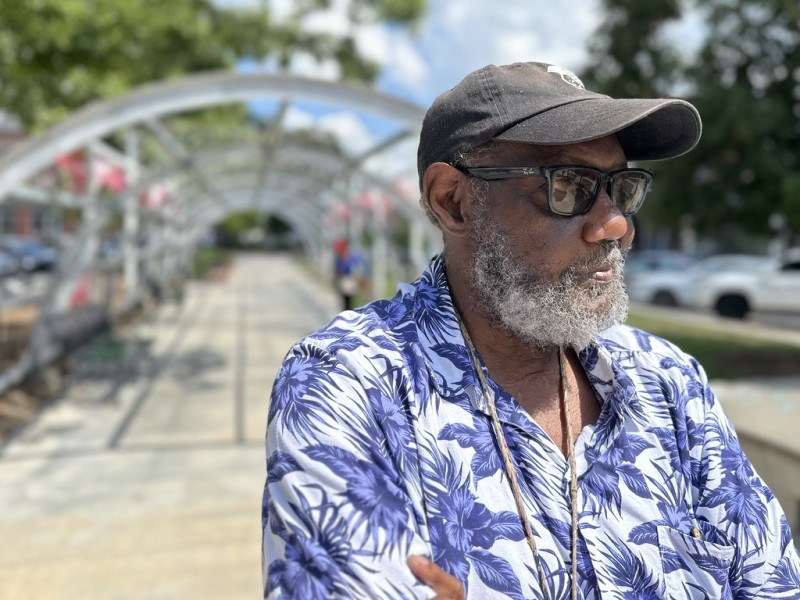
Newt Collier reflects on 81st birthday, the late Alan Walden, why Macon needs a music district and more
Today, Newton Collier is an ambassador for Macon, an active community volunteer, a beloved grandfather figure in music and an electronic trumpet player.