
With unique charcoal, Stebin Horne saves energy and keeps his fire going
The Macon native is the president and founder of African Charcoal Company and invented the Kudu grill.
A new chapter for The Melody
Our team and coverage are moving to The Telegraph. Make sure you look for The Melody's community-first journalism as a section highlighting the people, places and moments that are the rhythm of Macon.
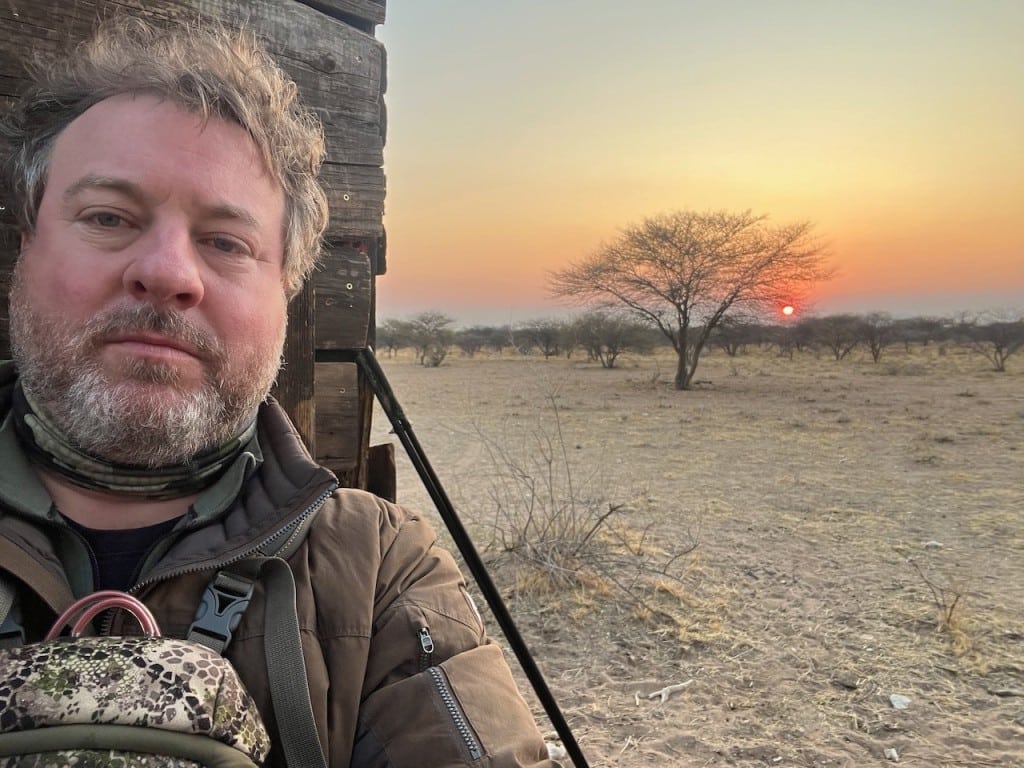
To Macon’s Stebin Horne, every day is Earth Day.
It is more than just a day in April to support environmental protection and promote renewable energy. Earth Week is more than just an opportunity to foster understanding of the ecosystem and encourage stewardship of our resources.
Horne, 50, could be considered more of a bush whacker than a tree hugger. But saving the planet one backyard burger at a time has become both a way of life and the cornerstone of his entrepreneurial spirit.
Horne is the president and founder of African Charcoal Company. His product is available locally at Salt Lick and Ace Hardware stores. It is packaged in bright yellow and red, 17-pound bags, with a lion’s face practically jumping out all the way from Namibia.
The marketing pitch is “Best on the Planet. Best for the Planet.”
Inventing grills and distributing an exotic charcoal wasn’t exactly on the flight manifest when he was growing up in Macon, the son of Frank Horne, a local attorney and former state legislator, and Pat Horne, a longtime educator.
Horne was a star soccer player at Stratford Academy, then followed in his father’s footsteps to the University of Georgia and on to law school at Mercer. He married and became the father of two sons.
But the former Macon city councilman watched parts of his life unravel. In 2006, he ran unsuccessfully for the state House District 137.
“It took a bankruptcy, a divorce and a foreclosure to hit me across the face and let me know there was a world out there I needed to tap into,’’ he said.
Horne said he moved to Atlanta in 2008 to “get out of Macon and clear my head.’’ He was working on mergers and acquisitions for a healthcare company when he met Roos-Maryn Opperman. She was from South Africa and on “holiday” to America after graduating from the University of Pretoria.
He courted her across two continents and an ocean, and not only fell in love with her but her homeland. She not only fell in love with him, but deeply and patriotically in love with the United States.
Her family members laughed and began calling her “Miss America,’’ while Horne picked up the nickname “Mr. Africa.’’
They celebrated their 10th anniversary last month. It was the second marriage for both. They live in Macon with their 7-year-old daughter, Lisbon, who is named after Roos’s family farm in South Africa.
Horne calls his wife “the muse for all my endeavors.’’
National Heritage Day is held in South Africa on Sept. 24. It is a public holiday to celebrate cultural history, diversity and transition from apartheid in a country where 11 different languages are spoken. Horne said it is similar to the Fourth of July in America.
“It’s a day when everyone puts down all their differences and gathers around an open fire for food and fellowship.’’ he said. “After living in that part of the world, I began understanding their culture of cooking out. Their grill culture is very experiential as you gather around the fire.’’
The unhurried communal sharing of food is known as a “braai.’’ The term originated from the Afrikaan language and is essentially the South African version of a barbecue.
Horne’s brother-in-law told him he thought it was funny how Americans preferred lids on their grills.
“He said you are covering up what we want to see,’’ Horne said. “We want to gather around because it’s the fire and the food that attract us.’’
Horne’s introduction to that cooking concept was the inspiration behind his invention and patent of the Kudu open fire grill, a combination of grill grates, elevator bars and a cast iron pan.
He began production and marketing in the U.S. and provided the jump start for his African Charcoal venture. At first, it was branded with the Kudu label but became a loss leader because of shipping costs. The African Charcoal Company officially launched eight years later on October 31, 2023.
There are more than 110 million acres in South Africa where a species of brush trees — sickle bush, camel thorn and blackthorn — were encroaching on the grasslands and disrupting the balance of nature. (They are the same trees Mufasa looks across from high on the cliff in Disney’s “The Lion King.’’)
“It was about 90% savanna grasslands and 10% wood,’’ Horne said. “But when the Afrikaaners came from Europe and brought in their cattle, they ate all the grass. The bush encroached and took over, so it now is 90% woodland and 10% grass.’’
The trickle down effect on the ecology has resulted in a crisis, driving animals like the cheetah and black rhino from their natural habitat.
“The encroacher bush sucks up what little water you have in the water table, not only affecting the animals but the humans who live there,’’ he said.
The byproduct of these encroaching trees is acacia, a long-burning and flavorful hardwood used in cooking. There are incentives to harvest the wood, which also provides more than jobs in a region of the country with high unemployment. The wood is then converted to charcoal.
Horne eventually sold the Kudu line of his business, and began investing time, money and research into the sustainable charcoal business.
“I wanted to keep the charcoal because it was so different from any product here in America,’’ he said. “Ten years ago, I knew it was an incredible cooking fuel. But I didn’t know as much about the environmental impact.’’
The charcoal contributes to the restoration of the African ecosystem, wildlife habitats and reduces carbon
emissions.
Making use of his time during COVID, Horne studied and immersed himself in eco-training and certification.
“I began to understand the ecosystem and the balance of nature and how nature’s organization keeps the ship right,’’ he said. “All of it is amazing … from how the animals interact to how the trees and the rocks and the minerals impact what trees grow here and the animals that eat them.
“The whole thing started to make sense to me. The trees were completely out of balance, therefore everything was out of balance all the way down to the humans who live there.’’
This summer, Horne will lead a group of Stratford high school students and teachers on a trip to South Africa as part of an ecology class.
Horne’s company has received certification as being environmentally friendly by the Forestry Stewardship Council. He has also diversified his business interests to include retail grill companies in South Florida and a company called Classic Overland, which offers restored Land Rover Vintage Defenders in Fort Worth, Texas.
He is also president of the parent Eco-X, a biochar company that produces sustainable and environmentally responsible charcoal substances. The “X” stands for the crossroads of business and conservation.
“As an entrepreneur, you look out and say: ‘Where is the next opportunity?’ ’’ Horne said. “The future of business — and they’re going to have to start teaching this in business classes – is that you are no longer going to value a company just based on its stock price. You are literally going to have to factor in impact and stewardship.
“People have always felt that being a conservationist or sustainable or recycling or anything environmentally leaning was not in line with capitalism, business and consumerism … that they are mutually exclusive,’’ he said. “In reality, we are moving into a world where they cross paths, and we don’t have a choice. I am trying to be a part of companies that show we can provide excellent products and services that are of the same quality and do good for the earth. That’s the genesis of everything I try to pursue.’’
Author

Related Articles

New podcast to offer locals a taste of Macon
The Melody’s food columnist Billy Hennessey will be launching a brand-new podcast in partnership with Visit Macon and 100.9 The Creek.

Five things we must never forget
In the midst of our forgetfulness, what should we strive to remember?
Newt Collier reflects on 81st birthday, the late Alan Walden, why Macon needs a music district and more
Today, Newton Collier is an ambassador for Macon, an active community volunteer, a beloved grandfather figure in music and an electronic trumpet player.